


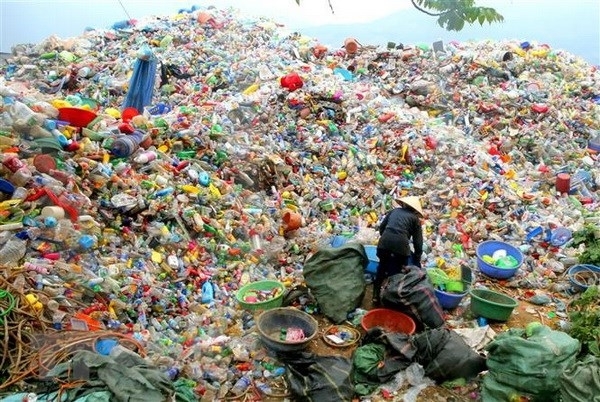
Vietnam needs an estimated $7.5 to $8.5 billion by 2030 to comprehensively address plastic pollution, according to the financial roadmap for the National Plastic Action Partnership (NPAP).
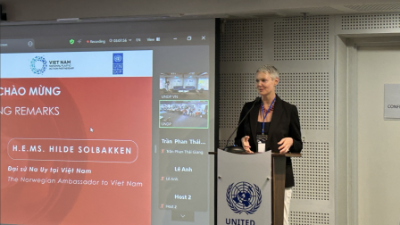
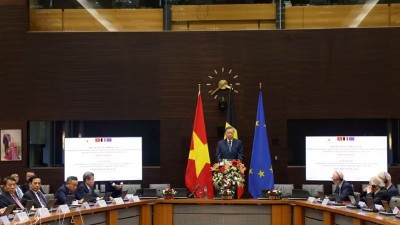
This information was shared at the 7th meeting of the Vietnam NPAP Working Group, organized by the Ministry of Agriculture and Environment in coordination with UNDP Vietnam on the afternoon of December 16
The workshop aimed to announce the financial roadmap report for plastic action in Vietnam through 2030, review the 2025 performance of the Vietnam NPAP Working Group and technical groups, and develop operational plans and priority orientations for 2026.
Additionally, delegates exchanged solutions to mobilize financial and technical resources to realize plastic waste reduction initiatives and discussed the preparation roadmap and national action plan to meet the requirements of the upcoming Global Plastic Pollution Treaty.
Deputy Minister of Agriculture and Environment Le Cong Thanh, Head of the NPAP Group, emphasized the need to promote the mobilization and effective use of financial resources for plastic actions. The focus is on strengthening connectivity, encouraging private sector participation, and creating favorable conditions for domestic and international capital to be transformed into specific projects and initiatives.
Furthermore, the ministry continues to perfect policies for transforming business models regarding plastic waste collection, recycling, and treatment in accordance with environmental standards, aiming to create significant momentum for scaling up and replicating sustainable solutions. Plastic actions will be closely integrated with Vietnam's sustainable development goals.
Mr. Thanh stated that Vietnam has actively chosen a proactive, preventive, and transformative approach, rather than solely focusing on handling consequences. Plastic pollution is not merely an environmental issue but a socio-economic development issue, closely linked to production-consumption models, market structures, and methods of mobilizing social resources.
Therefore, solutions for plastic pollution cannot stop at the collection or treatment stages but require a systemic approach based on appropriate policies, market mechanisms, innovation, and multi-stakeholder cooperation.
As announced at the workshop, the NPAP financial roadmap in Vietnam estimates that $7.5 – $8.5 billion will be required by 2030 to comprehensively tackle plastic pollution, ranging from upstream interventions (such as reducing and replacing plastic use) to downstream measures (collection and treatment infrastructure systems).
Speaking at the event, Ms. Ramla Khalidi, UNDP Resident Representative in Vietnam, noted that after five years, the partnership has engaged 200 organizations, mapped over 160 projects addressing plastic pollution, and catalyzed over 570 innovative solutions. Private sector participation is increasing, driven by green credit products from banks and investment flows for startups.
Mobilizing large-scale finance and public finance is necessary, but it will not be enough. Filling this gap depends on private investment in projects with managed risks and clear returns, she said, adding that connecting policies with investment projects is the point where NPAP creates value.


 Google translate