


Burden of birth defect and challenges of isolated treatment
In Vietnam as well as across Asia, medical statistics show that, on average, one in every 500 to 700 children is born with a cleft lip and palate. This not only directly affects appearance but also leads to a complex chain of functional disorders: infants may have difficulty feeding and swallowing, resulting in malnutrition from birth; they may be prone to recurrent otitis media, which can cause hearing loss; and they may develop malocclusion and speech disorders due to velopharyngeal insufficiency.
The psychological and financial burden weighs heavily on families for many years. Notably, treatment in Vietnam has historically been largely fragmented. Children often undergo isolated lip or palate repair at one facility, without continuous follow-up involving orthodontics, alveolar bone grafting, or speech therapy. Suboptimal technical decisions during the initial stage can easily result in residual complications such as scar contracture, nasal column deformity, or hypernasal speech, requiring pediatric patients to undergo multiple costly revision surgeries while achieving limited functional recovery.
Global experts gather to find comprehensive solution
To address bottlenecks in the treatment pathway, the International Cleft Mastery Summit - Hanoi 2026 was held at the Hong Ngoc - Phuc Truong Minh General Hospital, in collaboration with the International Health Organization NUOY (US).
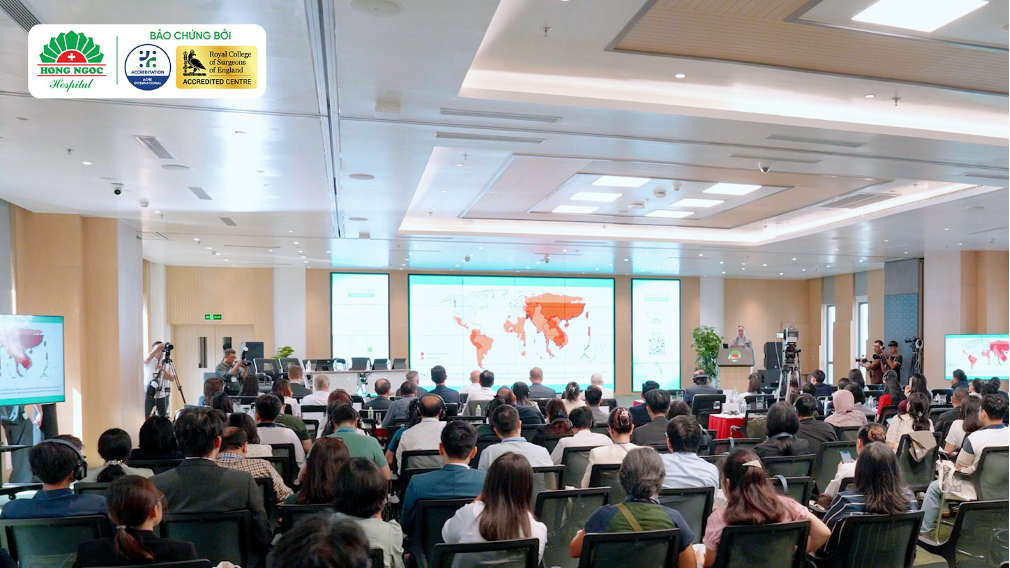
The event brought together 24 leading experts from more than nine countries and territories, along with domestic specialists in plastic surgery, craniofacial surgery, maxillofacial surgery, orthodontics, and speech therapy. The conference focused on establishing a comprehensive intervention approach throughout the entire developmental journey of pediatric patients: every surgical decision made during infancy must be precisely calculated to provide a foundation for subsequent functional and aesthetic interventions years later.

Attending and addressing
the seminar, Dr. Nguyen Dinh Hung, PhD., Deputy Director of the Hanoi
Department of Health, shared his thoughts on the event’s significance for advancing cleft lip and palate treatment
in Vietnam. According to Dr. Hung, the seminar is expected to contribute to
workforce training, the adoption and mastery of advanced techniques, the
step-by-step standardization of clinical protocols, and the expansion of
professional collaboration. This will help translate scientific advancements
into clinical practice, ultimately ensuring that patients truly benefit and
achieve a better quality of life.
Mastering advanced techniques and digitizing treatment
Over three days, with 22 professional sessions, including two technique demonstration video sessions and nearly 70 presentations, the conference covered the entire continuum of intervention across the different stages of patient development.
● Day 1 - Primary Cleft Surgery: Laying the foundation for aesthetics, function, and long-term development through sessions on pre-surgical infant orthopedics (PSIO); unilateral cleft lip repair and primary rhinoplasty; bilateral cleft lip repair; cleft palate repair; and intervention protocols for Pierre Robin syndrome.
● Day 2 - Secondary & Intermediate Reconstruction: Focusing on issues arising after initial intervention, with topics including management of palatal fistulas; diagnosis and treatment planning for velopharyngeal insufficiency; Phase I orthodontic treatment; techniques and timing of alveolar bone grafting; and secondary lip and nasal revision strategies.
● Day 3 - Adult Reconstruction & National Infrastructure: Completing structural rehabilitation and expanding the perspective toward sustainable development through sessions on Phase II orthodontic preparation; orthognathic surgery using digital workflows and virtual surgical planning (VSP); advanced orthognathic surgery; definitive cleft rhinoplasty; alongside a forum for leaders of non-governmental organizations and discussions on developing a comprehensive care system in Vietnam.
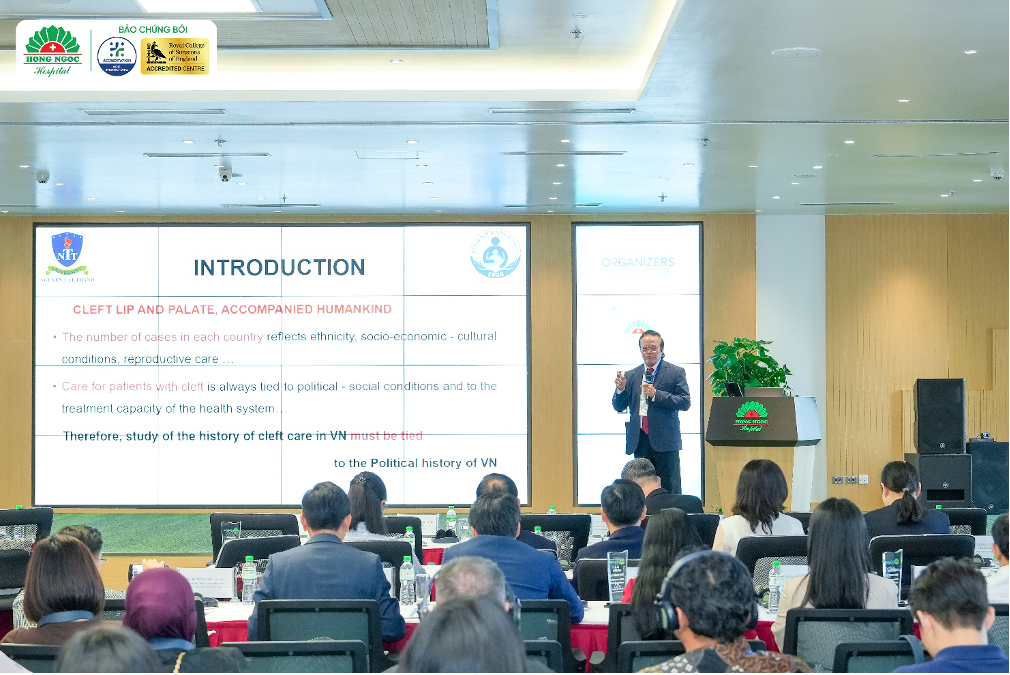
Opening up the future for pediatric patients and the national healthcare system
Establishing a comprehensive multidisciplinary treatment pathway enables pediatric patients to receive intervention at the “golden time,” minimizing the number of subsequent corrective procedures. Patients can achieve restoration of both aesthetic appearance and chewing and speech functions, opening up a future of confidence and integration into everyday life.
The event also marked an important step forward in strengthening the domestic capacity of Vietnam’s healthcare sector. The adoption and mastery of advanced techniques from an international network of experts lays the foundation for establishing specialized cleft lip and palate treatment centers operating in an integrated manner according to international standards, gradually reducing the long-term healthcare burden on society as a whole.






 Google translate