


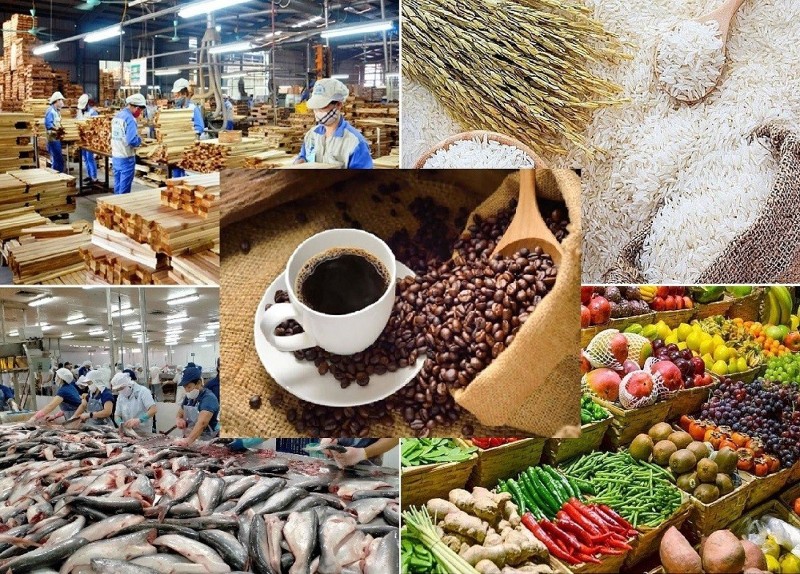
The United Kingdom is a major economy with high purchasing power and a sophisticated distribution network, but it also imposes stringent requirements on product quality, technical specifications, food safety, traceability, and environmental and social responsibility.
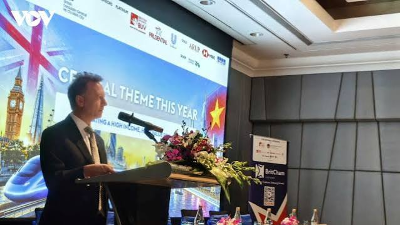
Ms. Ho Thi Quyen, Deputy Director of the Investment and Trade Promotion Centre of Ho Chi Minh City (ITPC), emphasized that point at a seminar titled "Strategies for Accessing the UK Market via CPTPP and UKVFTA" on November 10.
At the workshop, trade experts noted that the ability to capitalize on tariff incentives under both agreements must be viewed in tandem with corporate compliance capabilities. While reduced import duties may deliver a price advantage, converting that edge into commercial orders and long-term trade partnerships requires businesses to satisfy increasingly rigorous market demands.
The parallel implementation of the UK–Vietnam Free Trade Agreement (UKVFTA) and the Comprehensive and Progressive Agreement for Trans-Pacific Partnership (CPTPP) with the UK officially joining on December 15, 2024, has expanded options for Vietnamese exporters. However, as each trade pact features distinct rules of origin (ROO) and cumulation mechanisms, enterprises must evaluate their raw material sources, production setups, and product characteristics to select the most advantageous framework.
According to Mr. Trinh Huynh Quang Canh, a lecturer at the School of International Business and Marketing under the University of Economics Ho Chi Minh City, the UKVFTA, which entered into force on May 1, 2021, targets the elimination of 99% of bilateral tariff lines after six to seven years, which is estimated to save Vietnamese exporters approximately £114 million in duties on shipments to the UK.
Under the UKVFTA, goods utilize the EUR.1 UK Certificate of Origin (C/O) and benefit from extended cumulation with inputs sourced from EU member states, as well as a designated mechanism for South Korean fabrics. This arrangement is particularly advantageous for industries relying on diverse import sources, such as textiles, garments, and processed goods.
Meanwhile, the CPTPP facilitates multilateral cumulation, allowing Vietnamese exporters to aggregate originating inputs from other member states to fulfill origin requirements and secure preferential tariffs. Exporters currently use the CPTPP C/O model, transitioning toward a full origin self-certification regime following the transitional period ending in 2029.
Notably, the input supply chain for Vietnam's export sector remains heavily dependent on non-bloc suppliers. Citing trade data at the seminar, Mr. Canh revealed that domestic value added linked to the UK accounts for merely 0.3% of Vietnam’s exports, whereas foreign inputs comprise 48.5%—with China representing 15.7%, South Korea 6.7%, and the United States 3.1%.
For electronics, this heavy reliance on third-party components outside the pacts poses major challenges in qualifying for origin and cumulation criteria. As a result, selecting the optimal trade pact cannot rely solely on preferential tariff rates; it must begin with auditing supply chains, tracing input origins, and verifying whether each product line complies with specific rules of origin.
In other words, tariff preferences can only be realized once enterprises substantiate compliance with origin criteria. Incomplete or non-compliant documentation can nullify duty preferences, undermining product competitiveness.
Beyond rules of origin, escalating technical barriers and environmental mandates are intensifying pressures on exporters. Deputy Director of Blue Ocean Trade and Transport Co., Ltd., Mr. Nguyen Ly Truong An, noted that Vietnam's market share remains modest compared with the UK’s total import capacity. At the same time, Vietnam’s export capacity remains heavily reliant on the foreign-invested sector, which contributed 80.7% of total national export turnover in the first nine months of 2026.
Mr. An warned that as trade surpluses widen, regulatory authorities often heighten scrutiny over inbound shipments. Exporters must be prepared to address four primary compliance pillars: mandatory technical regulations; rules of origin and certification procedures; environmental compliance standards; and private buyer requirements, including BRCGS certifications, supply chain transparency, and forced labor prevention frameworks.




 Google translate