


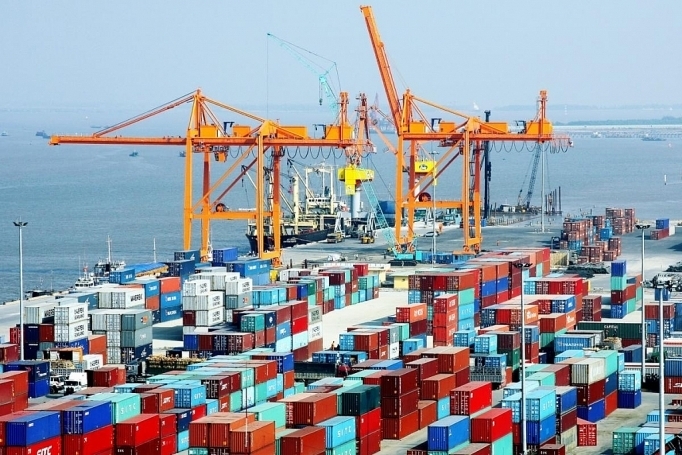
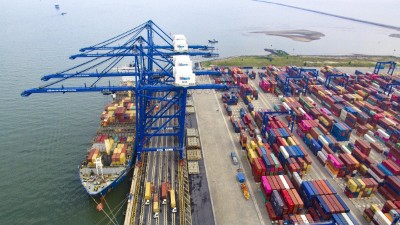
The year 2025 has set a new record for import-export activities, with a projected total value exceeding $920 billion. This represents a more than 17% increase compared to 2024, far surpassing the Government’s target of 10–12%.
This milestone officially propels Vietnam into the Top 15 global trading powers, according to Mr. Le Hoang Tai, Deputy Director of the Vietnam Trade Promotion Agency (Ministry of Industry and Trade), who spoke at the conference "Review of Trade Promotion in 2025 and Tasks for 2026" on December 29.
These positive results are significantly attributed to trade promotion efforts. Such initiatives have effectively supported businesses in networking, exploring, and expanding export markets, while simultaneously fostering the growth of the domestic market.
Reflecting on the 2021–2025 journey, Mr. Tai said "Trade promotion activities have undergone a profound transformation in mindset, methodology, and scale. This sector has become an effective tool helping businesses enhance brand value and bolstering Vietnam’s soft power on the international stage."
Notably, during the 2020–2025 period, nearly 1,000 trade promotion projects with a total budget of over VNĐ800 billion ($30.4 million) were implemented. These projects focused on diversifying export markets and effectively leveraging Free Trade Agreements (FTAs) to tap into potential markets.
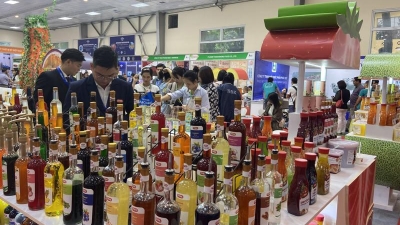
The Ministry of Industry and Trade has regularly organized briefing sessions with Vietnam’s overseas trade offices, export forums, international trade fairs, and supply-demand matching programs. These efforts have enabled Vietnamese goods to penetrate deeper into major and highly demanding markets.
Furthermore, digital transformation in trade promotion has seen a distinct push. Online trade fairs and cross-border livestreaming sales are becoming increasingly widespread, providing modern avenues for Vietnamese products to reach global consumers.
Entering a new phase, the global "arena" is no longer a mere continuation of the past but a fierce competition characterized by a blistering pace of digitalization and stringent technical barriers regarding corporate social responsibility, safety, and traceability.
To adapt to these changes, Mr. Tai stated that trade promotion for the 2026–2030 period will focus on five major pillars: Identifying priority commodity groups and sectors; Diversifying markets; Building and refining the National Trade Promotion Ecosystem; Enhancing the promotional capacity of industries, localities, and businesses; and comprehensively innovating the National Trade Promotion Program.
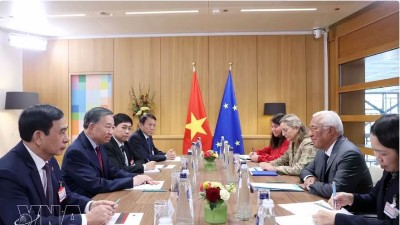
Mr. Tran Thanh Hai, Deputy Director of the ministry's Import-Export Department, noted that in a volatile global trade environment, strengthening the connection between the Import-Export Department, the Trade Promotion Agency, and the network of overseas trade offices is a key factor. This synergy helps businesses access information promptly, mitigate risks, and effectively seize market opportunities.
Ms. Ho Thi Quyen, Deputy Director of the Investment and Trade Promotion Center of Ho Chi Minh City (ITPC), proposed that for 2026, trade promotion efforts should prioritize: Maintaining regular briefings with overseas trade offices to capture market intelligence; identifying key markets and priority sectors; fostering two-way promotion (both import and export); and enhancing the trade promotion capacity of small and medium-sized enterprises.





 Google translate