


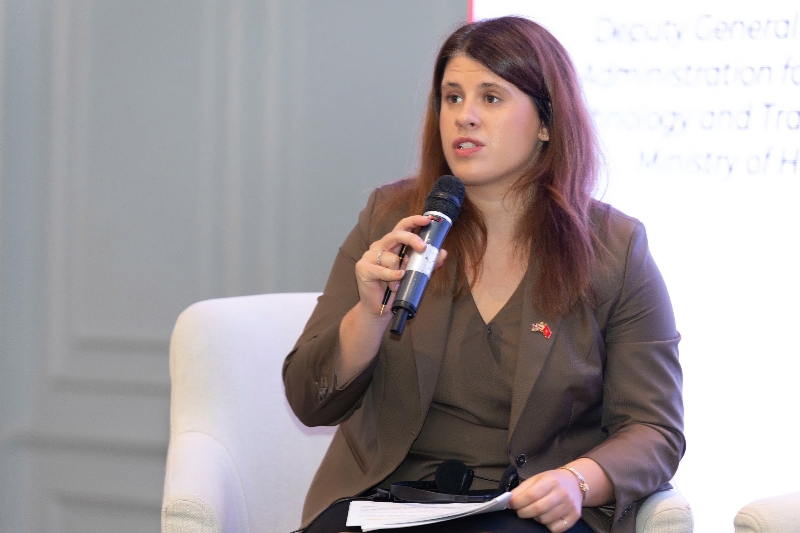
Vietnam’s economic transformation over the past decade has been remarkable. Strong export performance, a rapidly expanding middle class, and deeper integration into global markets have positioned the country among Asia’s most dynamic economies. Behind this success lies a less visible but equally critical factor: a modern financial system that enables businesses to access capital, manage risks, and scale efficiently.
As a Comprehensive Strategic Partner of Vietnam, the United Kingdom is supporting this transformation not only through investment, but also through expertise, innovation, and long-term institutional cooperation. Drawing on the experience of one of the world's leading financial centres, the UK is helping Vietnam build financial systems that are efficient, transparent, and resilient.
Today, this partnership is contributing to Vietnam's development in three key areas: expanding access to finance, advancing the green transition, and strengthening the foundations of its financial system.
Expanding access to finance
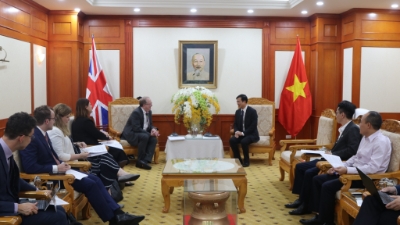
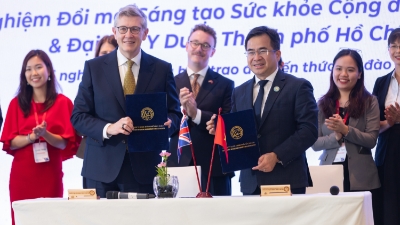
UK Export Finance (UKEF) has committed at least £5 billion (approximately $6.5 billion) to support projects in Vietnam through its guarantee framework. A Memorandum of Understanding between Vietnam’s Ministry of Finance and UKEF, signed in October 2025 during General Secretary To Lam’s visit to London, has laid the groundwork for deeper collaboration and expanded access to international capital.
Foreign trade remains central to Vietnam’s growth model, but exporting requires reliable financing for working capital, input materials, and order fulfilment. Yet many small and medium-sized enterprises (SMEs) continue to face challenges in accessing trade finance. Through collaboration with local partners, UK banks such as HSBC and Standard Chartered are expanding trade finance, supply-chain financing, and working-capital solutions, helping channel international capital into Vietnamese businesses and enabling them to integrate more deeply into global value chains.
Long-term investors are also contributing to the development of Vietnam’s capital markets. Dragon Capital, with more than three decades of experience in Vietnam, manages approximately $5 billion in assets, while Eastspring Investment Vietnam manages around $7 billion. Their continued presence reflects growing investor confidence and the increasing maturity of Vietnam’s financial sector.
Together, these partnerships are widening access to finance while improving the quality and depth of Vietnam’s financial ecosystem. By linking domestic businesses with global capital and expertise, they are supporting business expansion, job creation, and stronger export performance.
Cooperation is increasingly moving from commitments to implementation. The UK is supporting efforts to mobilise financing and expertise for metro systems and high-speed rail development in Hanoi and Ho Chi Minh City. UKEF has also engaged with key energy companies, including PetroVietnam and Petroleum Technical Services Corporation (PTSC), issuing letters of interest for Vietnam’s first large-scale offshore wind projects. These initiatives are helping unlock investment while accelerating the country’s green transition.
The UK is also supporting Vietnam’s ambition to achieve net-zero emissions by 2050. In 2025, British International Investment provided a $50 million loan to VPBank to expand climate-related financing, further strengthening the flow of capital towards sustainable development.
Building a stronger financial system for long-term growth
Beyond capital flows, UK expertise is helping Vietnam strengthen the foundations of its financial system. Sustainable economic growth depends not only on investment, but also on transparent institutions, modern infrastructure and trusted regulatory frameworks.
The UK is working with Vietnamese partners across fintech, capital-market development and financial regulation. A growing number of UK fintech companies, including Revolut, Wise, Ozone API, Raidiam, Sumsub and iProov, are exploring opportunities in Vietnam, contributing expertise in digital banking, cross-border payments, open finance and digital assets. Their engagement also supports Vietnam’s ambition to develop international financial centres in Ho Chi Minh City and Da Nang.
One flagship initiative is the Trade Finance Registry (TFR), developed in partnership with the State Bank of Vietnam, the Vietnam Banks Association and Boston Consulting Group. Vietnam is estimated to face a trade-finance gap of $85–90 billion, partly due to fraud risks, limited transparency and fragmented data. The TFR seeks to address these challenges through a centralised platform that records and verifies trade transactions, helping reduce risks and expand lending capacity, particularly for SMEs.
Cooperation also extends to commodity markets and financial infrastructure. Through the Growth Gateway programme, the UK is supporting the development of Vietnam’s commodity exchange market by sharing international best practices and strengthening links with institutions such as the London Metal Exchange and ICE Futures Europe.
For Vietnam, the benefits are clear. Better access to finance, deeper capital markets and stronger financial institutions enable businesses to expand, innovate and participate more effectively in global value chains. As the country works toward becoming a high-income economy by 2045 and achieving net-zero emissions by 2050, trusted financial partnerships will play an increasingly important role.
The UK–Vietnam financial partnership is therefore about far more than capital. It combines investment with expertise, strengthens institutions while supporting innovation, and helps build the foundations for a more resilient, sustainable and globally competitive economy.
(*) H. E. Ms. Alexandra Smith is the British Consul General in Ho Chi Minh City and Trade Director for Vietnam




 Google translate