


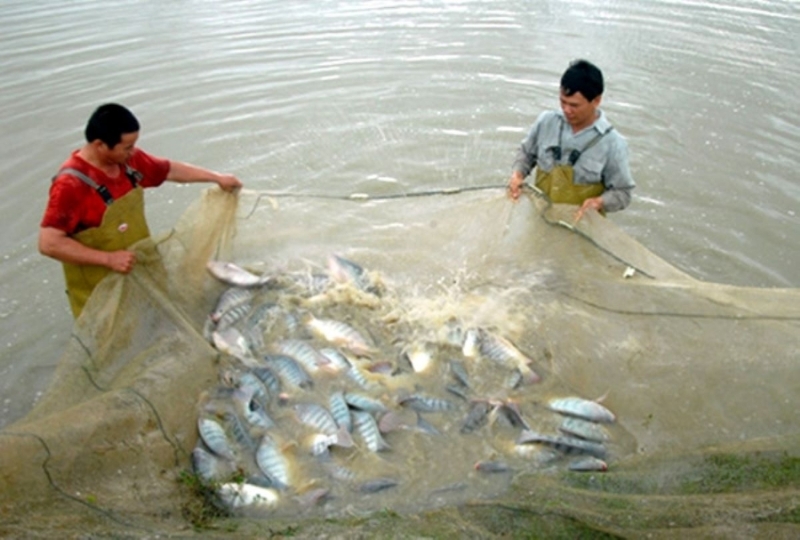
The United States is set to invest over $15.2 million in a project aimed at improving Vietnam’s tilapia value chain and promoting the trade of high-quality soy products for aquaculture.
The five-year initiative targets a total tilapia production of 1.21 million tons, with an estimated value of $1.25 billion.
On January 13, Deputy Minister of Agriculture and Environment Phung Duc Tien met with a delegation from the US Embassy to discuss the implementation of a new project titled the "US-Vietnam Aquaculture Value Chain Partnership."
Operating under the US Food for Progress Program, the project seeks to comprehensively enhance Vietnam's tilapia value chain. Simultaneously, it aims to facilitate the import of high-quality soybean meal and expand the consumer market for tilapia in the US, as well as across regional and domestic markets.
This project not only supports the improvement of tilapia productivity and quality but also creates favorable conditions for developing the soy-based aquaculture feed trade and expanding tilapia exports to the US market, according to Mr. Ralph Bean, the US Agricultural Counselor in Vietnam.
Meanwhile, according to Project Director Nick Richardson, the initiative is currently in its formal introduction phase to the Vietnamese government. From March to September 2026, the project will conduct baseline studies, resource surveys, and grant promotions while focusing on improving broodstock quality and supporting hatcheries. Starting in October 2026, activities will expand to include technical assistance, training, capacity building, and financial support.
Over the next five years, the project is expected to directly benefit more than 24,200 people, including small-scale farmers, commercial farms, and processing plants in the Red River Delta and the Mekong Delta.
Deputy Minister Tien praised the project as a "right and timely" move, providing critical resources to fulfill Vietnam’s tilapia development plan through 2030. He also suggested expanding the development of Nile and Red tilapia varieties in the country's Central and Southern regions to capitalize on the unique ecological advantages of each area.



 Google translate