Vietnam has officially introduced a carbon exchange, marking a major step toward its net-zero goals and a market-driven approach to reducing emissions.
As his diplomatic mission in Vietnam draws to a close, Mr. Timur Sadykov, Consul General of the Russian Federation in Ho Chi Minh City, shares his thoughts on the southern city’s remarkable transformation over the past five years with Vietnam Economic Times / VnEconomy’s Nhu Quynh and highlights new opportunities to further expand bilateral cooperation.
Foreign investment into Vietnam surged in the first half of 2026, driven by manufacturing, high-tech industries, and record FDI disbursement as investors reinforced their confidence in the country’s long-term growth prospects.
H.E. Ito Naoki, Ambassador of Japan to Vietnam, shared with Vietnam Economic Times/ VnEconomy about the strength of Vietnam-Japan relations and outlined the priorities shaping bilateral cooperation in the new era.
Solid export performance and record imports of production machinery and materials underscore Vietnam’s expanding role in global supply chains despite again posting a trade deficit.
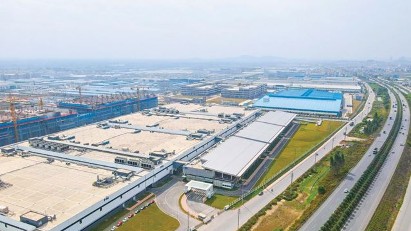
Industrial production accelerated to a six-year high in the first half of 2026, supported by strong manufacturing growth, rising investment, and improving business conditions.
Vietnam kept inflation broadly under control in the first half of 2026, but narrowing policy headroom is expected to make price management increasingly challenging in the months ahead.
With first-half growth exceeding expectations, Vietnam now faces the tougher challenge of sustaining momentum while balancing investment, inflation, and financial stability.
Ms. Nguyen Thi Huong, Director General of the National Statistics Office at the Ministry of Finance, tells Vietnam Economic Times / VnEconomy about the drivers behind Vietnam’s robust first-half economic performance, the challenges that could weigh on growth in the second half, and the policy priorities needed to achieve the country’s ambitious 2026 GDP target.