


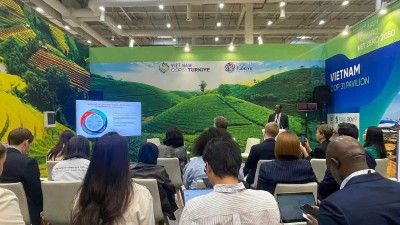
Vietnamese Deputy Prime Minister Ho Quoc Dung attended and addressed the high-level dialogue session "Vietnam Responding to Climate Change in the New Era," organized by the Vietnamese Ministry of Agriculture and Environment on November 17 in Antalya, Turkey, within the framework of the 31st Conference of the Parties to the United Nations Framework Convention on Climate Change (COP31), hosted by Turkey.
The event took place as global negotiations at COP31 entered their final week, with countries seeking consensus on accelerating the energy transition and enhancing climate adaptation financing.
Unlocking institutional bottlenecks and implementing green transition solutions
In his opening remarks, Deputy Prime Minister Dung emphasized that as a developing economy with high openness and significant vulnerability to climate change, Vietnam recognizes that the green transition is both an essential requirement and an opportunity to innovate its growth model, enhance competitiveness, and ensure fairness and livelihoods for its people.
Entering a new development phase with the goal of double-digit economic growth alongside its commitment to achieve net-zero emissions by 2050, Vietnam places climate change response at the center of its development decisions, viewing it as a catalyst for rapid and sustainable growth.
According to the Deputy Prime Minister, Vietnam has proactively addressed numerous institutional bottlenecks while simultaneously implementing green transition solutions.
Key priorities include promoting green transportation, developing smart and low-emission agriculture, advancing the development, use, and storage of renewable energy, and protecting forests and restoring natural ecosystems. Additionally, Vietnam is focused on completing the legal framework for operating its domestic carbon market to unlock financial resources for climate change response.
Emphasizing that climate change is a global challenge intertwined with economic growth, energy security, food security, and financial stability, Deputy Prime Minister Dung stated that fulfilling climate commitments must go hand in hand with improving the quality of life and livelihoods of local communities, in line with national conditions based on fairness, differentiated responsibilities, and respective capabilities.
However, he noted that investment demand for energy transition and adaptation is rising, while financial resources, particularly concessional and private capital, remain insufficient.
Four proposals to realize climate and green development goals
To realize the global climate goals established under the Paris Agreement, Deputy Prime Minister Dung put forward four key proposals.
First, organizations and businesses should strongly transition toward low-carbon emission models, treating the ability to measure, manage, and reduce the carbon footprint of products as a competitive advantage in international markets.
Second, the green transition should be paired with digital transformation by developing, transferring, and mastering strategic emission reduction technologies in industry, construction, and agriculture to build sustainable production and consumption models.
Third, countries should expand green, sustainable financial sources and concessional lending mechanisms for green projects meeting ESG criteria and just energy transition initiatives, while developing a transparent carbon market to mobilize greater private capital for emission reduction.
Fourth, stakeholders need to strengthen cooperation, technology transfer, and climate change adaptation capacity.
The Deputy Prime Minister affirmed that the Vietnamese Government is committed to continuously refining institutions and policies, ensuring a stable and transparent investment environment, and facilitating the participation of businesses and investors in green projects and the carbon market.
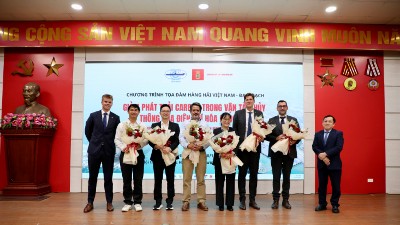
A major highlight of the dialogue was the signing of memorandums of understanding (MoUs) for climate investment and finance cooperation with a total estimated value of up to $260 million, demonstrating the active partnership of international financial institutions and the Vietnamese business community.
Specifically, Standard Chartered Bank Vietnam signed MoUs with Dai Dung Group and Stavian Group, while the Joint Stock Commercial Bank for Investment and Development of Vietnam (BIDV) signed an MoU with the French Development Agency (AFD). These agreements focus on providing green financing, promoting the circular economy, and supporting the green transition across key industries and major export sectors such as textiles, food, and beverages.
Welcoming the efforts of all parties, Deputy Prime Minister Dung urged businesses and financial institutions to swiftly translate these MoUs into substantive investment projects delivering tangible economic and environmental benefits.
He also tasked the Ministry of Agriculture and Environment with taking the lead in coordinating with relevant ministries and agencies to closely monitor implementation progress, compile outcomes from the dialogue, and promptly report to the Government on any issues requiring resolution.
Additionally, Deputy Prime Minister Dung called on international organizations, financial institutions, development funds, and businesses to continue partnering with the Vietnamese Government to achieve green transition objectives, reach net-zero emissions by 2050, and fulfill global climate commitments alongside the international community.
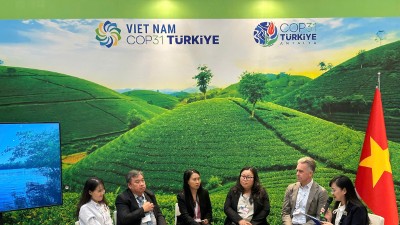
Also during the event, a thematic discussion on unlocking climate finance and carbon market opportunities for Vietnam's green transition drew strong interest from policymakers, experts, and international investors. Delegates analyzed Vietnam's new policy priorities, capital mobilization solutions, and mechanisms to boost private sector participation in emission reduction, energy transition, and climate adaptation projects.
The dialogue session served as a key diplomatic and technical activity of the Vietnamese delegation at COP31, providing a direct channel between the Vietnamese Government and the international business and investor community to advance green financial cooperation and carbon market development.
(*) The author is from the Department of Climate Change under the Ministry of Agriculture and Environment.
 Google translate