


The private sector plays a crucial role in providing finance, technology, and adaptation solutions in response to climate change. However, according to research by the Climate Policy Initiative, private finance currently accounts for only about 2% of the total tracked global finance for climate change adaptation.
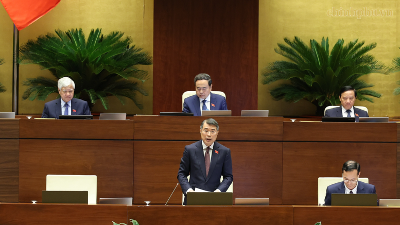
On November 12, at COP31 in Antalya, Turkey, the Department of Climate Change under the Vietnamese Ministry of Agriculture and Environment collaborated with the National Adaptation Plan (NAP) Global Network to organize an event titled "Promoting Investment and Private Sector Participation in Climate Change Adaptation: Experiences from Vietnam and Other Countries."
The event brought together representatives from Vietnam, countries with similar conditions, and international experts to exchange experiences and seek solutions for mobilizing private sector involvement in climate change adaptation, particularly in finance and investment.
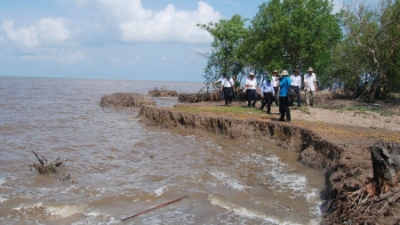
In her opening remarks, Ms. Mai Kim Lien, Deputy Director of the Department of Climate Change affirmed the private sector's vital role in providing finance, technology, and adaptation solutions. Climate change is increasingly impacting socio-economic development, food security, water security, and livelihoods. "As extreme weather events increase in frequency and intensity, climate change adaptation demands decisive action and commensurate investment resources," Ms. Lien emphasized.
According to the United Nations Environment Programme, by 2035, developing countries will need approximately $310-365 billion annually for climate change adaptation, which is 12-14 times the international finance allocated to this sector in 2023.
In Vietnam, the financial need for climate change adaptation for the 2021-2030 period is estimated at $55-92 billion. Meanwhile, according to the World Bank, economic damage from climate change in Vietnam in 2020 was estimated at $10 billion, equivalent to 3.2% of GDP. Without adequate adaptation and mitigation solutions, damages could reach 12-14.5% of GDP annually by 2050.
In response to these demands, Vietnam has progressively refined its mechanisms, policies, and implemented adaptation solutions. Notably, the updated National Climate Change Adaptation Plan for 2021-2030, with a vision to 2050, has been approved under Prime Ministerial Decision No. 1422/QD-TTg dated November 19, 2024. This plan identifies priority tasks and solutions in key sectors such as agriculture, water resources, ecosystem protection, infrastructure, and disaster prevention.
Furthermore, Conclusion No. 75-KL/TW dated July 28, 2026, from the third plenum of the 14th Party Central Committee, established the policy of allocating 2% of the total annual state budget expenditure for environmental protection and climate change response, while also emphasizing the roles of the state budget, the private sector, and international finance.
The current challenge is not only to mobilize additional capital but also to build appropriate mechanisms that transform adaptation needs and priorities into viable, effective, and sustainable investment opportunities.
In Vietnam, businesses can invest in agriculture, water resource management, sustainable infrastructure, and nature-based solutions. However, many adaptation activities, while providing significant community benefits, do not generate commensurate financial returns. A lack of information, difficulty in assessing investment effectiveness, and inadequate risk-sharing mechanisms remain barriers to private capital flows.
To address these challenges, Vietnam needs to enhance coordination among state management agencies, financial institutions, development partners, and businesses. It also needs to promote public-private partnership models, blended finance, and risk-sharing mechanisms to expand investment resources for climate change adaptation.
Notably, a review of NAP documents from developing countries conducted by the NAP Global Network showed that 100% of these documents mention the private sector. However, research by the Climate Policy Initiative indicates that private finance currently accounts for only about 2% of the total tracked global finance for climate change adaptation.
Through this event, Vietnam aims to collaborate with international partners to identify policy, financial, and risk-sharing barriers, and to expand cooperation opportunities. This effort seeks to promote concrete investment commitments, translating climate change adaptation priorities from plans into practice.






 Google translate