


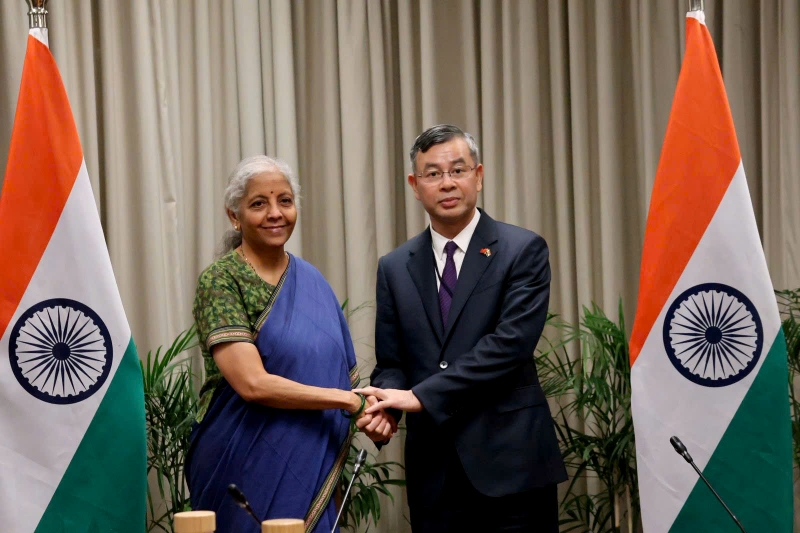
Vietnam's Minister of Finance Ngo Van Tuan had the bilateral talks with India's Minister of Finance Nirmala Sitharaman to discuss the macroeconomic situation, fiscal policy reforms, the promotion of economic and investment cooperation, and the strengthening of financial cooperation between the two countries.
The meeting took place on May 6, in New Delhi, within the framework of the State visit to India by Vietnam's Party General Secretary and State President To Lam.
According to Minister Tuan, India’s development achievements in recent years have provided valuable references and lessons for many developing countries, including Vietnam. For countries with large labor forces such as Vietnam and India, adapting to technological transformation and automation trends will be an important requirement in the coming period.
Regarding bilateral economic and investment cooperation, he noted that the cooperation potential between the two countries remains substantial and has yet to be fully tapped. Although the number of investment projects is relatively large, their average scale remains modest, indicating significant room for both sides to elevate cooperation in a more strategic, long-term, and in-depth manner.
Vietnam expects to expand investment in India, however, the scale of Vietnamese business investment in India remains limited, said Minister Tuan. Therefore, Vietnam proposed that the two sides continue discussions to improve market access conditions and create more favorable conditions for the business communities of both countries.
He expressed his hope that both sides would continue promoting cooperation in a more substantive and effective manner by making full use of existing cooperation mechanisms, enhancing information exchange, sharing experiences and technical support, while also strengthening market connectivity and facilitating trade and investment toward building a transparent, stable, and efficient financial environment.
In addition, the minister proposed that technical-level agencies of both sides study specific solutions to share successful experiences and strengthen capacity in areas where both countries have strengths and priorities, such as tax policy reform, especially for micro, small, and medium-sized enterprises, as well as promoting public investment in ways that improve both scale and efficiency.
India's Minister Sitharaman said she was particularly impressed by Vietnam’s strong interest in and in-depth research on the Indian economy, especially policies related to public investment, tax reform, and support for micro, small, and medium-sized enterprises.
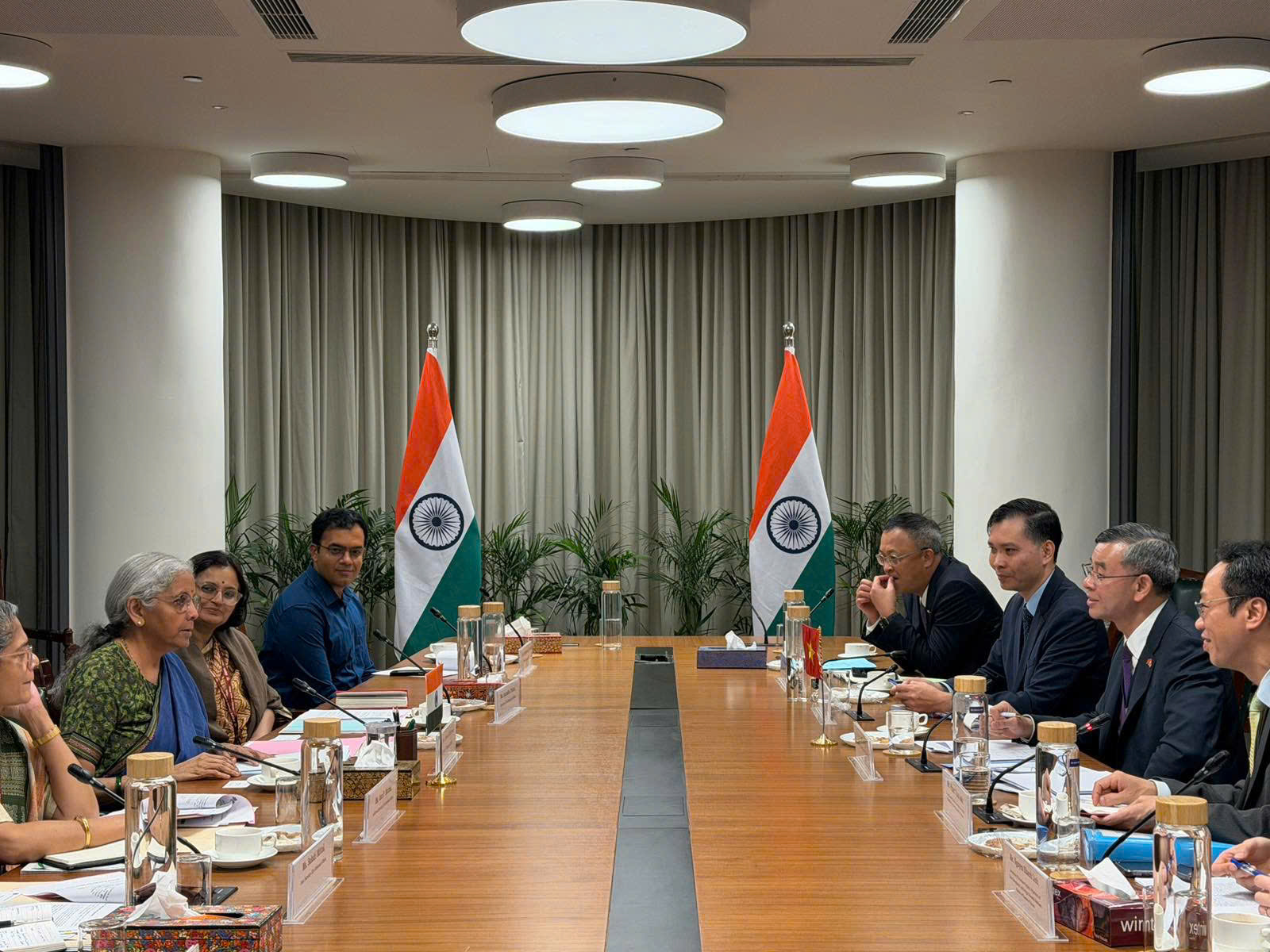
She highly appreciated Vietnam’s development achievements and emphasized that many of Vietnam’s reform orientations are aligned with India’s current development priorities, including institutional reform, improving the business environment, infrastructure development, enhancing the quality of human resources, and controlling inflation while maintaining growth.
Sharing India’s experience in public investment, Minister Sitharaman said that following the Covid-19 pandemic, the Indian Government had chosen public investment as the key driver for economic recovery. According to the minister, infrastructure investment generates strong spillover effects on growth, employment, and the competitiveness of the economy.
Minister Sitharaman noted that India has implemented major reforms to simplify tax procedures, including allowing small businesses to file taxes entirely online without auditor certification, while also applying Goods and Services Tax (GST) registration exemption thresholds for enterprises with low revenue.
India has also accelerated comprehensive digitalization in tax and public financial management under a “faceless” approach, with most declaration, dossier processing, and tax management procedures conducted through digital platforms.
The two ministers also held in-depth discussions on policies supporting micro, small, and medium-sized enterprises (MSMEs).
Two sides also exchanged views on orientations for strengthening economic and financial cooperation in the coming period, focusing on high technology, innovation, digital transformation, clean energy, pharmaceuticals, digital payments, and high-quality human resource training. Both sides agreed to continue promoting information exchange and sharing experiences in tax policy reform, infrastructure development, and improving the efficiency of public investment.

 Google translate