


Vietnam-Japan cooperation must undergo a decisive shift from outsourcing and assembly to a partnership rooted in science, technology, innovation, and Research & Development (R&D).
The two nations need to move beyond a "transferor-recipient" relationship toward a model of joint problem-solving, joint research, joint investment, and shared markets.
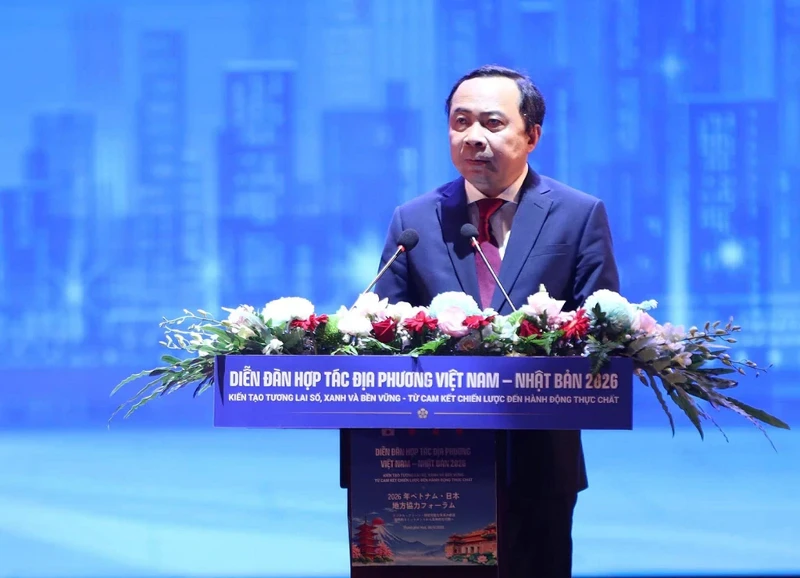
Minister of Science and Technology Vu Hai Quan emphasized at the Vietnam-Japan Local Cooperation Forum 2026, held on September 6.
Japan possesses world-class strengths in science and technology, manufacturing, semiconductors, automation, AI, and green tech. It also boasts extensive experience in urban management, smart infrastructure development, resource efficiency, and disaster response.
Meanwhile, Vietnam offers a dynamic economy, a large market, a young workforce, a high capacity for rapid technology adoption, and a burgeoning innovationn ecosystem. The growing demand for digital transformation, green transition, and smart city development across Vietnamese localities creates vast opportunities for testing and commercializing new technologies.
The key challenge, according to the minister, is to effectively bridge these complementary strengths.
Mr. Quan stressed that Vietnam-Japan cooperation must pivot strongly from processing and assembly to a model based on science, technology, innovation, and R&D. Vietnamese enterprises need to participate more deeply in the design, research, testing, production, and commercialization phases of products, gradually moving up the global value chain.
The two countries should transition from a "transferor-recipient" dynamic to one where they "identify problems together, research together, invest together, and share the market together." Collaboration must generate new technologies, products, and values, with results that are measurable and scalable.
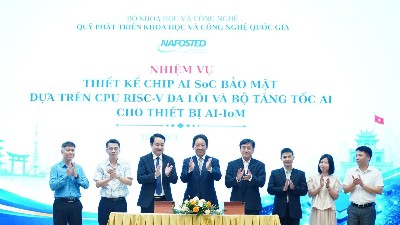
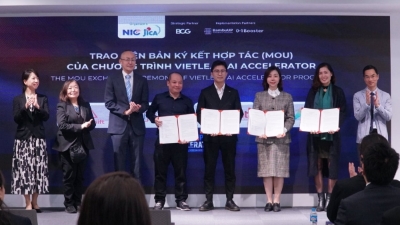
The foundation for this new direction includes the Memorandum of Understanding (MoU) on ICT and digital transformation between the two ministries; five joint semiconductor research projects under the NEXUS Program; and a proposed ODA framework of 50 billion Yen dedicated to digital transformation, green transition, and AI. These serve as the groundwork for both sides to move from policy exchange to the implementation of specific collaborative projects.
Regarding the Ministry of Science and Technology (MST), the minister affirmed a commitment to accompanying localities, businesses, and Japanese partners throughout the entire process—from idea formation to implementation and scaling.
The MST will focus on perfecting mechanisms, policies, and controlled testing frameworks (sandboxes); connecting local authorities with universities, businesses, and investment funds from both countries; and supporting the identification and execution of research and technology transfer missions.
The MST also stands ready to coordinate in selecting priority localities and sectors, mobilizing resources from central and local governments, businesses, and international partners, while monitoring and evaluating specific outcomes.





 Google translate