


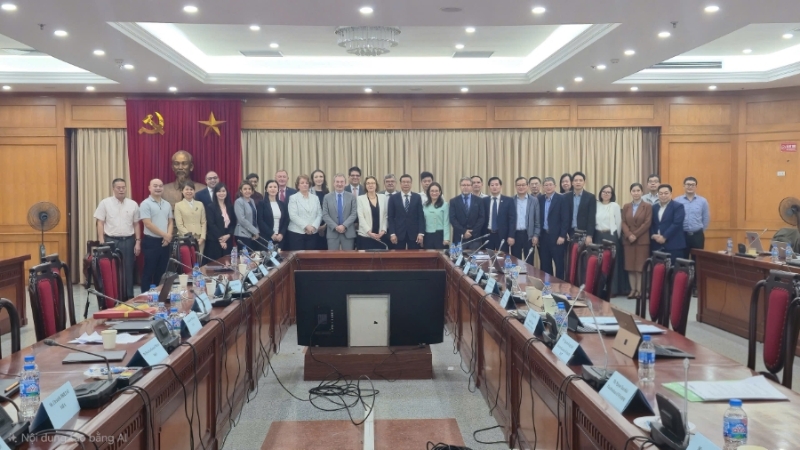
A mission from the International Atomic Energy Agency (IAEA) has identified two "good practices" in Vietnam that could serve as a model for other countries developing nuclear power.
The mission also acknowledged that Vietnam is approaching its nuclear power program methodically, in accordance with international standards, demonstrating a determination for responsible and effective implementation.
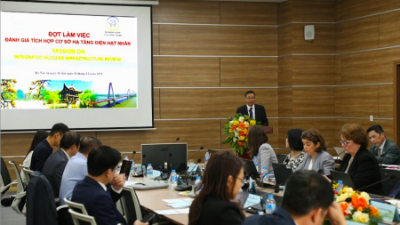
During nearly two weeks of working in Vietnam from December 1 to 11, IAEA experts on the Integrated Nuclear Infrastructure Review (INIR) mission engaged in direct exchanges and discussions with representatives of ministries, sectors, and enterprises to objectively and comprehensively review, examine, and assess all 19 areas of nuclear power infrastructure.
At the closing session on December 11, the INIR mission concluded that Vietnam has made significant strides to restart and accelerate the progress of the Ninh Thuan Nuclear Power Plant Project as well as the development of necessary infrastructure.
Many solutions and decisions have been adopted at all levels, including by the National Assembly, the Prime Minister, ministries, and relevant agencies. In 2025, Vietnam promulgated the amended Law on Atomic Energy and approved specific mechanisms to facilitate the implementation of the nuclear power project.
The INIR mission's preliminary draft report offered 38 recommendations and 13 suggestions, emphasizing areas requiring further action to benefit Vietnam. These include strengthening the legal and regulatory framework for radiation safety, nuclear safety, security, and safeguards; implementing plans to enhance human resource capacity; finalizing preparations for the bidding and construction phases; developing a national strategy on the nuclear fuel cycle and radioactive waste management; and updating coordination mechanisms among all stakeholders.
The expert group acknowledged two "good practices" of Vietnam that could serve as experience for other countries developing nuclear power.
First, the National Assembly's passing of Resolution 189/2025/QH15 demonstrates a strong political commitment to the nuclear power program. It simultaneously establishes specific mechanisms to simplify investment procedures, accelerate site clearance, expand capabilities for capital mobilization and contractor selection, and strengthen coordination among ministries, sectors, and localities. This is a practice the IAEA views as a decisive factor in ensuring the progress and sustainability of the program.
Second, Vietnam has effectively leveraged its existing experience and environmental monitoring network to serve the nuclear power project preparation process. This is a practice recommended by the IAEA as it helps improve the quality of environmental assessments, increase transparency, and reduce project preparation time.
These two practices demonstrate that Vietnam is approaching the nuclear power program in a methodical manner, consistent with international standards, and showing a determination for responsible and effective implementation.
According to the schedule, in the first quarter of 2026, the IAEA and Vietnam will coordinate to finalize the draft INIR report. In the second quarter of 2026, the IAEA will send the official report to the Government of Vietnam after completing the necessary procedures.

 Google translate