


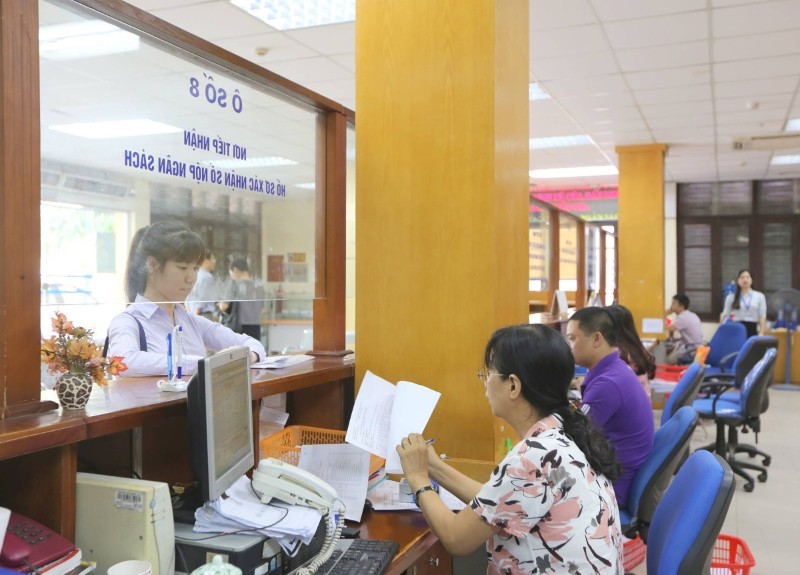
The draft resolution aims to ease financial burdens for non-compliant taxpayers seeking to settle outstanding administrative obligations. Enterprises and organizations that fully submit missing tax returns will receive reduced fines equal to 30 percent, 50 percent, or 70 percent of standard penalties prescribed under Article 13 of Decree 125/2020/ND-CP, depending on the completion timeframe.
Specifically, taxpayers completing missing filings from the effective date of the Resolution through June 30, 2027, will be subject to 30 percent of current fines. Fines will be set at 50 percent for filings completed between July 1, 2027, and December 31, 2027, and 70 percent for filings finalized between January 1, 2028, and June 30, 2028.
For business households paying taxes under the declaration method, submitting all missing filings during the Resolution period will entitle them to a 50 percent penalty reduction.
The drafting agency emphasized that fine reductions will not apply to cases showing signs of tax evasion or taxpayers undergoing tax inspection, investigation, prosecution, or trial for tax fraud or illegal invoice usage.
Furthermore, the draft resolution introduces a special mechanism regarding filing obligations for taxpayers that have ceased actual operations but have not completed tax identification number deactivation procedures.
Taxpayers will be exempt from submitting tax returns for tax periods with no tax liabilities arising during inactive periods at registered addresses. A similar mechanism is proposed for taxpayers whose business registration certificates, cooperative registration certificates, or operational licenses have been revoked by competent authorities prior to finalizing tax code deactivation.
The Ministry of Finance pointed out that requiring inactive businesses to submit historical tax returns for periods without revenue, expenses, or invoices generates excessive compliance costs for enterprises while burdening tax authorities with redundant administrative processing. High compliance costs and accumulated penalties currently deter inactive taxpayers from voluntarily settling obligations to finalize tax code termination.
Statistics from the Ministry of Finance show that tax authorities processed tax code terminations for 777,835 cases during the first ten months of 2026.
However, given the substantial volume of lingering backlog cases, special relief policies remain critical to streamlining tax code restoration and formal deactivation across the business sector.









 Google translate