Dear readers,
The relationship between Vietnam and the Russian Federation has a rich history of over 76 years of development, since the establishment of diplomatic relations between the Democratic Republic of Vietnam and the Soviet Union in January 1950. This solid foundation, based on high-level political trust and tested through history, allows the two countries to continue to strengthen and constantly develop their bilateral relations, culminating in the Comprehensive Strategic Partnership established in July 2012.
The State visit by Party General Secretary and State President To Lam to the Russian Federation in September provided additional momentum to promote the Vietnam-Russia Comprehensive Strategic Partnership. The joint statement on further strengthening the Partnership in the new era, issued during the visit, affirmed that: “Both sides continue to pay special attention to developing economic and trade cooperation; closely and effectively coordinating within the framework of the Intergovernmental Committee on Economic-Trade and Scientific-Technological Cooperation, its subcommittees, and working groups, to implement the Master Plan for Vietnam-Russia Cooperation Development until 2030, along with other joint cooperation agreements aimed at increasing bilateral trade turnover, including promoting cooperation in areas such as science and technology, including AI, the digital economy, green energy, the marine economy, and climate change response.”
This is an important orientation for the two countries to continue developing bilateral cooperation in economics-trade, science-technology, and many other fields, especially in energy, including nuclear energy.
During a reception for the Chairwoman of the Federation Council of the Federal Assembly of Russia, Ms. Valentina Matviyenko, in Hanoi on November 12, during her official visit to Vietnam from November 11-13, Party General Secretary and State President To Lam noted that it is necessary for the two countries to seize opportunities to continually promote and expand cooperation in favor of their development goals, enhance each other’s capacity, autonomy, and self-reliance, and make contributions to global peace, stability, and development.
In reality, the economic-trade and scientific-technological cooperation between Vietnam and the Russian Federation has achieved a host of specific results, with the effective operation of the Vietnam-Russia oil and gas joint venture (Vietsovpetro) and the Vietnam-Russia Joint Venture Bank (VRB) being typical examples.
Over the past 20 years, VRB has superbly fulfilled its mission as a “bridge” connecting the two economies in general and the businesses of both in particular.
In her exclusive interview with Vietnam Economic Times / VnEconomy, Ms. Fokina Anastasia, Chairwoman of Board of Members at VRB, said: “Today, the agreements and joint statements endorsed at the highest level, reaffirming the special friendship and Comprehensive Strategic Partnership between Vietnam and Russia, provide a renewed foundation for cooperation. Their priorities span trade and investment as well as areas such as energy, science and technology, and tourism. The ambition to raise bilateral trade to $15 billion by 2030, an objective set during the September State visit to Russia by Party General Secretary and State President To Lam, illustrates the scale of the opportunity.”
The effective cooperation between the two countries in trade and investment can be measured by concrete figures. In 2025, bilateral trade turnover reached nearly $4.77 billion. As of October 2026, Russia had 253 investment projects in Vietnam, with total registered capital of some $1.09 billion, ranking it 28th among 154 countries and territories investing in Vietnam. Meanwhile, Vietnam has 19 active investment projects in Russia, with a total registered capital of $1.64 billion, ranking it fourth among 87 countries and territories where Vietnam has investment projects.
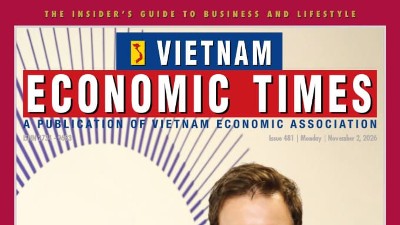
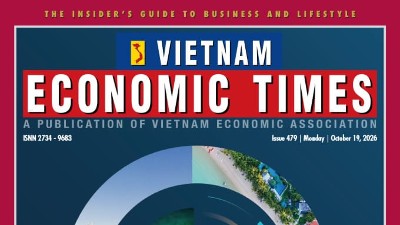
To provide readers with the latest information on Vietnam-Russia economic cooperation, our Cover Story in this edition looks back at the development of this cooperation, with exclusive interviews with the Ambassador of the Russian Federation to Vietnam, H.E. Gennady Stepanovich Bezdetko, Ms. Fokina Anastasia from VRB, and a representative from the Russian Federation’s National Nuclear Energy Corporation (Rosatom) serving as a focal point.
Warmest regards
Dr. CHU VAN LAM
CHAIRMAN OF THE EDITORIAL BOARD