
Dear readers,
The Law on Petroleum No. 10/2026/QH16, passed by the 16th National Assembly on August 23, 2026, and set to take effect on March 1, 2027, will serve as a crucial legal foundation for the development of Vietnam’s oil and gas industry, thus contributing to the realization of the goal of annual double-digit economic growth during the initial phase of the country’s new development era.
The economic growth targets for the 2026-2030 period present two important tasks for the oil and gas industry: ensuring a stable energy supply and enhancing its added value, productivity, and capacity.
The quality of growth in Vietnam’s oil and gas industry needs to be viewed across the entire chain, from exploration, extraction, and processing (gas, petrochemicals, and the chemical industry) to technical services, with the Vietnam National Industry - Energy Group (Petrovietnam), a multi-sector corporation with a large-scale business ecosystem, acting as the leading player.
Petrovietnam’s development strategy to 2030 with a vision to 2050 defines three pillars: energy, industry, and high-quality technical services, with science, technology, and innovation positioned at the center of the Group’s new growth model. This serves as an important basis for promoting and developing the country’s existing oil and gas potential and capacity, increasing links between segments, and selecting new fields that align with technological strengths, market capabilities, and the ability to mobilize capital and technology, as well as the policy of joint ventures, partnerships, and international cooperation.
The actual operations of the country’s oil and gas industry in recent years have shown that, alongside significant advantages and achievements, there remain many obstacles, inadequacies, and difficulties and challenges. These include obstacles that slow down projects, limit the attraction of capital and technology and the effectiveness of oil and gas investments; difficulties regarding mechanisms and technologies in exploration, extraction, and deep processing; as well as the challenge of establishing mechanisms that harmonize interests in international cooperation to attract foreign investment and technology, while ensuring national energy security and contributing to the protection of Vietnam’s sovereignty, sovereign rights, and legitimate interests at sea.
Furthermore, a major issue arises: how to convert the opportunities presented by the Law on Petroleum 2026 into practical projects, with priority placed on removing bottlenecks in mechanisms, procedures, and capital mobilization, and leveraging public-private partnerships and international cooperation to rapidly and sustainably develop the oil and gas industry in the new era.
On October 29 in Hanoi, with the support of Petrovietnam and the PetroVietnam Gas JSC, Tap chi Kinh te Viet Nam / Vietnam Economic Times / VnEconomy hosted a seminar entitled “Development of Vietnam’s Oil and Gas Industry: Ensuring Sustainable Growth.” At the event, policymakers, regulatory agencies, experts, scholars, scientists from both domestic and international backgrounds, along with representatives from companies operating in the oil and gas industry, focused discussions on how to address the aforementioned issues while offering many solutions for the sustainable development of the country’s oil and gas industry in the new era.
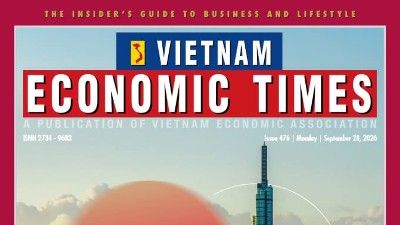
To further amplify the outcomes of the seminar, our Cover Story in this edition introduces keynote speeches presented at the event, which were seen as a focal solution to the core question: “Where should Vietnam’s oil and gas industry prioritize investment and how should it develop the value chain to create additional domestic value, ensure energy security, and maintain sustainable growth?”
Warmest regards
Dr. CHU VAN LAM
CHAIRMAN OF THE EDITORIAL BOARD