


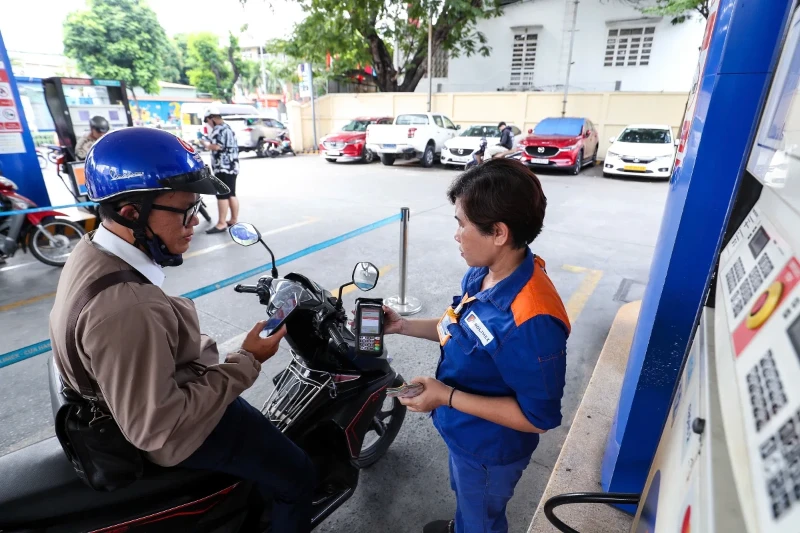
The Government has issued a resolution, extending preferential import tax, environmental protection tax and value-added tax policies for gasoline, oil products, fuel-production inputs and aviation fuel.
Under the new resolution, the preferential import tax measures introduced under Resolution No. 25/2026/NQ-CP and Decree No. 72/2026/ND-CP will be extended. The policy is aimed at diversifying fuel supply sources and enabling businesses to import from markets beyond ASEAN and South Korea, helping reduce dependence on a limited number of suppliers and strengthen energy security.
Under Decree 72, the preferential import tariff on unleaded motor gasoline was reduced from 10% to 0%, while the same rate applies to certain gasoline-blending materials, including naphtha and reformate.
For diesel, fuel oil, aviation fuel and kerosene, the preferential import tariff was cut from 7% to 0%. Tariffs on certain petrochemical inputs, including xylene, condensate and p-xylene, were also reduced from 3% to 0%, while the rate for other cyclic hydrocarbons was cut from 2% to 0%.
The Government will also extend environmental protection tax and VAT policies under Resolution No. 19/2026/QH16 through December 31, 2026. Accordingly, the environmental protection tax on gasoline, excluding ethanol, as well as diesel, kerosene, fuel oil and aviation fuel, will remain at zero.
Meanwhile, gasoline, diesel, kerosene, fuel oil and aviation fuel will remain subject to a VAT mechanism under which businesses are not required to declare and pay output VAT but may deduct input VAT.
Excise tax on gasoline will continue to be governed by the 2025 Law on Special Consumption Tax and related regulations, with current rates of 10% for conventional gasoline, 8% for E5 gasoline and 7% for E10 gasoline.


 Google translate