


Human resources represent one of the hurdles Vietnam must resolve expeditiously if nuclear technology is to achieve its full potential in the country.
While atomic energy is deployed extensively across the globe in fields ranging from healthcare and industry to environmental protection, Vietnam's real-world utilization remains constrained despite mastering several key foundational techniques.
This bottleneck stems primarily from a severe shortage of qualified personnel. In addition, public perception remains skewed—most people associate "nuclear" strictly with explosives and atomic bombs, unaware that nuclear technology actively drives efficiency across diverse socio-economic sectors.
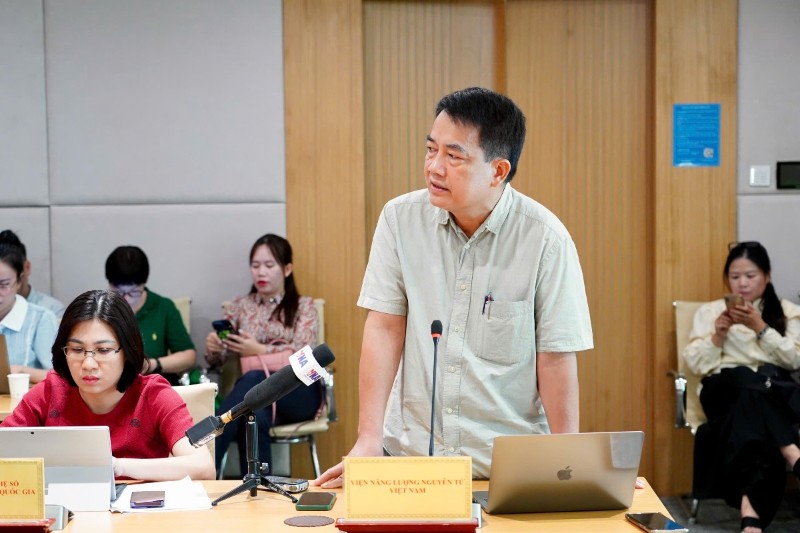
Dr. Tran Chi Thanh, Director of the Vietnam Atomic Energy Institute (VINATOM) under the Ministry of Science and Technology, highlighted these talent development constraints during the ministry's regular press briefing in September.
Against the backdrop of reviving two major nuclear power projects—Ninh Thuan 1 and Ninh Thuan 2—and potentially progressing toward small modular reactor (SMR) deployments, Vietnam is highly likely to face a sharp human resource crunch.
In Western facilities, operating a nuclear reactor typically requires between 600 and 700 personnel depending on the underlying technology. Under Russian reactor designs, staffing requirements can climb to nearly 1,000 workers per plant.
Vietnam previously dispatched nearly 100 specialists to Russia and Japan for advanced training in nuclear power. Following their return, however, a substantial portion migrated to other sectors. Only roughly 30% of those trainees remain active in the nuclear domain today, Dr. Thanh revealed.
Nevertheless, the Ministry of Education and Training continues to send personnel to Russia for specialized instruction. While Russia offers Vietnam approximately 1,000 university scholarships annually across multiple disciplines, Vietnam consistently underutilizes this quota. In the nuclear field specifically, the country dispatched only about 10 candidates this year.
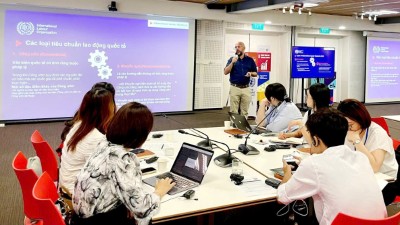
"Naturally, selection must be rigorous; we must identify truly capable individuals for training. Nuclear is an exceptionally challenging discipline requiring advanced proficiency in physics, chemistry, mathematics, and interdisciplinary engineering. It cannot be taught through mass training programs," Dr. Thanh explained.
Attracting high-caliber talent into the nuclear industry remains a formidable challenge, regulatory officials conceded. Yet, Vietnam must secure as an immediate prerequisite an engineering workforce fully capable of operating domestic nuclear power infrastructure.
Dr. Thanh estimated that a standard nuclear power plant requires roughly 1,000 personnel. The vast majority—up to 700 to 800 positions—comprises operating technicians, engineering crews, and auxiliary support staff, while the core specialized scientific and nuclear engineering cadre accounts for around 200 to 300 personnel.




 Google translate