


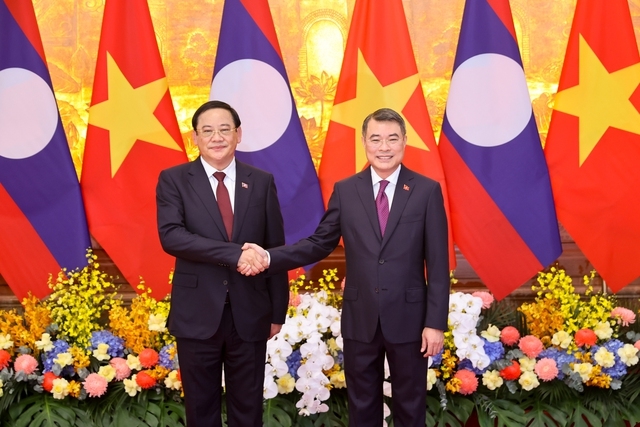
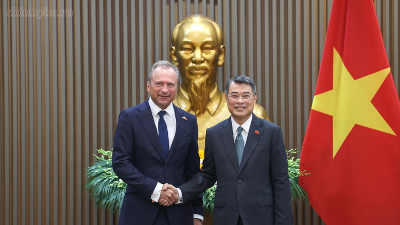
Vietnamese Prime Minister Le Minh Hung and his Lao counterpart Sonexay Siphandone have reaffirmed the consistent policy of giving top priority to consolidating and nurturing the great friendship, special solidarity, comprehensive cooperation, and strategic cohesion between the two countries, according to a report from the Government News.
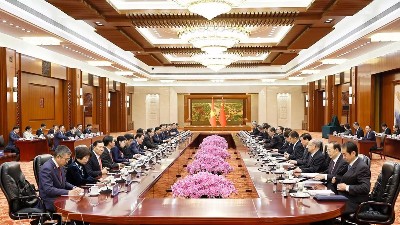
During their summit meeting in Hanoi on June 7, on the occasion of Lao PM Sonexay Siphandone’s official visit to Vietnam and attendance at the 3rd ASEAN Future Forum to be hosted by Vietnam, the two PMs noted with pleasure at the increasingly substantive and effective growth of bilateral ties over the past time.
Both sides agreed to continue the exchange of visits and contacts at all levels; serious implementation of high-level agreements, including the Inter-governmental Agreement on bilateral cooperation for the period 2026-2030, security and defense cooperation plan.
The two sides agreed to bolster cooperation in combating transnational crime and illegal natural resource exploitation; support each other to maintain political stability and social safety.
On economic front, the two Prime Ministers agreed to work together in implementing economic cooperation agreements in a bid to raise the two-way trade to $10 billion by 2030.
The two sides pledged to give priority to promoting both soft and hard infrastructure connectivity, particularly strategic transport connectivity projects such as Hanoi-Vientiane expressway and Vung Ang-Vientiane railway. Vietnam vowed to assist Laos in realizing its goal to become the logistics hub of the region.
Both sides also agreed to further improve the effectiveness of cooperation in the fields of education and training, science and technology, and high-quality human resource training.
The two countries agreed to soon establish Laos-Vietnam Friendship University in Laos, boost cultural, tourism and sports exchanges, and expand cooperation in agriculture, e-commerce, digital transformation, and innovation.
On multilateral cooperation, the two Prime Ministers agreed to continue close coordination and mutual support at multilateral forums, especially ASEAN, the United Nations, and Mekong Subregion mechanisms.
Both sides vowed to work together to maintain ASEAN's common stances over strategic issues related to peace, stability, and development in the region, including the East Sea and Mekong water resources issues.
The two sides agreed to foster cooperation in responding to global challenges like climate change, cybersecurity, energy security, water security, and transnational crime.
Following the meeting, the two Prime Ministers witnessed the exchange of four cooperation documents in the fields of transport, education, finance, and ethnic and religious affairs.
 Google translate