


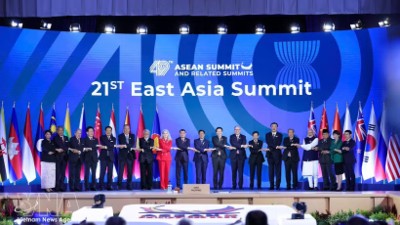
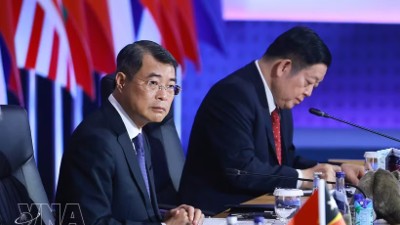
At the 29th ASEAN + 3 Summit, held in Manila (the Philippines) on November 17, within the framework of the 49th ASEAN Summit and related meetings hosted by the Philippines, Vietnamese Prime Minister Le Minh Hung proposed three key areas of cooperation to enhance resilience, build a new vision, and leverage the strength of regional mechanisms towards a common development space in East Asia.
The ASEAN + 3 comprises 11 ASEAN member States and China, Japan and the Republic of Korea (RoK).
The summit affirmed that ASEAN + 3 continues to play an important role in promoting peace, stability, and prosperity in East Asia, with economy, trade, investment, and finance as the main pillars of cooperation.
In 2025, the total bilateral trade turnover among the ASEAN + 3 is expected to reach $1.4 trillion, an increase of 13.7% compared to 2024, while direct investment from China, Japan, and South Korea into ASEAN is projected to reach $44.8 billion.
At the summit, leaders agreed to continue effectively implementing the ASEAN + 3 Work Plan for 2023-2027, promoting economic integration, and enhancing the effective implementation of the Regional Comprehensive Economic Partnership (RCEP) and trade agreements between ASEAN and each partner.
The summit also emphasized the need to strengthen crisis response capabilities and resilience to external shocks; promote financial-monetary cooperation, energy security, food security, digital transformation, logistics, and supply chains.
Three focal points to promote asean 3 cooperation
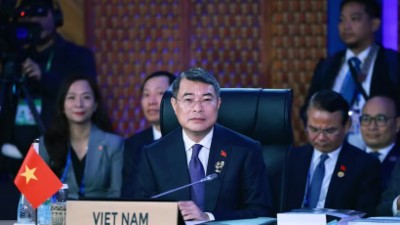
Speaking at the summit, Prime Minister Le Minh Hung affirmed that over nearly three decades of development, ASEAN + 3 has become one of the main drivers of East Asian cooperation.
Amid profound global and regional changes, the Prime Minister emphasized that ASEAN 3 needs to improve forecasting efficiency, proactively prevent and respond to new challenges; and proposed three focal points for future cooperation.
Firstly, enhancing the region's resilience and proactive risk prevention. The Prime Minister suggested strengthening economic and trade linkages, effectively exploiting existing economic and free trade agreements; and boosting connectivity and coordination across finance, energy, food, and logistics sectors to ensure supply when necessary.
Along with effectively implementing the emergency rice reserve fund, the Prime Minister proposed expanding cooperation to other essential goods such as agricultural materials, while enhancing coordination to ensure energy security.
Secondly, building a new vision for ASEAN + 3 cooperation. Towards the 30th anniversary of ASEAN + 3 in 2027, the Prime Minister proposed researching and building a cooperation vision for the new phase, aligned with the ASEAN Community Vision 2045 and better meeting the region's development needs.
Thirdly, leveraging the combined strength of regional cooperation frameworks. The Prime Minister called for reviewing and linking ASEAN+3 initiatives with ASEAN+1 cooperation, trilateral cooperation among China, Japan and the RoK, and bilateral frameworks, so as to help maximise the strengths and resources of each mechanism towards building a common development space in East Asia.
The Prime Minister also emphasized the need for persistent dialogue, trust-building, and peaceful resolution of differences based on international law, including the United Nations Charter, the United Nations Convention on the Law of the Sea 1982 (UNCLOS 1982), and the Treaty of Amity and Cooperation in Southeast Asia (TAC).
At the conclusion of the summit, leaders adopted the Declaration on Maritime Trade and Logistics Connectivity and the Declaration on strengthening energy and food security resilience against external shocks and supply chain disruptions.
 Google translate