


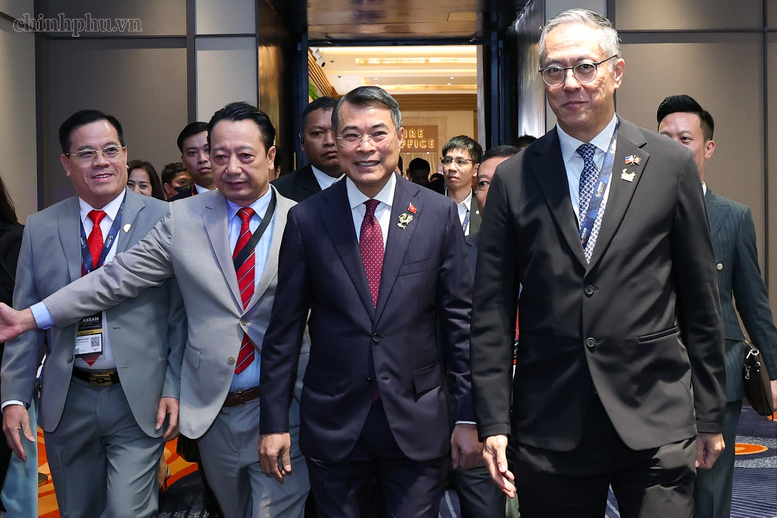
Prime Minister Le Minh Hung has proposed four strategic connectivity priorities and four action-oriented directions to advance regional infrastructure development, calling for a shift from commitments to concrete projects and paving the way for a modern and sustainable ASEAN economy by 2040.
The Vietnamese Government leader was speaking at the ASEAN Business and Investment Summit (ABIS) 2026 on November 14 shortly after his arrival in Manila, the Philippines to attend the 49th ASEAN Summit and related high-level meetings from November 14 to 17 at the invitation of Philippine President Ferdinand Romualdez Marcos Jr., who serves as ASEAN Chair for 2026.
Under the theme, “ASEAN: Creating Our Shared Future in the Age of Intelligence,” ABIS 2026 focuses on key issues including economic integration, trade and investment, energy and food security, infrastructure development, digital transformation, artificial intelligence, and inclusive growth.
According to the Vietnam Chamber of Commerce and Industry (VCCI), the event has brought together more than 2,000 delegates, around 10 world leaders, and over 40 global experts.
Four strategic connectivity priorities
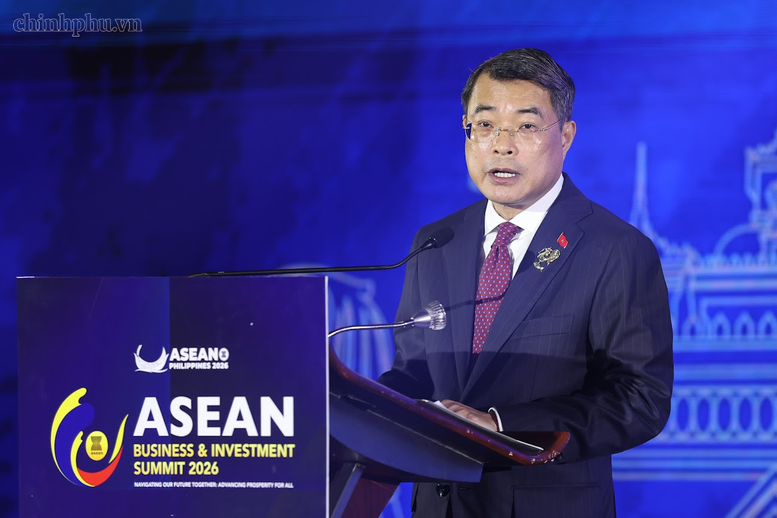
Speaking at a discussion session on building infrastructure for the future ASEAN economy toward 2040, PM Hung stressed the need to create a seamlessly connected, synchronized, modern, smart, and sustainable regional connectivity space. Such a framework, he said, would enhance competitiveness, foster innovation, and unlock new drivers of growth.
With ASEAN's population approaching 700 million and the region's GDP exceeding $4.2 trillion in 2025, infrastructure demand continues to rise. According to estimates by the Asian Development Bank (ADB), ASEAN requires around $210 billion in infrastructure investment annually.
The PM noted that ASEAN's challenge is not merely to mobilize more capital or build more infrastructure projects, but to set the right priorities, make efficient use of resources, and successfully implement regional infrastructure initiatives.
According to PM Hung, the ASEAN Connectivity Strategic Plan 2026-2035 should focus on four key priorities:
First, cross-border transport and logistics connectivity. ASEAN should move beyond developing isolated infrastructure projects and instead build integrated economic corridors that connect transportation networks, manufacturing hubs, logistics systems, trade flows, and smart cities. The region should also strengthen the quality, sustainability, and climate resilience of infrastructure to address emerging risks.
Second, energy connectivity. ASEAN should accelerate regional energy infrastructure integration, diversify energy supplies, and promote a sustainable energy transition. The ASEAN Power Grid (APG) is identified as a strategic infrastructure project that can help ensure energy security, economic stability, and sustainable development across the region.
Third, digital connectivity. The region should build a secure, seamless, and inclusive digital ecosystem. The ASEAN Digital Economy Framework Agreement (DEFA), signed at this summit, is expected to drive breakthroughs in policy harmonization, lower transaction costs, support business productivity, and enable deeper participation in regional and global value chains.
Fourth, institutional and people-to-people connectivity. ASEAN should enhance the harmonization of standards, simplify customs procedures, strengthen the ASEAN Single Window mechanism, improve the effectiveness of the ASEAN Customs Transit System (ACTS) and the ASEAN Authorized Economic Operator Mutual Recognition Arrangement (AAMRA), while also promoting cooperation in education, science and technology, and the exchange of highly skilled human resources.
Concrete projects and leveraging the private sector's role
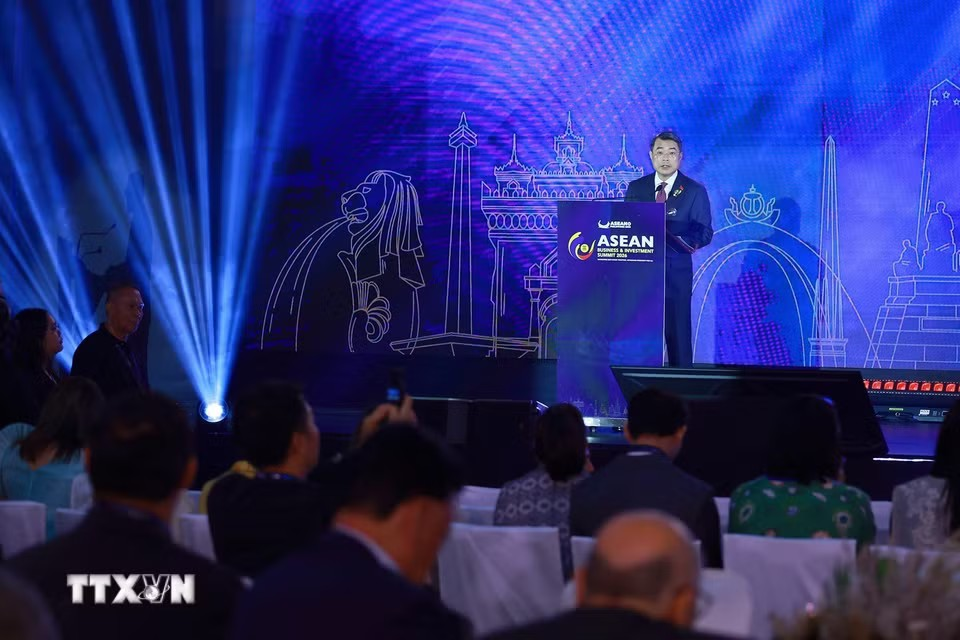
To translate these priorities into reality, PM Hung stressed that ASEAN must act collectively and move decisively from vision and commitments to concrete programs and projects. He proposed four key action directions.
First, develop an ASEAN Infrastructure Pipeline through 2040. This would involve identifying strategic connectivity projects in cross-border transport, logistics, power grids, digital infrastructure, and sustainable smart cities, while clearly defining objectives, funding sources, implementation timelines, financing arrangements, and project readiness.
Second, strengthen coordination on cross-border projects. ASEAN member states should work closely together from the planning and design stages through implementation, while harmonizing technical standards, legal frameworks, and mechanisms for sharing costs and benefits.
Third, build a regional project preparation and financing ecosystem. This includes expanding technical assistance, feasibility studies, financial advisory services, and risk assessments, while fostering stronger links among governments, development banks, investment funds, financial institutions, and the private sector.
Fourth, recognize the private sector as a genuine development partner. Businesses should be given greater opportunities to participate in infrastructure development, contributing not only capital but also technology, innovation, management expertise, and operational efficiency.
Vietnam’s development vision
Sharing Vietnam's development vision, PM Hung said the Government is striving to achieve double-digit economic growth in 2026 and the years ahead, identifying modern and integrated infrastructure development as one of the country's key strategic breakthroughs and a major driver of rapid, sustainable growth.
Vietnam is accelerating the expansion of its expressway network, seaports, key railway projects, international airports, power generation and transmission infrastructure, while increasing investment in energy, logistics, and digital infrastructure.
To date, 5G services cover more than 90% of the population, and Vietnam is actively conducting research and development on 6G technology.
The Prime Minister affirmed that, as a country located at the crossroads of major regional economic corridors and supply chains, Vietnam is committed to developing infrastructure in tandem with strengthening ASEAN connectivity. He pledged that Vietnam will continue working closely with businesses and international partners to remove barriers, improve the investment and business environment, and create favorable conditions for sustainable growth and regional integration.

 Google translate