


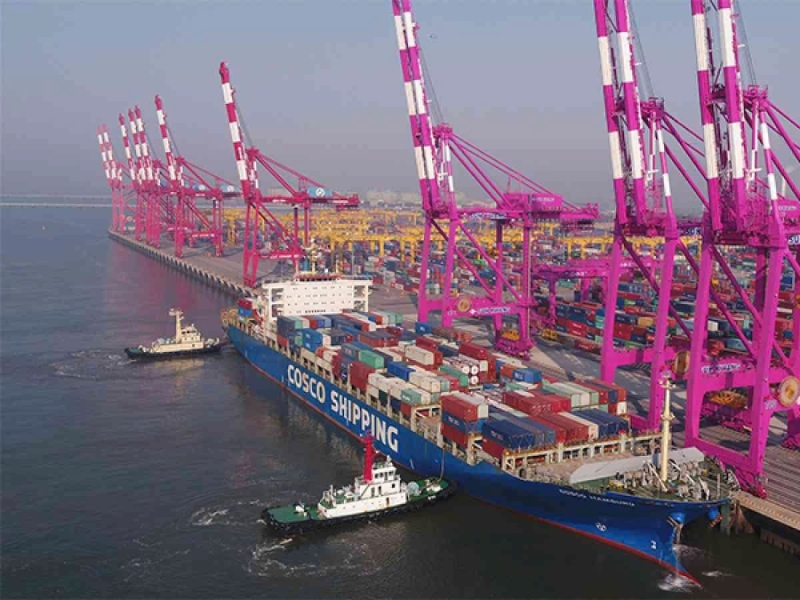
With bilateral trade turnover reaching $81.5 billion in 2024 and total cumulative direct investment of approximately $92 billion, South Korea continues to solidify its position as one of Vietnam's leading economic partners.
These figures underscore the increasingly deep economic integration between the two nations. Amidst a robust restructuring of global supply chains, Vietnam-South Korea economic cooperation is clearly shifting from expanding in scale to enhancing quality, with a particular focus on high-tech industries, energy, and logistics.
Providing an overview of bilateral trade and investment, Mr. Nguyen Manh Dong from the Department of Foreign Markets (Ministry of Industry and Trade - MOIT) stated that South Korea is currently Vietnam's largest foreign investor. As of 2024, cumulative registered capital has reached $92 billion across more than 10,000 active projects.
In terms of trade, South Korea ranks as Vietnam's third-largest trading partner, trailing only China and the United States. It is also Vietnam's third-largest export market and its second-largest source of imports.
In 2024, total import-export turnover between the two countries hit $81.5 billion. Specifically, Vietnam’s exports to South Korea totaled $25.6 billion, while imports from South Korea reached $55.9 billion, resulting in a trade deficit of $30.3 billion for Vietnam.
A standout feature of recent economic relations is the distinct qualitative shift in Foreign Direct Investment (FDI). Major conglomerates such as Samsung, LG, SK, Hanwha, and LS are expanding their footprints into high-value sectors including electronics, semiconductors, batteries, energy, data centers, new materials, and research and development (R&D).
Speaking at the workshop "Promoting Vietnam’s Trade Cooperation with Japan and South Korea in the New Era," recently organized by MOIT in Ho Chi Minh City, Mr. Nguyen Duy Kien, also from the Department of Foreign Markets, highlighted this qualitative transformation in investment flows.
According to Mr. Kien, this shift is closely linked to the global supply chain restructuring strategies of South Korean enterprises. Vietnam is increasingly being chosen not just for its cost advantages, but for its stable investment environment and its ability to integrate deeper into the technological value chain.
Currently, more than 70% of Vietnam's exports to South Korea consist of high-tech products, electronic components, and supporting products for the semiconductor industry. This represents a significant transformation compared to 10–15 years ago, when Vietnam’s export structure was dominated by traditional goods such as textiles, footwear, and agricultural products.
“Major corporations like Samsung, SK, LG, Hanwha, and LS are not only investing on a large scale but are also focusing on cutting-edge fields. This includes electronics, semiconductors, Artificial Intelligence (AI), R&D, energy, batteries, data centers, new materials, automation, and energy-saving solutions,” Mr. Kien said.


 Google translate