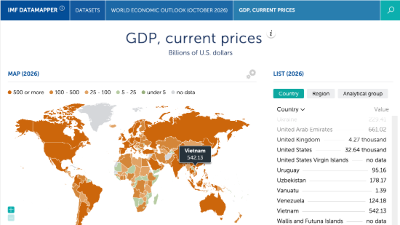
Vietnam’s nominal per capita gross domestic product (GDP) is forecasted to reach $5,259 this year, allowing the country to overtake Indonesia and climb to fifth place in ASEAN, according to the International Monetary Fund’s (IMF) October 2026 World Economic Outlook report.
The Ministry of Finance estimated that the policy would reduce budget revenue by approximately VND6,700 billion (more than $260 million) over two years.
The Ministry of Education and Training (MoET) is developing the “Strategic Framework for Higher Education Development for the 2021-2030 Period and Vision to 2045”, in which higher education is to become a core competitive strength of Vietnam and a key driving force of the country’s development.
Social investment capital totaled VND2.892 quadrillion ($126.4 billion) in 2021, up 3.2 per cent year-on-year. Though this was the lowest increase in many years, it was a positive result amid Covid-19. While capital in the State and FDI sectors both declined, capital in the non-State sector increased.
Nearly 120,000 businesses withdrew from the market in 2021, an increase of 17.8 per cent against 2020, most of which were established for less than five years and had low capital scale. There were nearly 117,000 newly-registered businesses during the year, down 13.4 per cent.
GDP growth reached only 2.58 per cent in 2021, with the agriculture, forestry, and fisheries sector and the industry and construction sector being pillars of the economy, growing 2.9 per cent and 4.05 per cent, respectively. Medical and social aid, banking, finance and insurance, and information and communication also saw relatively good growth.
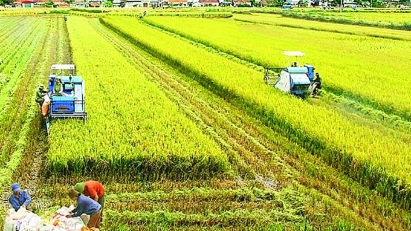
Digital transformation in the agriculture sector, which focuses on developing smart agriculture and applying digital technology to automate production and business, will help tens of millions of farming households in Vietnam access knowledge and new ways of thinking and be in line with development trends in the country as a whole.