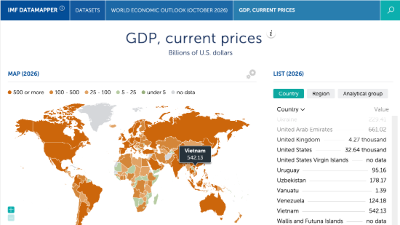
Vietnam’s nominal per capita gross domestic product (GDP) is forecasted to reach $5,259 this year, allowing the country to overtake Indonesia and climb to fifth place in ASEAN, according to the International Monetary Fund’s (IMF) October 2026 World Economic Outlook report.
The Ministry of Finance estimated that the policy would reduce budget revenue by approximately VND6,700 billion (more than $260 million) over two years.
The Prime Minister has requested that all citizens aged over 18 receive a second jab of Covid-19 vaccine before December 31. He also asked that a second dose for those aged 12 to 18 be administered during January, while those aged over 18 should receive their booster shot during the first quarter of the new year.
Despite acknowledging that the resilience and resources of the State, businesses, and people have declined significantly, the Ministry of Finance has nonetheless set a target of State budget revenue reaching over VND1.4 quadrillion ($61.4 billion) next year, an increase of 5 per cent compared to the 2021 estimate. The ministry outlined six key solutions, including accelerating the restructuring, equitization, and divestment of State capital in enterprises, and building a favorable, transparent business environment, especially in taxation, customs, and State treasury.
Prime Minister Pham Minh Chinh attended a breaking ground ceremony for two key transport infrastructure projects in northern Hung Yen province costing VND4.4 trillion ($192 million) on December 23. The projects will connect Hung Yen with Hanoi and other localities in the Northern Key Economic Region and contribute to it becoming a modern industrial province.
To achieve the ambitious goals set out in the national strategy on rural water supply and sanitation to 2030 and vision to 2045, UNICEF has recommended that Vietnam focus on three core issues. The first is smart investment, which is both sufficient in quantity and appropriate. Vietnam will not be able to build a green, circular economy if it ignores the issue of clean water and rural sanitation.
The “South-South cooperation to replicate value chain initiatives to adapt to climate change” project, which has been implemented in Laos, Cambodia, China, and Vietnam, contains 60 effective agricultural production models for deployment and replication. Vietnam contributed 42 of these models.
Seventy ministries, branches, and localities have completed bringing eligible public services to Level 4 online, reaching a total of 96 per cent in the country as a whole as of December 15. Vietnam has set a target of 80 per cent of administrative documents being processed entirely online by 2024.