


Against the backdrop of intensifying tariff barriers and trade defense measures deployed by the United States, clearly identifying opportunities and headwinds while implementing comprehensive breakthrough solutions serves as the key for Vietnamese goods to expand sustainably.
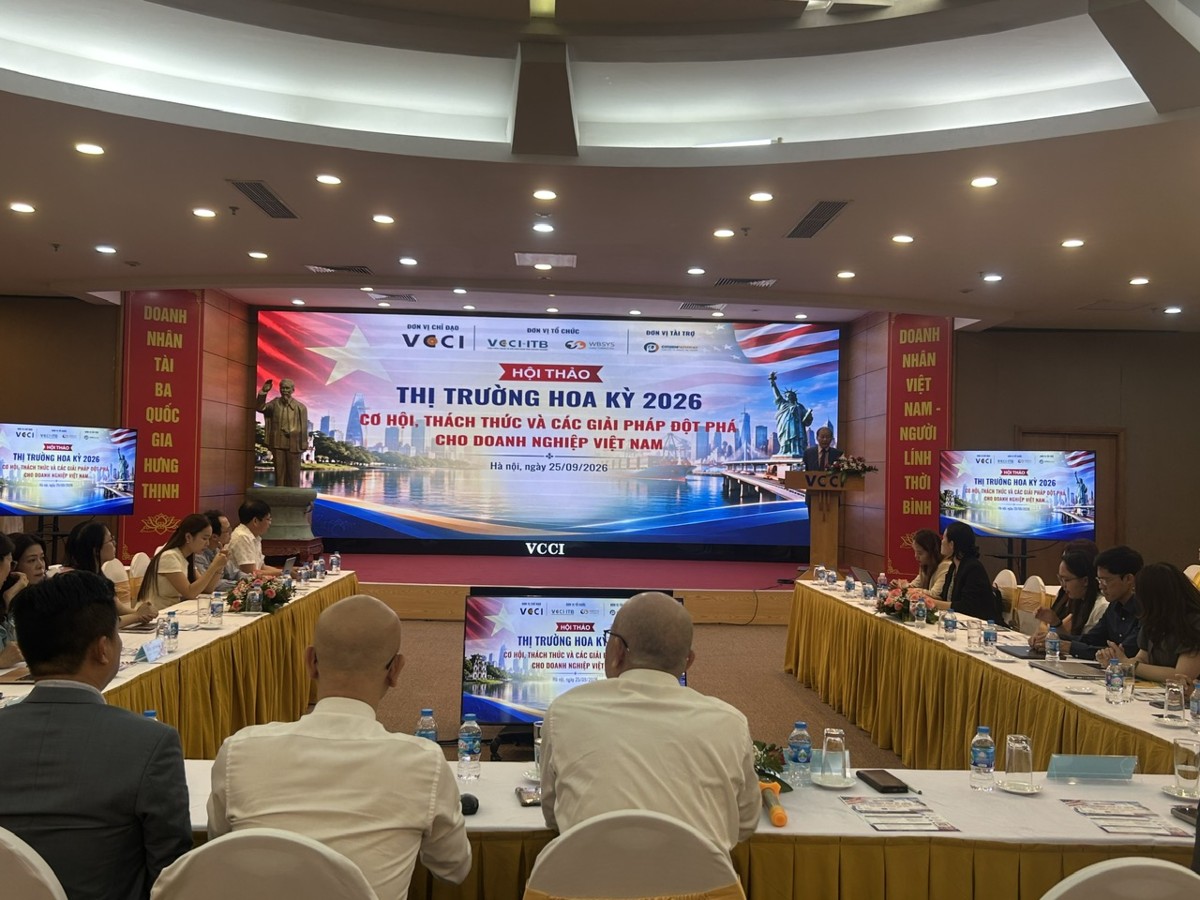
Data presented on September 25 at the workshop "The US Market in 2026: Opportunities, Challenges, and Breakthrough Solutions for Vietnamese Enterprises" showed that the US remains Vietnam’s largest export market, accounting for roughly 28% to 30% of total export turnover. Bilateral trade surged from $450 million in 1995 to $209.5 billion in 2025, an approximate 465-fold increase over three decades.
Challenges extend far beyond tariffs
Nevertheless, the hurdles facing Vietnamese goods in this market remain substantial. The evolving tariff landscape has caused considerable anxiety among exporters. According to Mr. Tran Thanh Hai, Deputy Director General of the Agency of Foreign Trade under the Ministry of Industry and Trade, Vietnam and the US have yet to conclude a bilateral free trade agreement (FTA). Consequently, the baseline tariff applied across the board remains the Most Favored Nation (MFN) rate.
However, primary vulnerabilities for exporting enterprises stem from overlapping supplementary tariff orders. Mr. Hai noted that alongside baseline MFN duties, Vietnamese shipments bound for the US can face stacked tariff layers depending on specific product classifications.
Specifically, Section 301 tariffs at 12.5% target defined product categories tied to intellectual property compliance or forced-labor provisions. Meanwhile, Section 232 tariffs apply independently to aluminum and steel products.
In addition, trade defense orders—such as anti-dumping and countervailing duties—increasingly encircle key export lines designated by the US as sensitive, including shrimp, pangasius, solar panels, wind turbine towers, galvanized corrugated iron, and steel.
He observed that not all goods are subject to every tariff pillar simultaneously. While the earlier elimination of reciprocal tariffs relieved significant pressure, current headwinds extend far beyond border taxes. Barriers have broadened to rules of origin, illegal transshipment concerns, rigorous technical standards, and strict supply-chain traceability demands.
Concurring with assessments on policy risks, Mr. An The Dung, former Vietnamese Commercial Counselor to the UK and the US, recommended that enterprises heed crucial strategic imperatives to maintain a firm foothold in this massive $20 trillion consumer market.
First and foremost is the proactive governance of legal and policy risks. Alongside this, product quality and food safety standards must consistently be treated as top priorities.
Exporters must also proactively adapt to American business practices. US buyers are frequently hesitant to use Letters of Credit (L/C) due to high banking fees and tightening credit lines. Therefore, flexibly offering secure alternative payment methods for small and medium-sized orders is vital.
Finally, and most crucially, lies the forging of strategic trust. When facing trade remedy investigations or origin challenges, trustworthy and transparent partnerships ensure that US importers themselves will serve as key advocates defending Vietnamese shipments.
Understanding the market, elevating export value
To achieve sustainable exports to the United States, Mr. Hai noted that the government's orientation—as well as the primary challenge facing businesses—does not center on expanding export volumes, but on elevating export value.
Previously, significant emphasis was placed on "Made in Vietnam" goods, defined by satisfying requirements on assembly, processing, or tariff heading classification shifts within Vietnam. In the current phase, however, higher demands require raising the intrinsic value of Vietnamese products. Adding substantive local value ensures goods naturally satisfy authentic "Made in Vietnam" criteria.
“Throughout the production process, enterprises must master technology and advance into critical nodes across the global supply chain, such as semiconductors, artificial intelligence (AI), renewable energy, the digital economy, and logistics services. These strategic objectives aim both to balance the bilateral trade surplus with the US and accelerate Vietnam’s international economic integration,” Mr. Hai said.
Concurrently, expanding imports from and deepening cooperation with the US remains vital. Beyond raw commodities like animal feed, cotton, and timber, the US provides advanced high-tech solutions that Vietnam can readily import as alternatives.
From a long-term strategic perspective, General Director of Citizen Pathway Investment Co., Ltd. Hoang Diệp Truc suggested that businesses consider moving a step further by establishing a direct corporate footprint in the host market. Enterprises can proactively establish legal entities, open representative offices and branches, or acquire existing US operating businesses to take over established domestic brands and distribution networks.




 Google translate