


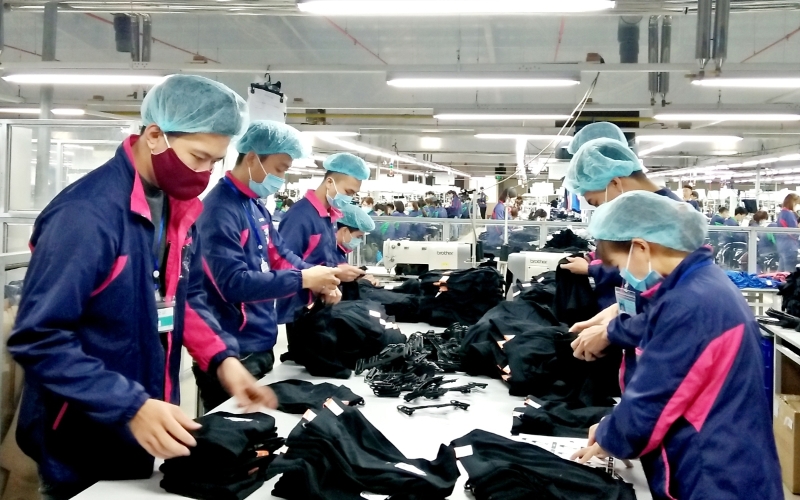
Vietnam’s National Wage Council held its first meeting on June 23 to discuss regional minimum wage adjustments for 2027, with the Vietnam General Confederation of Labour proposing two options that would raise wages by up to 9.8%.
Speaking to reporters on the sidelines of the meeting, Ms. Tran Thi Thanh Ha, Deputy Head of the Labour Relations Department at the confederation, said the organization had submitted two proposals for consideration.
Under the first option, regional minimum wages would increase by between VND360,000 ($13.6) and VND520,000 per month, representing an average rise of 9.8% compared with 2026 levels.
The second option proposes increases ranging from VND315,000 to VND450,000 per month, equivalent to an average increase of 8.5%.
According to Ms. Ha, the proposed adjustments are intended to better ensure a basic standard of living for workers. The recommendations were formulated based on key economic indicators, including GDP growth, consumer price inflation (CPI), labor productivity and factors affecting business operations.
She added that, considering Vietnam’s economic growth performance in 2025 and other influencing factors, the 7.2% increase in regional minimum wages that took effect on January 1, 2026 was relatively modest compared with actual living cost pressures.
The most recent wage adjustment raised regional minimum wages by an average of 7.2%, a move that was widely viewed as balancing the interests of both employers and employees while helping to maintain minimum living standards.
Vietnam’s minimum wage serves as the lowest legal salary for workers performing the simplest jobs under normal working conditions. It is designed to ensure a minimum living standard for employees and their families while reflecting the country’s socio-economic development conditions.






 Google translate