


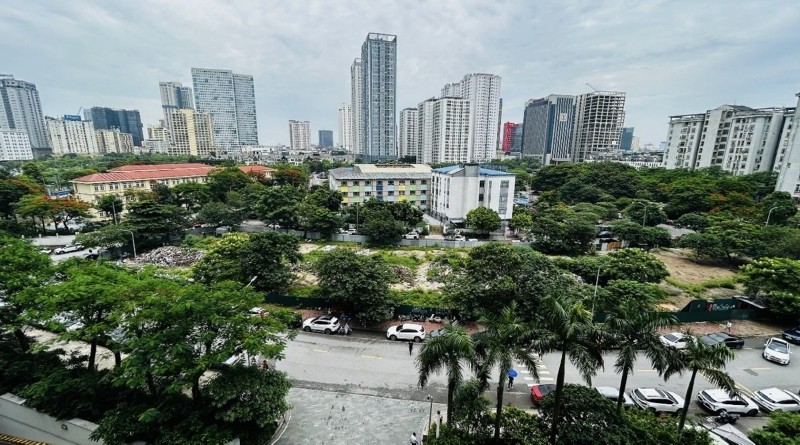
While domestic developers have dominated the market in recent years, tighter local liquidity has prompted foreign investors to return in search of strategic opportunities as the sector enters a new cycle.
Speaking at the 2026 Real Estate Forum themed “Activating a New Cycle - New Trends -New Strategies” held in Hanoi on November 11, Ms. Dang Phuong Hang, Managing Director of CBRE Vietnam, noted that Vietnam’s appeal rests on strong fundamentals, including macroeconomic stability, political security, and steady GDP growth. Combined with a young, growing population, underlying housing demand remains robust despite short-term market adjustments.
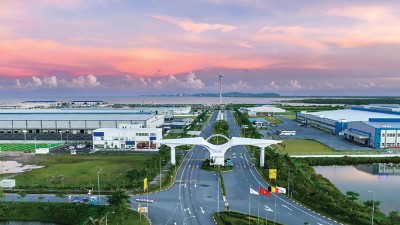
Global geopolitical shifts have also positioned Vietnam as a key beneficiary of supply chain diversification. Industrial real estate continues to post high occupancy rates not only in major hubs like Hanoi and Ho Chi Minh City, but also across their neighboring localities. This industrial expansion is driving job creation, fueling demand for residential housing, services, and supporting infrastructure.
Furthermore, regulatory reforms have significantly shortened project licensing timelines, a process that previously took foreign developers up to a decade or longer. This improved transparency, alongside financial pressures facing some land-rich domestic developers, has created fertile ground for cross-border joint ventures and mergers and acquisitions (M&A).
Beyond traditional capital channels, financial technology is emerging as a new catalyst for fundraising. According to Mr. Vo Duc Anh, Deputy Director of the Da Nang Innovation Startup Support Center, Vietnam requires approximately $1.4 trillion in development capital by 2030 to achieve double-digit economic growth, with real estate playing a pivotal role.
Following the Government’sResolution No. 05/2025/NQ-CP, dated September 19, 2025, on piloting a regulatory framework for the crypto-asset market, real-world asset (RWA) tokenization is gaining traction. With roughly 20 percent of Vietnam’s population holding digital wallets and annual digital asset transactions exceeding $200 billion, domestic liquidity is substantial.
Unlike speculative “paper projects” seen elsewhere, Vietnam's framework mandates that developers possess verified, legally eligible physical assets before tokenization, ensuring investor protection and market transparency.
“While selling a conventional land plot can take months, a tokenized asset can be traded on an exchange within seconds,” Mr. Duc Anh explained.
Pioneering this shift, FUTA Land JSC has partnered with the Da Nang Innovation Startup Support Center to tokenize compliant real estate assets.
According to FUTA Land CEO, Ms. Tran Thi Hoa Xim, the partnership operates on a three-pillar model: ensuring strict legal compliance, deploying technological infrastructure, and establishing a legal mechanism allowing international buyers and tenants to pay with digital assets converted into Vietnamese dong (VND). Though newly signed, the partnership is already laying the groundwork for upcoming tokenized real estate rollouts.




 Google translate