


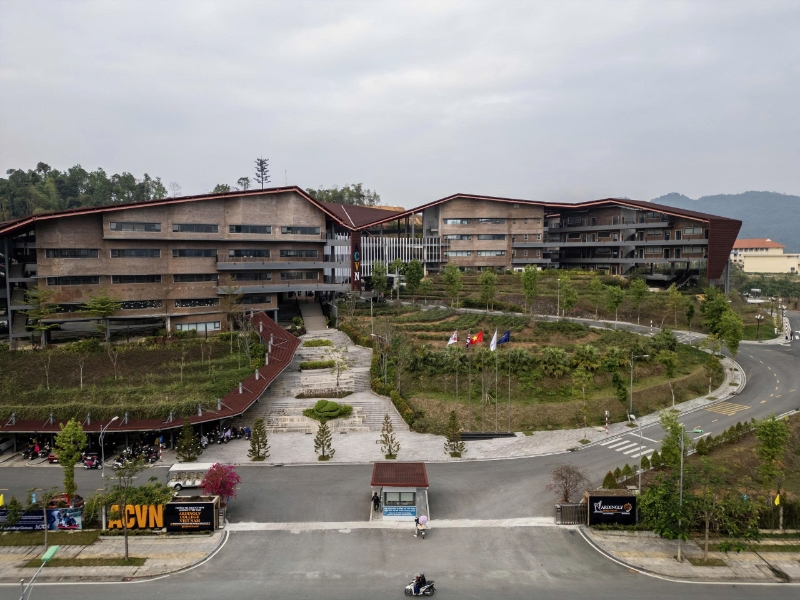
In Lao Cai province, about 300 km northwest of Hanoi, the school day looks a little different from what many might expect in Vietnam’s traditional education system.
Inside the school’s MakerSpace, a group of students gathers around 3D printers, learning how to design simple objects on computers before watching the machines bring their ideas to life. Their latest project is both technical and personal: small keychains and combs they plan to give their mothers as gifts for International Women’s Day on March 8.
Just a few rooms away, in the Marie Curie laboratory, another class is experimenting with chemistry by learning how to produce handmade soap, carefully measuring ingredients and discussing how different compounds interact.
Down the corridor, in what the school calls its “painting workshop,” students move between easels and worktables, experimenting with materials ranging from industrial paints to oil colors. Their pieces are part of a larger goal - preparing artwork that will be displayed at the school’s annual exhibition in April, where parents are invited to visit the campus and see their children’s creations.
Scenes like these offer a glimpse into a different approach to learning - one that blends academic study with creativity, experimentation, and hands-on exploration.
At Ardingly College Vietnam, recently launched in Lao Cai, this approach reflects the arrival of a model rarely seen in the country’s education system: the British boarding school tradition.
Bringing British education closer to home
The school is the result of a partnership between KNI Holdings and Ardingly College International Limited, representing Ardingly College, an independent boarding school founded in 1858 in West Sussex, United Kingdom.
The launch comes at a time when demand for international education across Asia is rising rapidly. Increasingly, families in Vietnam and neighboring countries are seeking globally recognized academic pathways but prefer options closer to home rather than sending children overseas at an early age.
Ardingly College Vietnam aims to respond to that demand by delivering British-style education within the region, combining international curricula with a full boarding environment.
Speaking to VET, Ms. Jo Hayter, Deputy Head responsible for Pastoral Care and Co-Curricular at Ardingly College UK, said the school’s philosophy goes beyond academic achievement.
“At Ardingly, we believe education must be holistic,” she said. “It is about the balance between academics, sport, co-curricular activities, boarding life, and pastoral care. When those elements come together, students are able to flourish not only academically but also as individuals.”
The Vietnam campus marks Ardingly’s first presence in Southeast Asia, following international schools established in Kazakhstan and China.
According to Ms. Trinh Quang Dong Thao, Director General of Ardingly College Vietnam, the school’s approach is built around what it calls the “World Ready” framework, which focuses on developing both character and practical skills alongside academic achievement. Speaking at the launch event, Ms. Thao explained that the model is structured around several pillars of student development, including enquiry and critical thinking, enrichment through arts and extracurricular activities, care and wellbeing, and the cultivation of enterprise and employability. At its core, the framework aims to nurture qualities such as resilience, collaboration, compassion, and active engagement among students. “World Ready is not simply about leaving school with certificates,” she said. “What matters more is that students leave with the real abilities needed to enter life - the ability to think independently, work with others, and contribute positively to society and the world.”
The role of boarding culture
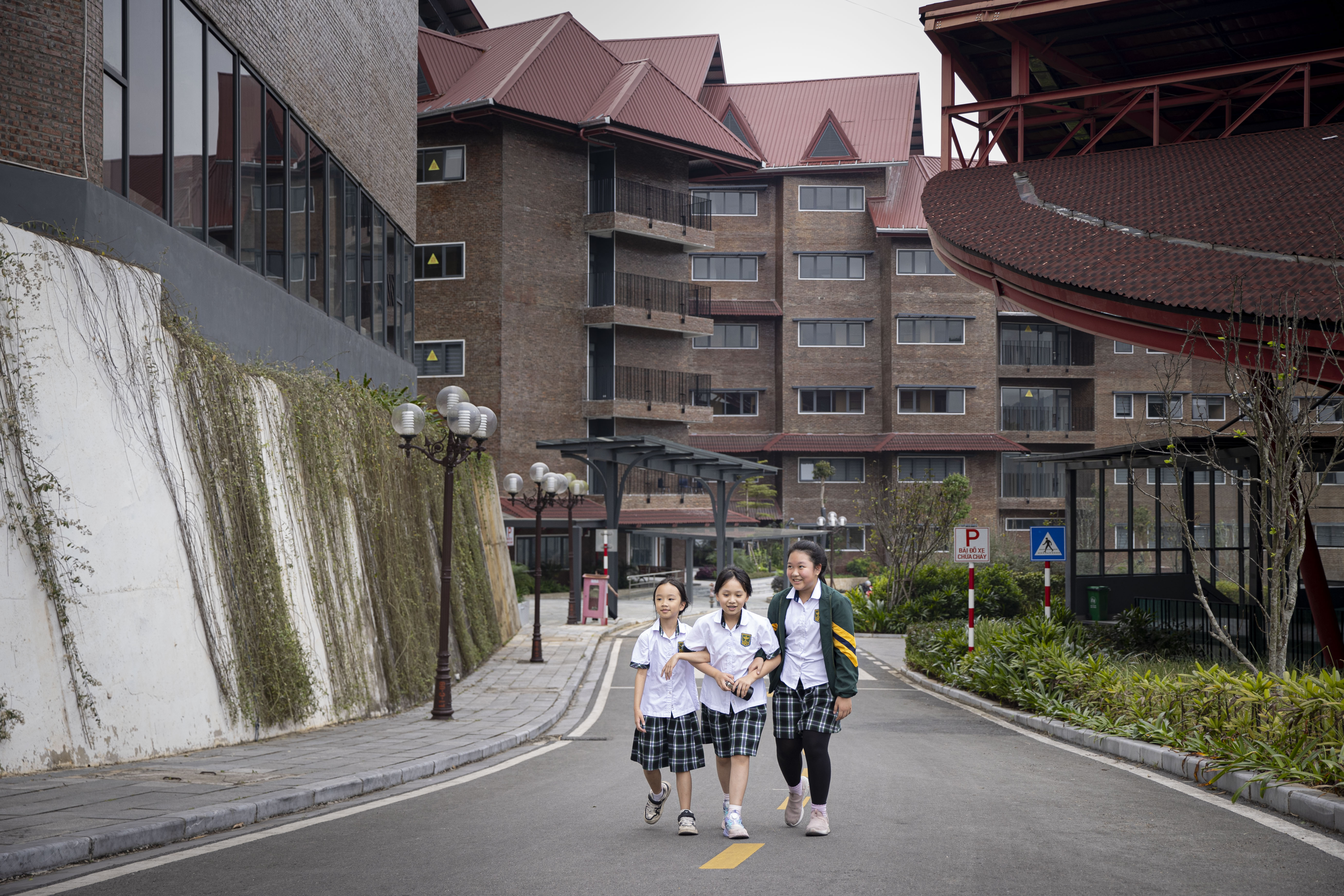
A defining feature of the school is its boarding system, which aims to replicate the structure and culture of the British model.
Boarding schools have long played a significant role in the United Kingdom’s education tradition, where residential life is designed to build independence, discipline, and a strong sense of community among students.
Ms. Hayter said the foundation of that system is a comprehensive pastoral care framework. “A boarding school must be a place where students feel safe, valued, and supported,” she said. “When students feel secure and cared for, they develop confidence and reach their full potential. A happy student is a student who can truly thrive.” She added that the boarding model also allows students from different cultural backgrounds to live and study together, an experience that helps foster global awareness and mutual respect.
Another advantage of the boarding environment, educators say, is the opportunity to extend learning beyond the classroom.
According to Mr. Craig Lewis, Principal at Ardingly College Vietnam, the institution has already begun introducing families to the concept through boarding experience days, where students can stay on campus for short periods and experience residential life.
“We invite parents to the school and explain what it means to be part of a boarding community,” he told VET. “We also allow students to try boarding for a short time. The response has been very positive. Some of the students who joined our first experience programme told us they wanted to continue boarding for the rest of their time at the school.”
Mr. Lewis said creating the right environment is key to making boarding work. “When you create a place where students feel safe, where they can enjoy themselves but also remain engaged in learning, that’s when a real community begins to form,” he said.
A campus built for outdoor learning
Located in Vietnam’s northern highlands, the school’s setting is also part of its educational vision. Unlike many urban international schools, the Lao Cai campus offers large open spaces and proximity to natural landscapes such as the mountains around Sa Pa.
Mr. Lewis said the environment creates opportunities for outdoor learning and physical activities that are difficult to replicate in densely populated cities. “One of our biggest advantages is our location,” he said. “Schools in major cities often do not have the space to build a full boarding campus. Here we have fresh air, open land, and a beautiful natural environment.”
The school plans to integrate outdoor activities such as trekking, mountain biking, and sports competitions into student life, while also hosting weekend camps and activities for students from other schools.
At the same time, the institution hopes to attract not only Vietnamese students but also international students from across Asia. “Vietnam is becoming an increasingly attractive destination for education,” Mr. Lewis said. “It is safe, stable, and developing rapidly. Because of our location near the Chinese border, we are well positioned to welcome students from neighboring countries as well.”
Education and international cooperation
The launch also reflects growing educational cooperation between Vietnam and the United Kingdom following the elevation of bilateral relations to a Comprehensive Strategic Partnership in October 2025.
Speaking at the launch ceremony, H.E. Iain Frew, Ambassador of the United Kingdom to Vietnam, described the new school as a symbol of that collaboration. “Education remains one of the strongest pillars of our cooperation, and today’s launch is a testament to that enduring and forward-looking partnership,” he said.
Ambassador Frew noted that the British boarding tradition is internationally respected not only for academic standards but also for its emphasis on pastoral care and character development. “Boarding fosters independence, resilience and responsibility through community,” he said.
He added that the establishment of a British-standard boarding school in Lao Cai reflects Vietnam’s commitment to expanding access to international education while preparing young people with the skills and global outlook needed for the future.
The school will offer both bilingual and international academic pathways, including IGCSE and A Level qualifications, allowing students to pursue internationally recognized credentials while remaining connected to Vietnam’s national curriculum.
For the educators involved, however, the broader goal goes beyond academic pathways.
“Our responsibility is not only to prepare students for university,” Ms. Hayter said. “It is to prepare them for life in a world that is constantly changing.”





 Google translate