


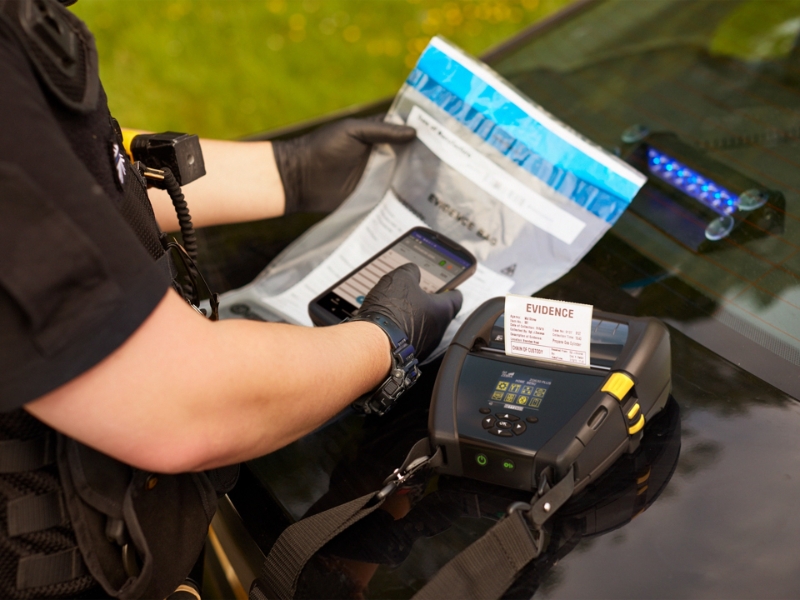
Vietnam has made significant progress in digital modernisation through the rollout of its national population database and the VNeID digital identity platform. By enabling real-time data access and verification for frontline officers, the Ministry of Public Security has established a strong foundation for improving operational efficiency and public safety. The next step is to extend this digital discipline to the critical assets officers rely on in their daily operations.
In practice, the integrity of evidence handling remains crucial, as lost or damaged materials can affect case outcomes. At the same time, public safety operations face increasing pressure from unpredictable risks, while frontline personnel must manage complex tasks under time and resource constraints. As highlighted in the Get Things Done (GTD) methodology, the more tasks individuals must track mentally, the lower their effectiveness, which is an issue particularly relevant in high stress emergency environments.
This has driven a growing shift towards mobile computing and radio frequency identification (RFID) technologies. These tools are essential for creating a truly connected frontline and enabling real-time asset visibility.
International experience highlights operational gains
The results support the rationale behind this shift. One example can be seen in Spain, where police forces are deploying Zebra L10 rugged tablets as in vehicle mobile solutions. These devices enable officers to verify vehicle and personal identities, capture photos, scan documents, collect evidence, and access arrest databases, effectively digitising field operations.
By allowing these tasks to be carried out in real time, the tablets reduce reliance on paper based processes and eliminate the need for time consuming trips back to police stations, thereby improving both logistical efficiency and response times.

“A similar model could be applied in Vietnam, where a traffic police officer in Hanoi could use a single device to verify a citizen’s VNeID while simultaneously recording evidence at an accident scene,” said Ms. Tran Thi Bao Tran, Vietnam Country Manager at Zebra Technologies.
In the UK, the Mid and West Wales Fire and Rescue Service has implemented a solution combining Zebra’s fixed RFID readers and mobile computing to optimise the distribution, management, and use of personal protective equipment. The system has delivered cost savings of more than £600,000 ($810,000) over the 10 year lifecycle of the equipment. A similar approach could be applied in Vietnam, where such technology could help ensure that, during flood season in the central region, all rescue equipment on fire and rescue vehicles is fully accounted for and ready for immediate deployment.
By streamlining and digitising workflows, these solutions allow officers to spend less time on administrative tasks and more time on frontline duties. At the same time, investigators benefit from more accurate and reliable data, contributing to improved case outcomes. This approach aligns with Vietnam’s broader objective of building a modern and efficient digital government.
More broadly, asset tracking and mobile digitalisation solutions are delivering benefits across public safety operations. Automated inventory management reduces reliance on manual paperwork, while scanner technologies and integrated software enable first responders to capture and tag evidence directly at the scene. This information can then be uploaded, shared, and retrieved instantly via mobile or fixed RFID systems.
Saving time saves lives
Checking equipment on emergency vehicles remains a time consuming task due to the volume, variety, and weight of items involved, particularly when carried out using manual, paper based methods. RFID technology, however, now enables officers to verify within seconds at the start of each shift which equipment is available and which is missing, significantly improving efficiency.
Digital asset tracking also enhances the management of defective or missing components. Equipment with expiry dates can be monitored to ensure timely replacement, while maintenance schedules can be managed more effectively. This not only reduces the administrative burden but also improves safety and operational readiness, giving personnel greater confidence in the reliability of their equipment.
At the same time, paperless documentation supported by mobile access to critical data is becoming essential for emergency services to make faster and more informed decisions. Technologies such as artificial intelligence, edge computing, and real time database connectivity enable instant retrieval of key information, including suspect records, vehicle registrations, medical data, and live incident reports.
From a cost perspective, digitalisation presents a compelling case, particularly for smaller emergency service units. In some cases, fire and rescue services have reduced carrying costs by up to 50 per cent and achieved monthly savings of around $3,620 supported by continuous 24/7 inventory visibility and automated tracking of supplies and equipment.
Beyond data capture in the field, the ability to access and share information in real time is increasingly critical. In Europe, the transition from TETRA, or Terrestrial Trunked Radio systems, to broadband communication is enabling frontline personnel to handle larger volumes of data, including documentation, evidence, and video based communication, more effectively.
In Vietnam, the Ministry of Public Security is accelerating the rollout of the national population database and the VNeID platform, providing real time data access and verification for frontline officers. Building on this foundation, integrating RFID and mobile computing into public safety workflows could further enhance the management of equipment, evidence, and personnel, in line with international practices.
Overall, the future of public safety is expected to be shaped by technology driven efficiency, proactive decision making, and secure, interoperable communication. Leveraging digital asset management alongside platforms such as VNeID could help strengthen frontline capabilities and support Vietnam’s ongoing digital transformation.








 Google translate