


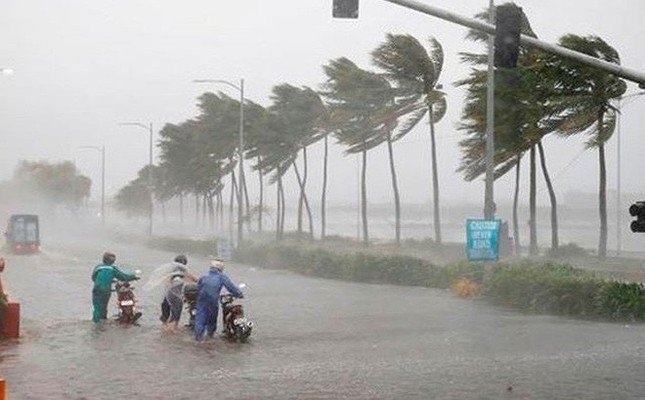
The year 2025 ended as one of the most severe and abnormal periods for natural disasters in Vietnam’s history. Estimates put total economic losses at VND100 trillion ($3.85 billion); the highest level ever and highlighting the growing vulnerability of communities to the escalating impacts of climate change, while underscoring the urgent need to strengthen response capacity and overall resilience.
Unprecedented levels
According to Mr. Nguyen Van Tien, Deputy Director of the Vietnam Disaster and Dyke Management Authority at the Ministry of Agriculture and Environment (MAE), a series of records related to typhoons, rainfall, flooding, and damage were set in 2025, reflecting increasingly extreme and unpredictable weather patterns driven by climate change.
Fifteen typhoons and six tropical depressions rolled in from the East Sea last year; the most since records began in 1961. The previous record was set in 2017, with 20 severe weather events in total. Notably, Typhoon No. 9 (Ragasa) reached wind force level 17, with gusts exceeding level 17, making it the strongest typhoon ever recorded in the East Sea and one of the most powerful typhoons globally in 2025.
Typhoon No. 1 (Wutip) formed early, in June; something that had not occurred for more than 40 years. For the first time in meteorological history, a tropical depression formed in the Indian Ocean, moved into the northwest Pacific, and then entered the East Sea, clearly illustrating a disruption of traditional climate patterns. In addition, the seasonal distribution of typhoons shifted, with early-season impacts concentrated in central Vietnam and late-season typhoons striking northern regions in rapid succession.
Beyond these typhoons, the resulting rainfall and flooding hit exceptional extremes. Bach Ma Station in the central region recorded approximately 1,740 mm of rainfall within 24 hours in October; the highest ever observed in Vietnam and currently under review by the World Meteorological Organization as one of the largest 24-hour rainfall events worldwide. Nearby Hue and Quang Tri province experienced unseasonal flooding during the dry season, while Ban Ve Reservoir in north-central Nghe An province also recorded historic water levels.
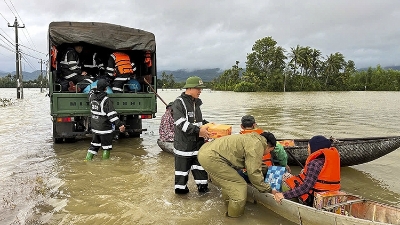
Severe flooding was seen nationwide, affecting Vietnam’s northern, central and southern regions, including the central highlands and the Mekong Delta, with peak flood levels on the banks of many rivers surpassing records. Never before had major, historic floods been seen in the same year along 20 rivers.
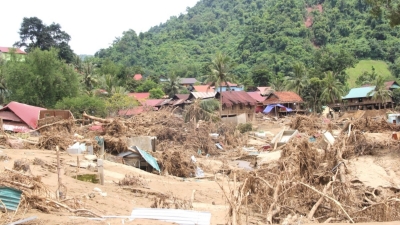
Extreme natural disasters also resulted in heavy human and material losses, with 409 people reported dead or missing. Eighteen rivers in northern and central Vietnam and two in the southern region exceeded record levels, causing prolonged inundation and severely affecting the livelihoods of millions.
Hastening recovery
A significant highlight in disaster recovery efforts during 2025 was the implementation of the “Quang Trung Campaign.” The initiative was not only an emergency response to severe disaster impacts but also a consistent policy of the Party and the State to ensure social security, guided by the principle of “decisive action, clear tasks, clear timelines, and clear accountability,” from the central government to local authorities.
To urgently rebuild and repair homes damaged or destroyed by typhoons and floods and ensure safe housing for residents so they can stabilize their lives and welcome in 2026 and the Lunar New Year in February, Prime Minister Pham Minh Chinh directed chairpersons of city and provincial people’s committees from north-central Ha Tinh province to the central highlands’ Lam Dong province to develop detailed plans and simultaneously launch the Quang Trung Campaign from December 1. The Campaign focused on severely affected localities, such as Dak Lak, Gia Lai, Khanh Hoa, and Lam Dong provinces, with the goal of mobilizing all available resources to rapidly construct and repair housing in disaster-hit areas.
According to a consolidated report from the Government Office, the region saw 1,628 houses completely destroyed, requiring reconstruction, and 34,352 houses damaged and in need of repair. Local authorities concentrated resources and implemented comprehensive measures to support residents in disaster recovery and restore living conditions as quickly as possible.
Under the direct and continuous leadership of the Prime Minister, the Quang Trung Campaign was implemented in a spirit of “speed, determination, and leaving no one behind.” In less than three weeks, by December 17, construction had begun on 1,622 houses, reaching 98.1 per cent of the plan, while 32,259 houses had been repaired, accounting for more than 90 per cent of all damaged homes.
A Joint Disaster Response Plan developed by the United Nations, in close cooperation with the Vietnamese Government and domestic and international partners, was also rolled out. Under the plan, response activities extended beyond emergency relief towards sustainable recovery. Key priorities included repairing and rebuilding housing, supporting livelihood restoration, rehabilitating essential public infrastructure, strengthening local institutional capacity and enhancing community resilience.
The principle of “leaving no one behind” was emphasized, particularly for vulnerable groups such as women, children, the elderly, ethnic minorities, and people with disabilities.
Weathering the impact
According to data from the Plant Production and Protection Department at MAE, in November, Typhoon No. 13, accompanied by heavy rainfall and flooding in the south-central region and the central highlands, caused severe damage to agricultural production. The total affected crop area reached 113,925 ha, including 14,763 ha of rice, 39,663 ha of vegetables, and 59,498 ha of fruit trees, industrial crops, and other perennial crops.
Based on Decree No. 09/2025, the Department advised the Ministry to release more than 3,400 tons of crop seeds from national reserves to heavily-affected localities, with north-central Thanh Hoa and Ha Tinh provinces and central Quang Tri province and the city of Hue receiving the largest allocations. Crop production remained stable as a result. In December and into January, the crop sector continued to closely monitor production conditions, coordinating with local authorities to provide seeds and fertilizers to support recovery.
At the same time, plans for the 2025-2026 Winter-Spring crop were developed and implemented, focusing on expanding acreage and improving yields of key crops to offset losses and achieve agricultural growth targets.
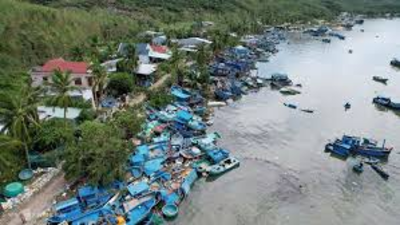
According to the Directorate of Fisheries, during October and November, Typhoons No. 10, 11 and 13, along with widespread flooding, also caused serious damage to aquaculture and fisheries in many provinces, with Khanh Hoa, Dak Lak, and Gia Lai the hardest hit. The total affected aquaculture area was estimated at about 1,848 ha, while more than 23,000 cages and over 331,000 cubic meters of floating cages were damaged or swept away.
In response, the Department dispatched working teams to affected localities to assess damage and directed research institutes to strengthen water environment monitoring to provide a scientific basis for recovery and restocking.
It also proposed that local authorities coordinate with banks to implement debt rescheduling, deferment, and credit support for households reinvesting in production. Measures to stabilize input and seed markets were intensified to prevent speculation and unreasonable price hikes. As a result, the fisheries sector recorded growth driven by strong aquaculture performance. In the first eleven months of 2025, total fisheries output was estimated at 9.0496 million tons, up 2.9 per cent year-on-year.
Over the longer term, to respond to and mitigate disaster-related losses, leaders from the Directorate of Fisheries said the sector will reorganize production toward adaptive and sustainable models. Key priorities include reviewing and re-planning caged aquaculture activities, in particular stocking density; prioritizing infrastructure investment in key farming areas; strengthening environmental monitoring and early warning systems; and accelerating the application of digital technologies.





 Google translate