


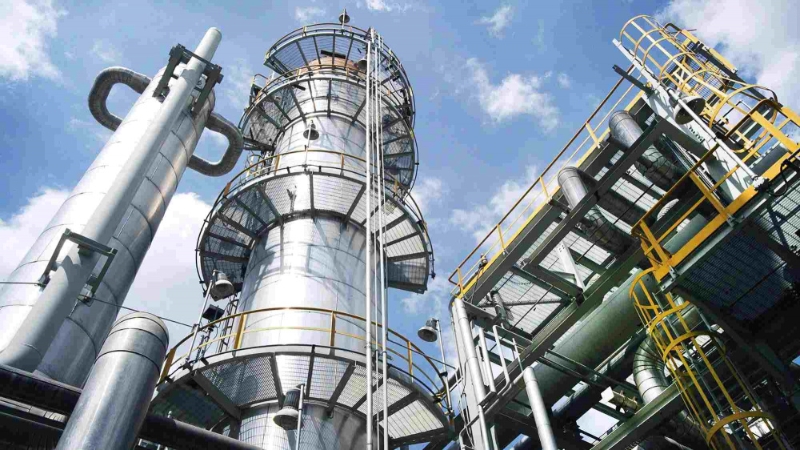
Vietnam’s chemical industry has made strong strides forward over recent years, maintaining stable growth from a number of large-scale projects coming on stream. The industry’s scale and pace of development, however, still fall short of its role and potential.6According to the Ministry of Industry and Trade (MoIT), among the country’s ten largest industries at Level-2 classification, the chemical industry ranks third, accounting for around 2-5 per cent of total industrial GDP. Its industrial production value has grown by about 10-15 per cent a year. Several chemical subsectors have largely met domestic demand - such as fertilizers, plant protection chemicals, tires, paints, and detergents - and their exports have also grown.
Holding back potential
At the recent “Institutional breakthroughs as a driver to elevate the chemical industry” seminar, participants agreed that the industry’s development remains misaligned with its inherent potential. One of the biggest challenges is its dependence on imports. Many essential chemical materials and products must still be sourced from overseas, while domestic investment structures remain out of balance, lacking high value added products and failing to establish deeply-integrated value chains at the regional and global level.
Mr. Vuong Thanh Chung, Deputy Director of the Vietnam Chemicals Agency at the MoIT, said the existing legal framework has become outdated after more than 16 years in place. The Law on Chemicals 2007 has not kept pace with major changes in the broader legal framework, sustainability trends, or international commitments and new-generation free trade agreements Vietnam has joined or signed.
In particular, the country’s rapid economic and industrial growth has led to a sharp increase in the production, import, and use of chemicals - both in volume and variety. The number of chemical enterprises has grown quickly, along with the range of activities and the volume of chemicals produced, traded, imported, and used, creating pressure to revise regulations to better reflect real-world practices.
Mr. Nguyen Duc Hoan, Deputy Director of the Bac Ninh Department of Industry and Trade in Vietnam’s northern region, noted that awareness at enterprises remains limited - especially among users of chemicals, who account for up to 90 per cent of entities - but there are still no specific requirements regarding professional qualifications for staff in charge. Moreover, frequent personnel changes mean enterprises often lack consistent access to and understanding of State regulations on chemical activities.
In addition, local technical infrastructure such as warehousing and production equipment remains insufficient and technologically weak. State management staff at the provincial and commune level are thinly stretched and often multitask across sectors, resulting in overlapping responsibilities and a lack of coordination between agencies. Oversight of chemical imports and distribution is also increasingly difficult given the growing variety of chemical types and business models.
From a business perspective, Ms. Vuong Thi Thuy, Deputy Director of Nippon Paint Vietnam, acknowledged that although administrative procedures have improved, enterprises still struggle to fully grasp detailed compliance requirements related to legal application, safety, and inspection due to a lack of in-depth training and information channels.
Four strategic breakthroughs
To address such bottlenecks, Mr. Chung said the amended Law on Chemicals was passed on June 14, 2025, by the 15th National Assembly at its ninth session, and focuses on four major policy pillars to establish a modern and coherent legal framework.
First, it specifies investment incentives for key chemical fields. Products such as basic chemicals, petrochemicals, pharmaceuticals, hydrogen, and ammonia produced from renewable energy will receive special support, providing investors with clearer direction and confidence for large-scale projects.
Second, it strengthens the management of specialized chemical projects by introducing stricter requirements on technology appraisal, safety, and environmental protection from the investment approval stage. Green chemistry criteria and sustainable development goals are embedded to ensure projects deliver economic benefits while minimizing health and environmental risks.
Third, it establishes lifecycle-based chemical management. Instead of focusing on isolated stages, controls will span production, import, circulation, storage, transport, and disposal - the latter being an important step to prevent any leakage of hazardous chemicals into the environment.
And fourth, it adds regulations on safety distances and chemical incident prevention and response plans, addressing risks to public security and social order amid the rapid growth in chemical volumes and varieties used in industrial production.
To ensure the Law’s timely and synchronized implementation from January 1, 2026, the MoIT has led the drafting of decrees detailing provisions and implementation measures. “With these fundamental innovations, the Law and its guiding documents will establish a comprehensive and unified legal framework, enabling the chemical industry to fully play its role as a foundational sector and expand its development space,” Mr. Chung said.
Mr. Hoan added that the amended Law will clarify responsibilities between central and local authorities while promoting digital transformation. A centralized, sector-specific chemical database will ease staffing pressure at regulators and provide enterprises with clear benchmarks for investing in compliant storage infrastructure.
Turning policy into reality
For the Law to truly serve as a catalyst upon taking effect, seminar participants stressed the need for a decisive implementation roadmap and close coordination between stakeholders.
On the regulatory side, Mr. Chung said the Vietnam Chemicals Agency is actively advising on decrees and circulars to avoid legal gaps. Communication, training, and capacity-building for local Departments of Industry and Trade are also being intensified to ensure uniform enforcement nationwide.
In Bac Ninh, the Department plans to organize in-depth training sessions not only for enterprises but also for commune-level officials. Mr. Hoan said it will coordinate to build a data-driven management system connected with the MoIT, enabling timely updates and support for enterprises in fulfilling their reporting obligations.
From the beneficiary side, Ms. Thuy expressed hope that the amended Law would mark a breakthrough in lifecycle chemical management aligned with sustainable development and international integration. She urged authorities to continue streamlining investment procedures and harmonizing processes between central and local levels, adding that State support for technology upgrades and policy dissemination would help enterprises reduce compliance costs and enhance competitiveness.
Experts are confident that with the enactment of the Law on Chemicals 2025, Vietnam’s chemical industry will have sufficient space to attract high-quality investment, integrate more deeply into global value chains, and make a meaningful contribution to the country’s double-digit economic growth target for the 2026-2030 period.






 Google translate