


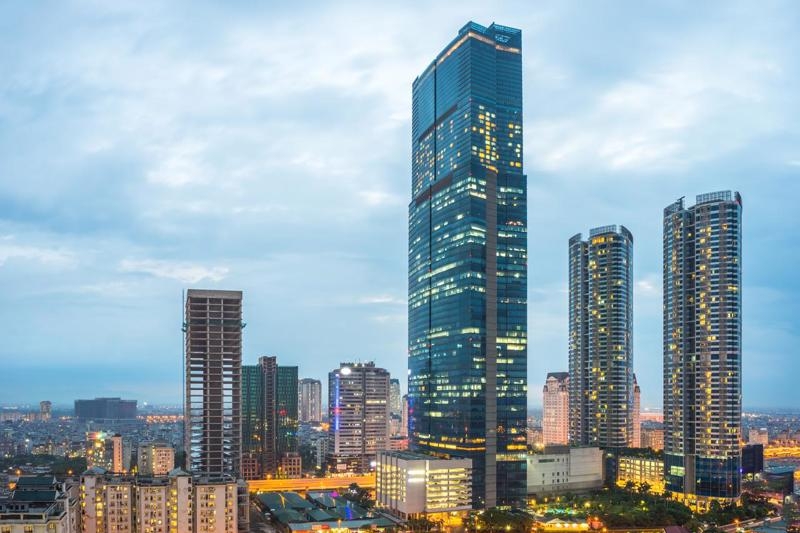
Vietnam’s office market has demonstrated stability over the course of 2025 while undergoing a structural shift shaped by decentralization, a flight-to-quality, and the rise of sustainable workspaces. Reports from consultants show that although overall market conditions remain steady, the preferences of occupiers are evolving rapidly. The shift is less about expansion and more about recalibrating workplace strategy, with companies prioritizing higher-quality space, the employee experience, and long-term cost efficiency.
New office landscape
Supply was modest in both Hanoi and Ho Chi Minh City in the early part of the year. That scarcity helped maintain rent stability, though vacancy patterns between Grade A and Grade B buildings are diverging. Relocation continues to make up the bulk of leasing activity, especially in Hanoi, where nearly 60 per cent of transactions in the first nine months involved tenants upgrading to better-quality premises. In Ho Chi Minh City, Grade A space accounted for the overwhelming majority of completed transactions in the third quarter.
One of the most notable transformations is the rapid decentralization occurring in both markets. In Hanoi, western and mid-town districts are emerging as major alternatives to the traditional CBD, while the recent administrative boundary expansions in Ho Chi Minh City are reshaping the definition of the CBD, bringing areas such as Thu Thiem, Thu Duc city, and parts of South Saigon into the conversation as viable core office destinations.
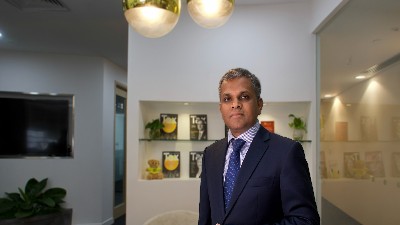
Buildings that meet green certification standards are increasingly viewed as the market baseline. Mr. Matthew Powell, Director of Savills Hanoi, noted that the shift towards green and environmentally-friendly developments is now happening “not just because it is a global trend, but because it is essential for long-term competitiveness.” He said new buildings are expected to meet green standards from the outset, and older stock must be upgraded to avoid being left behind. This shift coincides with changing workforce demographics, as Millennials and Gen Z, who prioritize wellness, natural light, and flexibility, become the dominant groups in Vietnam’s labor market.
While both markets remain stable today, the medium-term outlook will be shaped by a significant amount of new supply, particularly in the premium segment. Between 2025 and 2027, the two cities are expected to receive between 520,000 and 700,000 sq m of new supply, based on Savills and Cushman & Wakefield (C&W) projections, much of it in Grade A buildings located outside of traditional CBD areas. As this supply arrives, competition is expected to intensify, pushing landlords to enhance building performance and tenant experience.
Hanoi: Stable market
Hanoi’s office market remained stable through the second and third quarters of this year, supported by steady demand, manageable new supply, and a strong preference among occupiers for higher-quality space. Total supply reached approximately 2.3 million sq m in the third quarter, according to Savills.
Despite the small number of new completions, only one project in the first half and one more in the third quarter, the market recorded more than 56,000 sq m of net absorption in the first nine months of the year, according to CBRE. This level matched the same period of 2024 and signaled a measured confidence among occupiers despite broader global uncertainties.
New supply in the third quarter caused vacancies in the segment to rise to 16.8 per cent, according to CBRE, while C&W’s earlier data pointed to a slight quarter-on-quarter decline in occupancy in the second quarter. This divergence underscores growing competition within the mid-range segment, where landlords are increasingly offering incentives and flexible terms to retain tenants.
Rental levels have remained generally stable. For the third quarter, CBRE reported average Grade A rents at $27.5 per sq m per month, unchanged from the previous quarter, and Grade B rents at $15.1 per sq m per month, a slight increase driven by the entry of newer buildings into the segment.
Decentralization remains the most significant trend shaping Hanoi’s market. Tenants are increasingly selecting locations in the western and mid-town areas, where newer buildings offer modern layouts, energy-efficient systems, and more competitive pricing compared with the traditional CBD. Starlake Tay Ho Tay, in particular, is emerging as a major hub for next-generation office projects. Oriental Square, the first Grade A building launched in the area, is helping establish Tay Ho as a rising premium cluster, and Savills expects a wave of new developments in the next two to three years to strengthen this position further.
Industry demand remains anchored by the banking and finance, insurance, and information technology (IT) / telecommunications sectors, which each accounted for about one-third of leasing activity in the first half of this year. Relocation continues to dominate deal flow. Even in a cautious macro-economic environment, companies are prioritizing workplace upgrades to enhance the employee experience, accommodate hybrid work models, and optimize operational efficiency.
Mr. Powell emphasized that green certification is no longer optional, “it is becoming the default expectation for new buildings in Hanoi. Older projects will need to invest in sustainable operations and improved user experience if they are to remain competitive.”
HCMC: Rising appetite
Ho Chi Minh City’s office market displayed stronger momentum in the third quarter of this year, driven by improved occupancy in Grade A buildings, sustained demand from high-growth industries, and a gradual reshaping of the city’s office geography following the administrative mergers. While new supply remained limited through the second and third quarters, tenant activity was concentrated in the premium segment, resulting in a notable decline in vacancies and stable rental performance.
The Grade A vacancy rate dropped sharply in the third quarter, by 4.2 percentage points to 18.6 per cent, according to CBRE, supported by more than 27,000 sq m of net absorption in the quarter alone. Grade B vacancy rose to 13.7 per cent due to the completion of Tan Thuan Tower in District 7, which added more than 13,000 sq m of new supply.
Rents adjusted only slightly in the quarter, with Grade A and Grade B recording small quarter-on-quarter declines but maintaining positive year-on-year growth of 1.9 per cent and 1.7 per cent, respectively.
C&W’s second-quarter data shows a significant rental gap between CBD and fringe markets. Grade A rents in the CBD averaged $62.09 per sq m per month in the quarter, while comparable space in the CBD fringe averaged $40.70. Grade B rents demonstrated a similar pattern, with $44.76 in the CBD and $28.27 in fringe areas. These disparities continue to encourage tenants to consider decentralized locations, especially as infrastructure improvements make non-core districts more accessible.
Demand in the southern city is being driven by sectors with strong growth trajectories and increasingly sophisticated space requirements. In the third quarter, logistics accounted for as much as 40 per cent of total transacted area, according to CBRE, followed by IT at 29 per cent and retail, trade, and services at 26 per cent. Many of these tenants require large floorplates, often between 600 and 1,000 sq m and sometimes up to 3,000 sq m, making new Grade A buildings the preferred option.
A key structural shift is taking place in how the market defines “central”. Savills noted that the administrative merger is expanding the CBD’s boundaries, bringing areas such as Thu Thiem, Thu Duc city, and South Saigon into an enlarged central market. In practice, it means tenants now view a wider range of districts as viable central locations, especially when those areas offer modern buildings at more attractive rents.
Savills expects more than 234,000 sq m of new office space to be added by 2027, with key upcoming projects including Saigon Marina IFC, The Kross, OneHub Saigon Tower 2, and Millennial Tower.
Overall, Ho Chi Minh City is transitioning towards a market characterized by broader geographic choice, stronger premium demand, and heightened expectations for building performance. As supply expands in the next two to three years, competition will likely shift from location-based differentiation to quality, sustainability, and workplace experience, continuing the market’s ongoing transformation.




 Google translate