


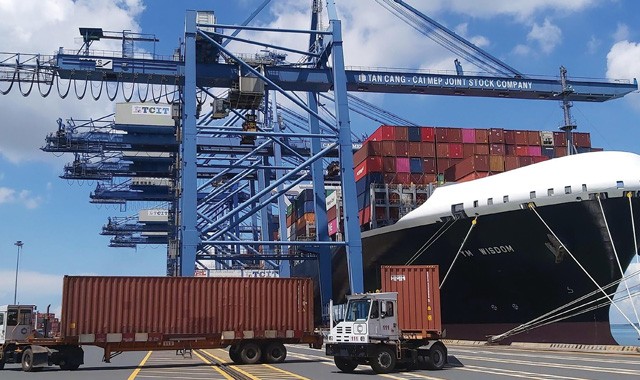
The US is Vietnam’s key export market, with trade reaching more than $153.1 billion in 2025. The momentum continued in the first eight months of this year, when exports totaled $122 billion, maintaining its position as Vietnam’s largest export market.
While the potential for exports to the US remains substantial, mounting technical barriers are pushing bilateral trade toward an important turning point. Vietnamese businesses must now shift from a reactive approach to a more proactive strategy for entering global value chains, built around technology, domestic design, and a systematic market-entry strategy.
Multilayered challenge
Mr. Vu Tu Thanh, Acting Regional Managing Director & Chief Country Representative of Vietnam for the US-ASEAN Business Council (USABC), said the US imports more than $3 trillion worth of goods annually. Vietnam currently accounts for less than 10 per cent of that figure, underscoring the considerable room for further export growth.
However, much of Vietnam’s current export value is still generated by foreign-invested enterprises (FIEs), while the contribution of purely Vietnamese companies remains modest. Unlocking this potential will require businesses to overcome a multilayered set of challenges, ranging from internal capacity constraints to the international regulatory environment.
Mr. Tran Lich, Director of the Vietnam Impact Startup Incubator and Accelerator (VISIA), said small scale is the first and biggest bottleneck. Most Vietnamese companies remain too small by US market standards. Annual revenues of just a few million dollars often leave them unable to fulfill large orders or absorb the costs of regulatory compliance.
Surveys show that as many as 85 per cent of Vietnamese businesses are not fully prepared to enter an export acceleration phase. Mindset and awareness remain major barriers as well. Many companies excel at contract manufacturing but lack market research capabilities and a deep understanding of consumer behavior. Even when they produce high-quality goods, Vietnamese businesses often remain content to manufacture under foreign brands.
A tendency to assume that export experience in other markets can be applied wholesale to the US also leaves businesses vulnerable to rapidly-changing policies and tariff regulations.
Mr. Thanh noted that Vietnam’s proximity to China creates significant sensitivity around rules of origin. Developing self-sufficient sources of raw materials remains problematic, while domestically-produced inputs often struggle to compete on price. At the same time, the US Trade Representative (USTR) applies a stringent tiered tariff regime. Though Vietnam enjoys a tariff advantage over China, it still faces intense competition from “Tier 1” countries such as India, Mexico, and other ASEAN economies. Green and sustainability standards are also becoming mandatory and increasingly difficult to reverse.
Ms. Ann Ha, CEO of Defenova Global Connect, said the long geographic distance to the US drives up logistics costs, while global geopolitical volatility is increasing shipping risks. On the domestic side, Vietnamese businesses still have limited capacity to absorb new technologies. Companies are often reluctant to make large upfront investments in US technology and equipment when demand for their products remains uncertain.
Building capacity and strategy
Against these systemic challenges, experts agree that “a good product is not enough.” Vietnamese businesses need a coordinated roadmap spanning mindset, technology adoption, and the use of new political and trade opportunities.
Mr. Lich said the first step is to move from a reactive to a proactive approach to obtaining certifications and meeting standards such as those required by the US Food and Drug Administration (FDA), organic certifications, and ISO standards. Waiting for a buyer to request certification before beginning the process can take three months to a year, potentially costing companies business opportunities at the outset.
Product strategy must also evolve, with businesses gradually moving from pure original equipment manufacturing (OEM) toward original design manufacturing (ODM). Controlling product design and intellectual property can help companies avoid severe penalties under Section 301 of the US Trade Act. Creative packaging, along with adjustments to colors, styles, and product designs in line with US consumer trends can also serve as a powerful tool for increasing value-added.
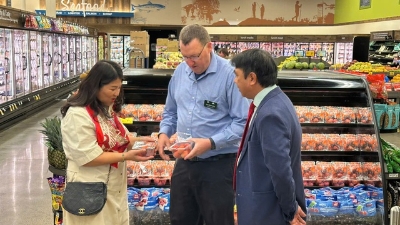
Mr. Lich also noted that major retail channels such as Amazon account for only about 5 per cent of the overall US market. The vast majority is made up of more than 500,000 specialized channels serving product niches such as vegan goods, healthy foods, and Asian foods. The fastest and most effective way to enter these channels is therefore to work with local partners that understand US regulations and have established domestic supply chain networks.
“Vietnamese businesses need to abandon the habit of going it alone,” Mr. Lich said. “Building a Vietnam Collective Brand for key products would help pool resources, build trust, and strengthen negotiating power in international markets. At the same time, investing in global trade data systems would allow businesses to accurately track market information, order frequency, and export volumes, enabling them to develop more effective pricing strategies.”
Ms. Ha pointed to opportunities created by the Comprehensive Strategic Partnership between Vietnam and the US and the growing trend toward “friend-shoring,” or shifting supply chains to trusted partners. The imbalance in bilateral trade also creates significant room for Vietnamese companies to invest in the other direction by importing advanced technology, management know-how, and high-value services from the US.
Importing advanced US technology in sectors such as aviation, airport infrastructure, healthcare, and high-tech agriculture could help Vietnamese businesses narrow the productivity gap, strengthen domestic capabilities, and qualify to participate more deeply in the supply chains of global corporations.
Vietnam should also introduce stronger policies to promote technology transfer and increase localization requirements for FIEs, helping develop the domestic support industries needed to underpin longer-term growth.
Mr. Thanh similarly recommended that businesses focus on high-tech niche segments. Smart electronics and unmanned aerial vehicles (UAVs, or drones), for example, could offer opportunities in areas where regulations such as the National Defense Authorization Act (NDAA) restrict Chinese-origin products.
Vietnamese drone companies such as Real-time Robotics (RtR) have already secured indefinite export licenses for the US market by adopting a flexible model: conducting R&D in Vietnam, registering intellectual property through a US legal entity, and following an appropriate roadmap for component manufacturing.
Finally, the growing presence of US regulatory agencies in Vietnam could provide an important support mechanism. The US Customs and Border Protection (CBP) and the FDA, which plans to open its only Southeast Asian regional office in Hanoi this year, could give businesses direct access to regulatory guidance, helping standardize processes and eliminate costly informal intermediaries.
According to Mr. Lich, entering the US market is a long-term undertaking that requires careful preparation in both business capacity and strategic thinking. Vietnamese companies have a genuine opportunity to break through by leveraging global strategic competition, steadily increasing localization and taking a more active role in global value chains through technology and intellectual property.
A good product, combined with a market-entry strategy and support from expert networks, is ultimately the key to taking Vietnamese goods to the world.




 Google translate