


After more than half a century of diplomatic relations, Vietnam and Canada are entering a new phase of cooperation, with both countries sharing increasingly clear interests in diversifying markets, strengthening economic connectivity and building supply chains that are more resilient to global disruptions.
General Secretary and President To Lam will pay a state visit to Canada from September 24, 2026. According to the Office of the Governor General of Canada, Governor General Louise Arbour considers Vietnam an important partner for Canada in the Indo-Pacific, while emphasizing the growing cooperation between the two countries in trade, the economy, energy security and climate change response. This will also be the first time Canada has welcomed a General Secretary of the Communist Party of Vietnam since the two countries established diplomatic relations in 1973.
While trade in goods was a prominent foundation of bilateral economic relations in the early years, the scope for cooperation has now expanded considerably. Canada is pursuing a strategy of trade diversification in the Indo-Pacific, while Vietnam continues to deepen its integration into regional trade and production networks. The CPTPP, negotiations for a Canada-ASEAN FTA, and growing demand for clean energy, critical minerals, AI and new technologies are creating new areas of convergence between the two economies.
Canada looks to the Indo-Pacific: Where does Vietnam fit?
Vietnam in Canada's Indo-Pacific strategy
One of the most important changes in Canada's approach to Vietnam is that bilateral relations are increasingly being viewed within a broader framework: Canada's Indo-Pacific strategy.
Canada regards Vietnam as an important economic partner in ASEAN and the Indo-Pacific. According to Global Affairs Canada, Vietnam is currently Canada's largest merchandise trading partner in ASEAN. In 2024, two-way merchandise trade reached CAD 15.7 billion, with Canada importing CAD 14.7 billion worth of goods from Vietnam and exporting around CAD 1 billion to Vietnam. Areas in which Canada has identified commercial interests in Vietnam include agriculture and food, education, information and communications technology, and clean technology.
More notably, trade has been growing rapidly. According to the Office of the Chief Economist at Global Affairs Canada, Canada imported CAD 19.3 billion worth of goods from Vietnam in 2025, up 31% from 2024. This was significantly higher than the growth in Canada's imports from many other major Indo-Pacific partners.
The figure highlights an important reality: as Canada seeks new markets and sources of supply in Asia, Vietnam is becoming increasingly prominent in Canada's trade network.
A key driver is the CPTPP. Vietnam and Canada are both members of the CPTPP, which entered into force for Canada in late 2018 and for Vietnam in January 2019. Canada regards the CPTPP as an important instrument in its trade diversification strategy in the region. In 2026, Vietnam holds the chairmanship of the CPTPP Commission.
During a telephone conversation on July 21, 2026, Canadian Prime Minister Mark Carney and Vietnamese Prime Minister Le Minh Hung discussed expanding trade and investment, focusing on sectors including aerospace, transportation, and agriculture and food. The two sides also discussed strengthening energy cooperation, including LNG, as well as opportunities to strengthen connectivity between the CPTPP and the European Union. The two prime ministers also discussed the priority of completing negotiations for the Canada-ASEAN Free Trade Agreement in 2026.
Vietnam therefore occupies a distinctive position in the economic integration network that Canada is building in Asia: it is both an ASEAN member and a CPTPP member, while also emerging as an increasingly important manufacturing and export hub in the region.
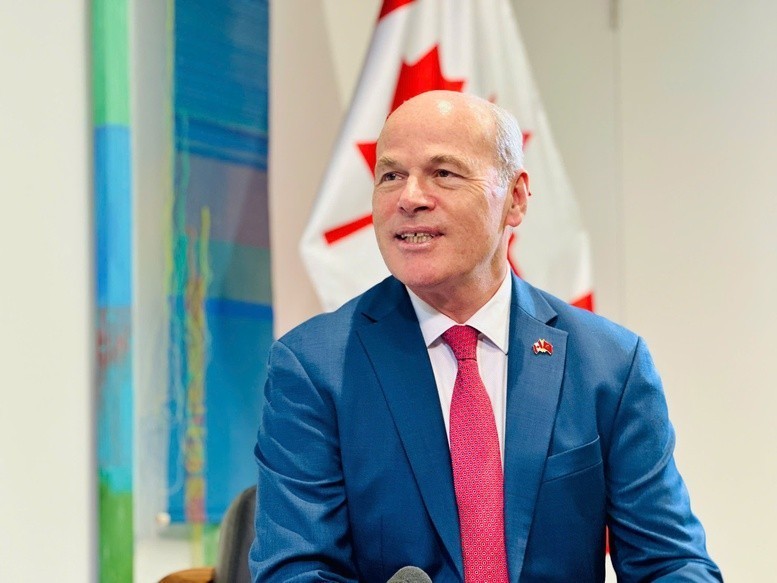
Canadian Ambassador to Vietnam Jim Nickel said Vietnam is one of Canada's important partners in ASEAN and that the visit could provide fresh momentum for trade and investment cooperation. He also referred to Canada's interest in the international financial centres in Ho Chi Minh City and Da Nang, as well as the potential for Vietnam to attract investment into Canada's energy sector.
Vietnamese Ambassador to Canada Pham Vinh Quang, meanwhile, said the strengths of the two economies are clearly complementary: Canada has advantages in technology and finance, while Vietnam has manufacturing capacity and a large market. On that foundation, the two countries could expand cooperation into new areas such as clean technology, smart agriculture, new materials, artificial intelligence, cybersecurity and digital transformation. According to the ambassador, strengthening links among research institutes, universities and businesses in the two countries would help align science and technology cooperation more closely with development and market needs.
This points to a different approach to Vietnam-Canada economic relations. Rather than looking only at import and export turnover, the two countries could seek to build value chains with deeper participation by businesses from both sides.
From merchandise trade to value chains
The current trade structure still shows a significant imbalance: Vietnam exports considerably more to Canada than Canada exports to Vietnam. This creates room to expand Canadian exports to Vietnam, while also highlighting the need for greater two-way investment and business linkages.
For Vietnam, the opportunity lies not only in continuing to increase exports of consumer goods, textiles and garments, footwear, electronics, machinery and industrial products, but also in participating more deeply in North American supply chains through Canada.
For Canada, Vietnam could serve as a gateway to ASEAN, a market of more than 700 million people and one of the world's regions with notable economic growth potential.
This is also why supply-chain resilience is becoming increasingly important in bilateral relations.
As international businesses adjust their production strategies and seek additional locations beyond traditional manufacturing centres, Vietnam has become one of the locations attracting attention in Asia. Canada, with its strengths in resources, energy, finance, technology and the North American market, could complement Vietnam's manufacturing capabilities and ASEAN network.
From a business perspective, this could provide a foundation for moving from a "buy-and-sell" model toward "co-investing, co-producing and jointly developing markets."
Energy, critical minerals and technology: New links in economic relations
Energy: A broadening space for cooperation
If trade is the current foundation, energy, critical minerals and technology could become the areas shaping Vietnam-Canada cooperation in the next phase.
Canada has a particularly diverse energy system, combining traditional energy sources with low-emission electricity. According to the Energy Fact Book, Spring 2026 Edition of the Canadian Centre for Energy Information, Canada produced 623 TWh of electricity in 2024. About 65% of electricity generation came from renewable sources, while 78% came from sources that do not emit greenhouse gases, including hydropower, wind, solar and nuclear power. Canada is currently the world's third-largest producer of hydropower, with hydropower accounting for about 55% of electricity generation and nuclear power contributing around 13%.
In 2025, Canada's total electricity generation reached 625.2 TWh, up 2.6% from 2024. Hydropower remained the largest source of generation, accounting for 54.9%, or 343.4 TWh. However, its share fell to the lowest level since 2016 amid prolonged dry conditions that affected hydropower generation.
Nuclear power accounted for around 13%, equivalent to 81.6 TWh, continuing, together with hydropower and other renewable sources, to form an important foundation of Canada's low-emission electricity system. Wind and solar power accounted for around 9%, generating a combined 56.5 TWh, the highest level on record. Wind power generation increased by 10.1%, while solar power generation rose by 13.9% in 2025.
By contrast, electricity generated from combustion fuels, including natural gas, coal, oil and other fuels, accounted for 22.9% of total electricity generation in 2025. This was the highest share since the current data series was established in 2016, showing that Canada's energy transition is taking place within an energy structure in which fossil fuels still have a significant presence.
Canada, however, is not simply a clean-electricity economy. Oil and gas continue to play a major role in the country's energy mix, industrial activity and exports. Canada is currently the world's fourth-largest crude oil producer and fifth-largest natural gas producer. According to the Energy Fact Book 2026, Canada exported CAD 197.8 billion worth of energy to 137 countries in 2025, with the United States accounting for 85%.
The combination of traditional and clean energy gives Canada a diversified energy structure, while placing the country's green transition in close connection with energy security, export capacity and the need to invest in new infrastructure.
In 2025, investment in Canada's energy sector reached around CAD 89 billion, including CAD 42 billion for oil and gas extraction and CAD 34 billion for electricity generation and distribution. Notably, Canada had 205 major energy projects that had been announced, were under consideration or had been approved, with a combined value of CAD 378 billion. Of these, 113 projects worth CAD 132 billion were under construction. The clean technology sector alone accounted for 186 projects, with a combined value of around CAD 240 billion.
These figures show that the scope for energy cooperation goes beyond fuel imports. Vietnam and Canada could also expand cooperation in clean electricity technologies, LNG, hydrogen, energy storage, power grids, emissions-reduction technologies and energy-efficiency solutions.
For Vietnam, this is particularly relevant as electricity demand continues to rise alongside industrialization, urbanization and the development of high-tech industries.
Critical minerals: From resources to value chains
Another rapidly emerging area is critical minerals - essential inputs for high technology, clean energy and the digital economy, including lithium, nickel, cobalt, graphite and rare earth elements. Canada is implementing the Canadian Critical Minerals Strategy to increase responsible supply and develop domestic value chains. The strategy is supported by around CAD 3.87 billion in federal funding for the period from 2023-24 to 2029-30, with objectives including increasing production, improving competitiveness, protecting the environment, strengthening economic security and expanding international partnerships.
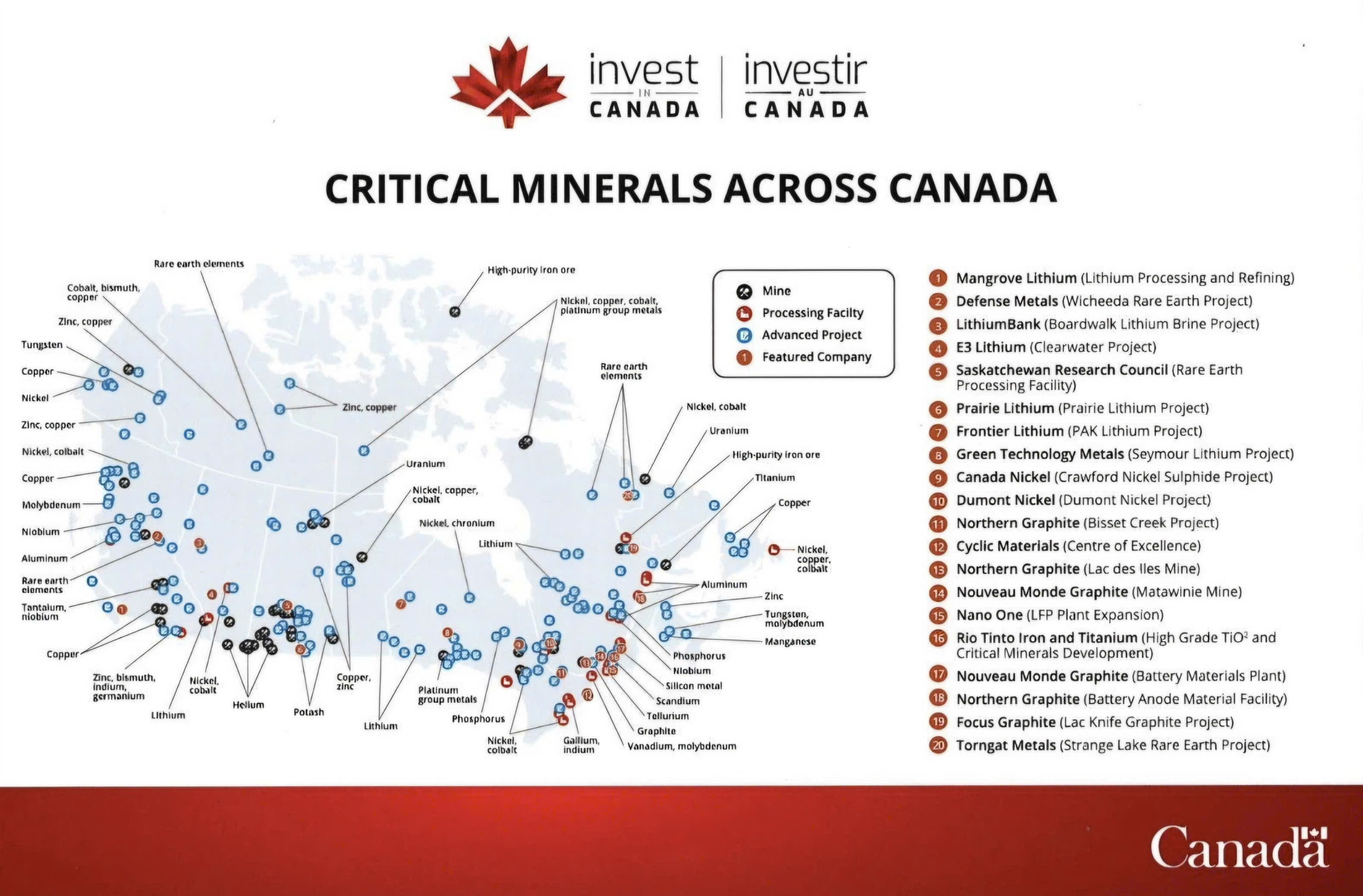
Canada is not focusing solely on mining. It is seeking to develop value chains spanning exploration, extraction and processing through to the production of inputs for clean technology and the digital economy.
In 2026, Canada continued to strengthen this policy. In July 2026, the Canadian government announced the Canada Critical Minerals Accelerator and its first strategic investment agreement with Teck Resources and Canada Growth Fund, aimed at expanding production and processing capacity at Trail Operations in British Columbia. The Canadian government describes the programme as a tool to encourage private investment, accelerate projects and secure supplies of critical minerals for the energy transition and economic security.
For Vietnam, cooperation in this area can be viewed in both directions. On the one hand, Canada has resources as well as expertise in mining, processing, finance and technology. On the other, Vietnam is developing electronics, electric vehicles, electrical equipment, renewable energy and high-tech industries, all of which increasingly require stable supplies of raw materials.
The challenge is to build value chains rather than simply exchange raw materials. This requires cooperation in processing technology, environmental standards, logistics, finance and research and development.
Technology and AI: Another space for cooperation
Canada is also entering a new phase in the development of artificial intelligence and foundational technologies.
Canada's new AI strategy, AI for All, focuses on expanding research capacity, AI infrastructure, human resources, commercialization and international cooperation. Canada is promoting technology alliances, including cooperation in AI, digital infrastructure, research and development.
In 2026, Canada continued to invest in emerging technologies such as quantum computing. In August 2026, the Canadian government announced a CAD 195 million investment in Xanadu Quantum Technologies, supporting a CAD 893 million project to expand research, development and manufacturing capabilities in quantum technology.
These areas are broadly aligned with Vietnam's development priorities in AI, semiconductors, digital technology, new materials and digital transformation. If cooperation expands from merchandise trade to partnerships among universities, research institutes, technology companies and investment funds, Vietnam-Canada relations could gain another layer of connectivity: the connection of knowledge and technology.
From trading partners to long-term value chains
The state visit to Canada by General Secretary and President To Lam comes at a time when economic relations between the two countries have favorable conditions for expansion.
First is the political foundation built over more than half a century. The two countries established diplomatic relations in 1973 and upgraded them to a Comprehensive Partnership in 2017. Over the years, political consultation mechanisms, the Joint Economic Committee and the Defense Policy Dialogue have created additional channels for regular dialogue.
Second is a relatively solid trade foundation. The CPTPP has created a favorable framework for trade and investment, while both sides share an interest in advancing negotiations for a Canada-ASEAN FTA.
Third is the complementarity of the two economic structures. Canada has resources, energy, technology, finance, education and knowledge-intensive industries. Vietnam has a strong production base, a domestic market, an extensive network of FTAs and a strategic position connecting ASEAN.
But turning potential into concrete projects requires economic relations to take another step forward.
One important direction is two-way investment. Bilateral merchandise trade has grown rapidly, but the scale of investment remains below its potential. Attracting Canadian businesses into priority sectors in Vietnam, such as energy, clean technology, digital infrastructure, high-tech agriculture, logistics, finance and high-tech manufacturing, could generate greater value than simply increasing imports and exports.
Conversely, Vietnamese businesses could seek opportunities in Canada in energy, minerals, food processing, logistics and sectors targeting the North American market.
Another direction is to strengthen connections among small and medium-sized enterprises. Most international supply chains are not built solely by large corporations, but also by thousands of Tier 1 and Tier 2 suppliers and specialized technology companies. Connecting Vietnamese businesses with Canada's business ecosystem could therefore generate significant spillover effects.
Agriculture and food is another area with room for expansion. Canada has strong capabilities in agriculture, food technology and cold-chain logistics, while Vietnam has a large market and an increasingly developed processing and export system. Cooperation could expand from commodity trade into processing technology, standards, traceability and product development.
In the energy sector, Canada's identification of Vietnam as an important Indo-Pacific partner provides a basis for the two sides to engage more deeply on LNG, clean energy, hydrogen, electricity, emissions-reduction technologies and financing for the energy transition.
For critical minerals, the key issue is to build transparent, stable supply chains that meet environmental standards. This is a long-term field that requires the participation of governments, businesses, financial institutions and research organizations.
In technology, cooperation in AI, semiconductors, quantum technology, cybersecurity and data could create another layer of connectivity between the two economies. Vietnamese Ambassador to Canada Pham Vinh Quang has identified AI, cybersecurity, new materials, clean technology, smart agriculture and digital transformation as potential areas of cooperation.
Of course, realizing these opportunities will require both sides to address practical issues such as technical standards, market regulations, logistics, business capacity, transportation costs, access to finance and market information.
Therefore, the economic significance of the visit lies not only in the specific agreements that may be signed, but also in the potential to establish mechanisms that allow businesses from the two countries to continue cooperating after the visit.
During the July telephone conversation, Canadian Prime Minister Mark Carney emphasized that Canada regards Vietnam as one of its important partners in ASEAN and the Indo-Pacific. The two sides also discussed expanding trade and investment in areas including aerospace, transportation, agriculture and food, and energy.
These are also sectors that demonstrate how the economic structure of Vietnam-Canada relations is changing.
From a trade relationship primarily based on the flow of goods, the two countries have the conditions to move toward a model of cooperation based on value chains, investment, technology and energy.
In an Indo-Pacific undergoing major restructuring in trade and production, Canada needs to expand its relations with reliable partners in Southeast Asia, while Vietnam needs access to new sources of capital, technology, energy and markets.
The convergence of these two needs could open a new chapter in Vietnam-Canada economic relations.
The state visit by General Secretary and President To Lam therefore comes not only in the context of commemorating and looking back on more than 50 years of bilateral relations, but also at a time when the two economies face a more practical question: how to turn Vietnam's position in the Indo-Pacific and Canada's strengths in resources, technology and finance into new value chains capable of generating long-term growth for businesses and the two economies.





 Google translate