


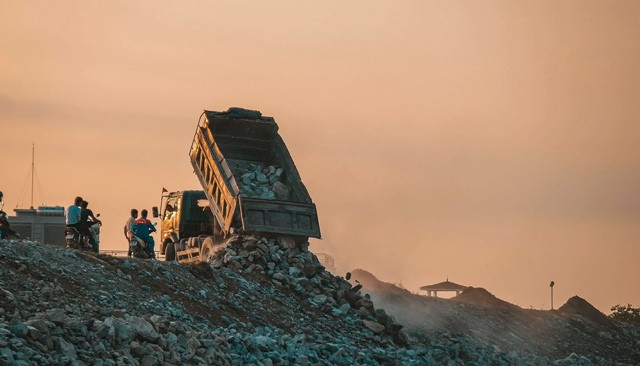
One of the key challenges facing Vietnam’s circular economy has long been reducing the volume of municipal waste sent to landfill. With tens of thousands of tons of municipal solid waste generated each day and much of it still ending up in landfill, the country’s waste stream actually represents a significant pool of untapped economic value.
A new generation of climate tech startups is approaching the issue differently. Rather than treating waste solely as a cost, they are looking at the economic value that can be recovered before it reaches the end of the treatment chain. ARC-V and RetriV, two projects that reached the national final of ClimateLaunchpad Vietnam 2026, illustrate this shift. ClimateLaunchpad is a global green business ideas competition conducted by EIT Climate-KIC. In Vietnam, the program is organized by the Center for Research, Consulting, Innovation and Sustainable Development (CCS), with support from the Hanns Seidel Foundation Vietnam and the Vietnamese-German University.
Rethinking waste
Vietnam’s waste challenge provides a large potential market for this and similar approaches. The country generates tens of thousands of tons of municipal solid waste each day, while treatment infrastructure and technologies have not always kept pace with the volume and composition of the waste. Mr. Ngo Huynh Thien, General Director of ARC-V, said Vietnam has developed a relatively effective waste collection system, but treatment technologies and infrastructure have yet to keep up, leaving considerable resource value embedded in waste.
According to Mr. Thien, the model’s key advantage is its ability to turn a cost-generating waste stream into multiple sources of economic value. The company says it already has more than six potential locations and local operators ready to deploy the solution, supported by project designs and financial models. This suggests that market demand may not be the main barrier to commercialization.
Ms. Tran Van Ty, CEO and Co-founder of RetriV, meanwhile, is targeting a less visible waste stream: nutrients dissolved in food processing wastewater. At most food processing plants, wastewater is treated primarily as an operating and compliance cost. RetriV takes the process one step upstream, seeking to recover proteins and nutrients at source before they are degraded or lost during conventional treatment.
The startup is initially testing the approach on wastewater from surimi (fish paste) production, where repeated washing of minced fish releases part of the protein and nutrient content into the wastewater stream.
Unlike solid seafood by-products such as heads and shells, which already have relatively established reuse markets, dissolved nutrients are more difficult to recover. This creates an opportunity for technology-based solutions, but also makes the technical and economic case more complex.
ARC-V is seeking to lower this barrier through a modular approach. Rather than requiring a large-scale facility from the outset, the system can start with a smaller unit to validate both the technology and financial model. Successful deployment can then provide the basis for incremental expansion. For investors, this changes the risk profile. The initial capital commitment can be limited to proving the model, rather than financing a full-scale rollout before the technology has been demonstrated.
RetriV faces a different commercialization challenge: variations between production sites. Wastewater composition and volumes depend on raw materials, production processes, and existing treatment systems. The technology therefore needs to be assessed site-by-site and integrated without disrupting production. RetriV remains at the pilot stage, with further validation needed to assess nutrient-recovery performance, consistency across wastewater streams, regulatory requirements for recovered products, and economies of scale.
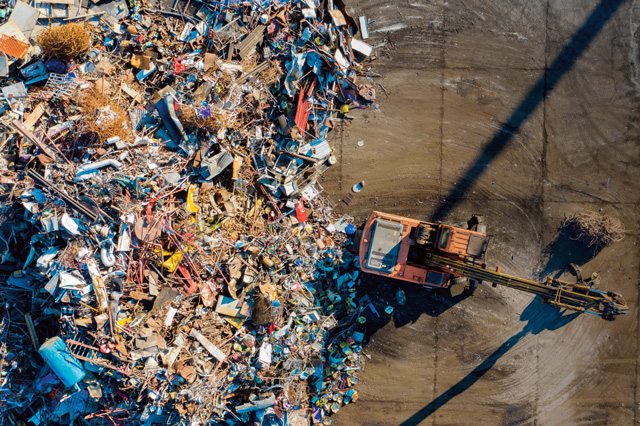
At a reference site, preliminary calculations indicate that the solution could reduce emissions associated with the defined treatment stage by 62 per cent. The estimate, however, is based on customer-supplied operating parameters and reference emission factors and has not yet been independently verified. The experience points to a broader challenge for climate tech: pilot results can demonstrate technical potential, but commercialization requires a stronger case built around reliable performance, market demand, and return on investment.
Turning waste into economic value
The economics of waste recovery are more complicated than simply finding a use for discarded materials. ARC-V’s model illustrates this point. Rather than relying solely on waste treatment fees, its financial model includes payments from local authorities, sales of recovered products, technology transfer royalties, and potentially carbon credits.
For its Phu Tho model, ARC-V estimates a payback period of around two years without subsidies. This remains a projection, however, rather than a result demonstrated through a full-scale commercial plant. “The value here is recovered from the waste itself,” Mr. Thien said. “The question isn’t whether it works, but who is positioned to benefit when it does.”
The circular economy proposition is to offset part of the cost of collecting and treating waste through revenue from recovered materials. But that depends on more than the existence of potentially-valuable materials. Recovered products need consistent quality and established markets, while recovery costs and regulatory requirements can determine whether the model works commercially.
RetriV faces a similar question further upstream. Its technology seeks to recover nutrients from food processing wastewater before conventional treatment. If those nutrients can be recovered and sold, part of what is currently a treatment cost could potentially become a source of revenue.
Whether that equation works depends on the value and consistency of the recovered material, as well as the capital and operating costs of the recovery system. RetriV remains at the pilot stage and is still testing these assumptions.
For both projects, the transition from pilot to commercial operations is therefore the critical test. ARC-V needs its first commercial plant to establish whether its technology, operating costs, and revenue assumptions hold under real-world conditions. RetriV needs to determine whether nutrient recovery can be replicated across different wastewater streams and generate sufficient value to justify deployment.

Vietnam has developed a relatively effective waste collection system, but treatment technologies and infrastructure have yet to keep up, leaving considerable resource value embedded in waste. The model's key advantage is its ability to turn a cost-generating waste stream into multiple sources of economic value.

The different approaches also highlight why climate-tech financing differs from software. ARC-V is seeking to reduce initial capital requirements through modularity, while RetriV emerged from a corporate spin-off. In both cases, the challenge is to generate enough technical and financial evidence to turn a promising environmental solution into an investable business.
From environmental costs to economic assets
The two projects show that technology is only one part of the commercialization equation. Financing and deployment models can be equally important. In both cases, revenue does not come simply from “selling technology.” Value is created through lower treatment costs, recovered products, resource savings, and, potentially, carbon credits.
This is also why climate tech faces a more complex financing challenge than software startups. Investors are not only funding a product, but also equipment, testing, certification, integration into production lines, and the time required for the market to adopt the technology.
ARC-V and RetriV differ in technology and waste streams, but both point to a broader shift in the economics of the circular economy.
The objective is no longer simply to make waste “less harmful.” The focus is increasingly on maximizing the value recovered before a material actually becomes waste.
For municipal waste, that value could lie in fuel, fertilizer, protein, or other materials. For food processing wastewater, it could be proteins and nutrients. The same logic could extend to waste heat, CO2, agricultural by-products, and other material streams currently discarded.
Ultimately, the decisive factor is not how “green” a technology is, but whether the value recovered is large, stable, and repeatable enough to support a viable business model.
That may be the more significant insight emerging from ClimateLaunchpad’s participating startups: they are not only trying to solve environmental problems but also to revalue what businesses currently pay to address them.
As the boundary between treatment costs and revenue opportunities continues to narrow, waste may increasingly cease to be the endpoint of a production chain and become a new input for the economy.





 Google translate