



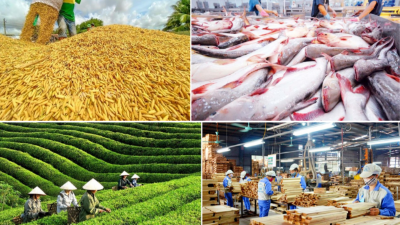
Vietnam’s agro-forestry-fishery export turnover reached an estimated $56.3 billion in the first nine months of 2026, up 7.8% year-on-year, according to a Deputy Minister of Agricultura and Environment.
To reach the full-year target of $74.212 billion, the sector must generate an additional nearly $18 billion in the remaining three months.
Deputy Minister of Agriculture and Environment Vo Van Hung was quoted by the Government News as disclosing the figures during a meeting on September 25 between Permanent Deputy Prime Minister Pham Gia Tuc and leading agro-forestry-fishery associations and enterprises.
Based on nine-month outcomes and prevailing market conditions, the ministry projects full-year export turnover could match or exceed the target. Wood and wooden products, seafood, fruits and vegetables, rubber, and livestock products are forecast to meet or outperform planned figures, while coffee, cashew nuts, cassava, and tea face continuing headwinds.
For the final quarter, the Ministry of Agriculture and Environment determined that priority must be given to defending staple commodity groups that form the foundation of exports, notably wood, wooden products, and seafood, while maintaining momentum in fruits & vegetables, especially durian.
For coffee, the focus will shift from volume expansion to value elevation through quality improvements, sorting, roasting, soluble coffee, specialty varieties, and branding. For rice, the priority is to sustain stable export shipments while raising the proportion of fragrant and high-grade varieties and penetrating markets beyond traditional destinations.
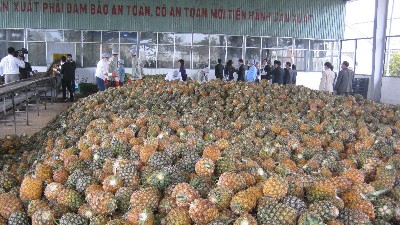
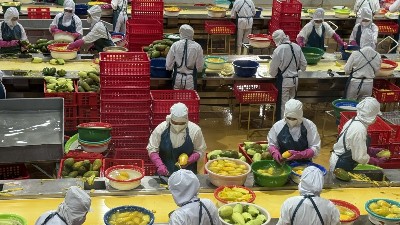
For fruits and vegetables, alongside securing seasonal supply, the agricultural sector will maintain rigorous oversight of growing-area codes, packaging facilities, pesticide residue limits, and traceability. For durian specifically, beyond the primary Chinese market, authorities emphasize lifting the share of frozen products, puree, dried fruit, and processed goods to reduce dependence on harvest seasonality and fresh-fruit shipments.
The ministry also stressed continuous market diversification by tapping deeper into the EU, Japan, South Korea, Australia, and CPTPP and RCEP member states, alongside exploring headroom in the Middle East, South Asia, Africa, and Latin America for rice, coffee, pepper, processed vegetables and fruits, seafood, and livestock items.
Parallel to market expansion, the ministry will concentrate on clearing administrative and technical bottlenecks spanning customs clearance, technical standards, quarantine and testing, traceability, growing and aquaculture codes, packing house accreditations, credit access, logistics, and cold storage, while fostering tighter links between processors and raw-material production regions.
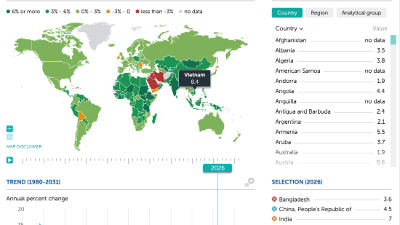
The overarching roadmap outlined by the ministry entails decisively pivoting from volume-driven growth to quality, value addition, branding, and digital transformation. Anchored by market demand, quality standards, enterprise-centric operations, and farmers as primary stakeholders, the sector aims to achieve 4% sectoral GDP growth and exceed $74 billion in total agro-forestry-fishery export turnover in 2026.







 Google translate