


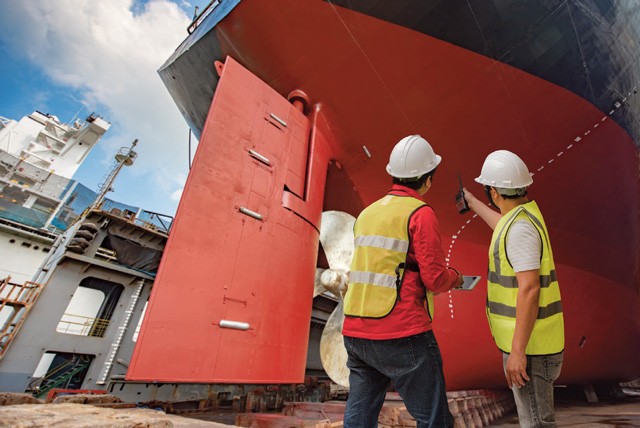
For decades, the marine industry has been associated with shipyards, dry docks, piers, and mechanical workshops along rivers and coastlines. Yet these are only part of the picture.
The marine industry therefore extends far beyond shipbuilding to include ship repair, offshore structures, marine equipment, materials, robotics, sensors, aquaculture equipment, software, and control systems. This broader perspective changes how a maritime nation should be understood: it must not only have an economy that uses the sea, but also an industrial base capable of supporting it.
Marine industrial ecosystem
Vietnam holds advantages that other countries and territories lack, including a long coastline, an expanding port network, shipping operations, oil and gas activities, fisheries, tourism, logistics, coastal economic zones, and extensive maritime space supporting diverse economic activities.
To translate these advantages into national competitiveness, one fundamental question must be answered: How much of the equipment, technology, and products needed at sea can Vietnam develop and master itself?
Within the shipbuilding industrial ecosystem, support industries cover a broad range of products, including shipbuilding steel, diesel engines, gearboxes, shafts, propellers, electrical equipment, cables, automation systems, marine equipment, pumps, valves, insulation, and interior fittings. This illustrates the integrated nature of shipbuilding, which connects multiple industrial sectors.
A single vessel can generate demand for steelmaking, precision engineering, electronics, advanced materials, information technology, automation, logistics, inspection services, and technical training. In turn, these industries can supply essential inputs for offshore structures, wind power, fisheries and marine aquaculture equipment. Viewing shipbuilding as an isolated manufacturing activity would therefore underestimate its wider economic impact. Strengthening support industries must be an integral part of Vietnam’s marine industrial development strategy.
In addition to mastering maritime economic activities, a strong maritime nation must also have the capacity to safeguard its maritime security, national defense and sovereignty over its seas and islands. Building an integrated maritime industrial ecosystem not only strengthens the marine economy but also reinforces the foundation for the country’s strategic autonomy.
New opportunities for manufacturing
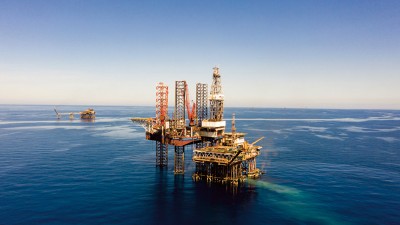
A common question in industrial development is where Vietnam can find a sufficiently large market to support manufacturing growth. For the marine industry, part of the answer lies in the expansion of the country’s own maritime economy. Growing maritime transport creates demand for new ships, repairs, and maintenance, while port development requires cranes, cargo-handling equipment, and electrical and control systems. Offshore oil and gas operations need service vessels, steel structures, and mechanical equipment.
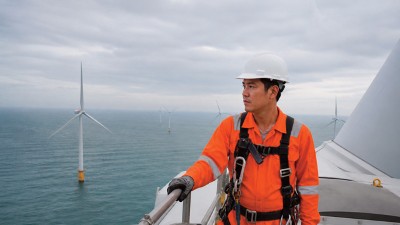
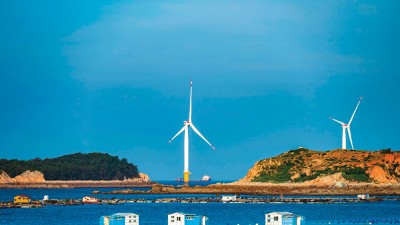
Offshore aquaculture drives demand for cages, buoys, environmental sensors, automated feeding systems, and service vessels. Offshore wind creates markets for specialized vessels, foundations, lifting equipment, cables, substations, and maintenance services. Together, these emerging sectors offer new opportunities for marine manufacturing.
Traditional maritime industries, alongside offshore wind, aquaculture, green shipping, and deep-sea activities, could establish a substantial domestic market. This is important because industrial development cannot rely solely on supply-side incentives. Businesses need actual orders, customers, opportunities to test products, and sufficient demand to achieve economies of scale.
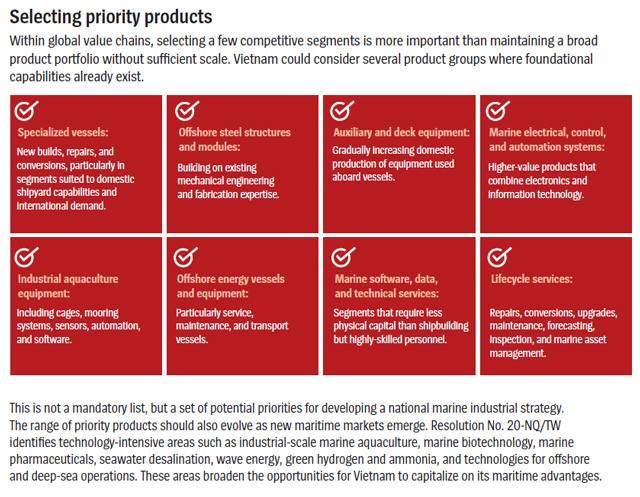
In the early stages, the domestic market can serve as a testing ground. Vietnamese manufacturers can gain experience supplying local ship owners, aquaculture operators, and offshore projects, while software developers can refine fleet management systems through implementation across domestic shipping fleets.
Once products demonstrate reliability, quality, and compliance with certification requirements, businesses can expand internationally. Domestic demand provides an initial market, while exports drive companies to meet higher standards.
The International Maritime Organization (IMO) has highlighted the substantial investment needed to reduce maritime emissions, including in alternative fuels, port infrastructure, and new technologies. This is not merely an environmental challenge but also a transformation in technology and market structures, creating opportunities for new industries to emerge.
For Vietnam, the maritime sector’s green transition could create opportunities for new industrial activities, including supplying cleaner fuels for ships; developing port infrastructure for fuel supply and pollution control; equipping vessels with pollution-monitoring systems; providing software to optimize fuel supply and consumption; and offering new equipment upgrades and maintenance solutions. These markets are not limited to large corporations but also create numerous niche opportunities for small and medium-sized enterprises capable of adapting to evolving technical requirements.
Developing marine industrial clusters
Building a sophisticated marine industry will require Vietnam to move beyond isolated manufacturing facilities. Shipyards need ports, ports need logistics, and logistics operations need warehouses. Manufacturers require suppliers of steel, equipment and materials, while businesses depend on inspection, repair, training, and financial services. These activities benefit from being concentrated within the same economic area.
This is the rationale behind port-industrial clusters. Coastal economic zones and port-industrial complexes can support specialized marine supply chains, with each region developing according to its existing strengths.
Not every locality needs a mega-shipyard. Instead, clusters can specialize in selected segments, from shipbuilding and deck equipment to precision engineering, electrical cables, control systems, maintenance, software, and marine data. Such a network would be more efficient than having every locality invest in every type of manufacturing facility.
Major marine economic centers should also become hubs for marine industry and technology, bringing together leading enterprises, supporting manufacturers, research institutes, universities, testing and certification facilities, ports, and logistics networks. Each center could focus on particular strengths, such as shipbuilding and logistics, offshore equipment and energy, aquaculture technology, or mechanical engineering and marine materials.
These clusters require more than factories. They need reliable transport links, specialized ports, electricity, industrial water supply, waste treatment, warehouses, emergency response facilities, training institutions, and worker housing. Offshore manufacturing may additionally require heavy-duty berths, module assembly areas and facilities capable of handling oversized cargo. Marine industrial planning must therefore be coordinated with seaport planning, marine spatial planning, and energy infrastructure development.
Mastering marine technology
By 2045, the key question will not be how many shipyards Vietnam has but how much of the technology underpinning maritime activities the country can master. A strong maritime nation needs a capable shipping fleet supported by shipbuilding, steelmaking, mechanical engineering, electronics, automation and advanced materials, with these sectors working together as an integrated ecosystem.
Vietnam already has a foundation to build on. The SBIC maintains shipbuilding and repair operations across several regions, while domestic enterprises with international capital, technology, and partnerships participate in specialized segments. The country is therefore not starting from zero.
Progress does not necessarily require building large numbers of new factories. Vietnam could achieve more by upgrading existing facilities, focusing on competitive segments, establishing a domestic market, and linking large enterprises with smaller suppliers.
A meaningful measure of progress will be when vessels designed by Vietnamese engineers incorporate more equipment manufactured by Vietnamese companies, undergo domestic testing and certification, operate using Vietnamese software, and are maintained by domestic service networks. Their value would then extend beyond being built in Vietnam, with Vietnamese technology embedded in the products themselves.
As these products reach international markets, Vietnam would export not only ships but also design, equipment, software, technical services, standards, and expertise. In doing so, the country would be exporting marine industrial capabilities - a key step in its maritime development.
Vietnam’s vision for 2045 should therefore be to establish a marine industrial ecosystem with sufficient depth, openness, and international competitiveness. Shipbuilding would remain a core component, but not the entire industry. Steel, mechanical engineering, electronics, automation, materials, software, robotics, sensors, and data would develop alongside it.
Coastal economic zones and port-industrial clusters could become specialized production centers, with domestic demand providing an initial platform for growth and international markets driving improvements in quality and competitiveness. This is the path toward making the sea not only a source of economic growth but also the foundation of a new Vietnamese industrial base.


 Google translate