


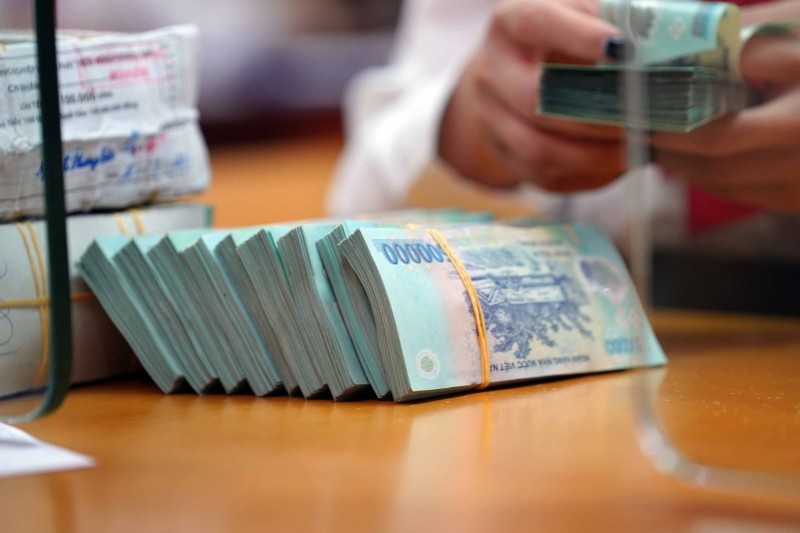
Against the backdrop of a recovering economy following global fluctuations, combined capital mobilization in Ho Chi Minh City and nearby Dong Nai city reached over VND6.1 quadrillion (over $232,2 billion) in the first six months of the year, representing a 7.1% increase compared to the end of 2025.
The capital mobilization growth is reflected not only in the figures but also in positive shifts within the capital structure. Savings and term deposits accounted for 39.2% of the total mobilization, an increase of 9.2% from the end of the previous year.
This trend underscores the confidence of the public and businesses in the banking system, while enabling credit institutions to expand mid-to-long-term credit to support corporate investment and development.
According to Mr. Nguyen Duc Lenh, Deputy Director of the State Bank of Vietnam Region 2 Branch, there are three primary reasons for this growth trend.
First, the total scale of capital mobilization in HCMC and Dong Nai has exceeded the VND6 quadrillion mark, which was supported by a positive growth momentum in recent months. Specifically, growth rates reached 1.3% in April, 1.57% in May, and 2.84% in June. These results have provided a stable foundation for banking operations in Region 2 to effectively support economic growth.
Second, savings and term deposits—which make up 39.2% of the total mobilization—grew by 9.2% compared to the end of 2025, outpacing the overall growth rate of capital mobilization in the region. This stability significantly benefits the capital management and utilization processes of credit institutions. As these deposits are inherently stable, they allow banks to expand mid-to-long-term credit, helping businesses invest in production, renew technology, and develop infrastructure.
Third, the growth is attributed to a favorable investment environment and macroeconomic stability, coupled with effective monetary policies. The SBV has implemented flexible policy adjustments, including regulations on the ratio of short-term funds used for mid-to-long-term loans, adjusting credit quotas for social housing, and providing loans for the development of industrial zones and export processing zones.
Furthermore, the advancement of account-based services and the application of modern technology continue to be vital factors in capital mobilization. These innovations help credit institutions operate effectively, expand credit growth, and successfully fulfill the monetary policy objectives for 2026 in the two localities.








 Google translate