


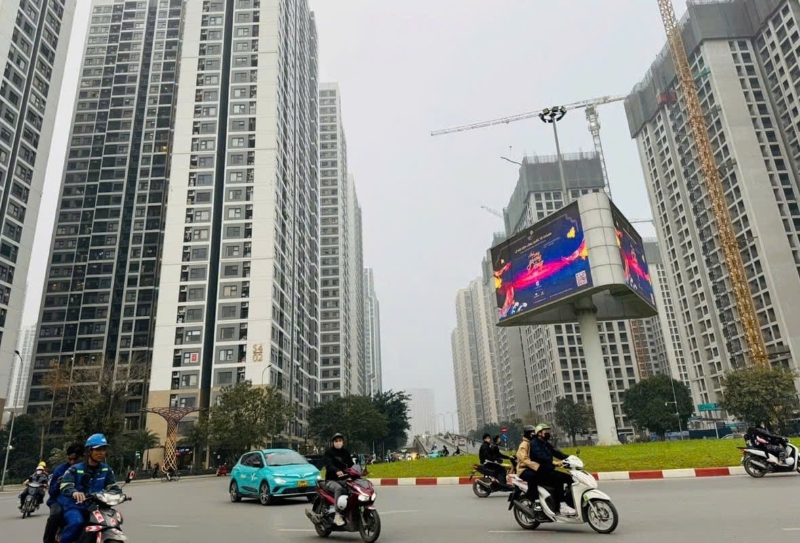
Vietnam’s real estate capital flows are showing notable signs of recovery, albeit in a cautious and uneven manner, according to the Ministry of Construction.
As of February 28, 2026, outstanding credit for real estate business activities reached VND2.24 quadrillion ($88.9 billion), up 11.7% from the fourth quarter of 2025 and 43% year-on-year. The increase reflects improving confidence in the sector, though capital allocation remains selective.
A significant portion of credit has been directed toward urban development and housing projects, which accounted for 35% of total real estate lending—rising 24.1% compared to the previous quarter. Meanwhile, other segments such as industrial parks, resort properties and land-use rights also recorded credit growth, albeit at a slower pace.
In the corporate bond market, total bond issuance surged to VND16.31 trillion ($620 million) in March. Of this, the real estate sector made up a dominant share of VND10.2 trillion, equivalent to 62.51%, signaling a strong return of capital flows into the segment.
Foreign direct investment (FDI) inflows in the first two months of 2026 remained stable, with no major fluctuations in registered or disbursed capital. This was largely attributed to seasonal factors early in the year and the time required to complete investment procedures. Overall, the steady inflows underscore continued investor confidence in Vietnam’s business environment.
Momentum picked up in March, with newly registered FDI reaching an estimated $15.2 billion, up 42.9% year-on-year, while disbursements totaled $5.4 billion. Notably, real estate accounted for 7.2% of total disbursed FDI, equivalent to $389.5 million, signaling an initial recovery of foreign capital into the sector.




 Google translate