


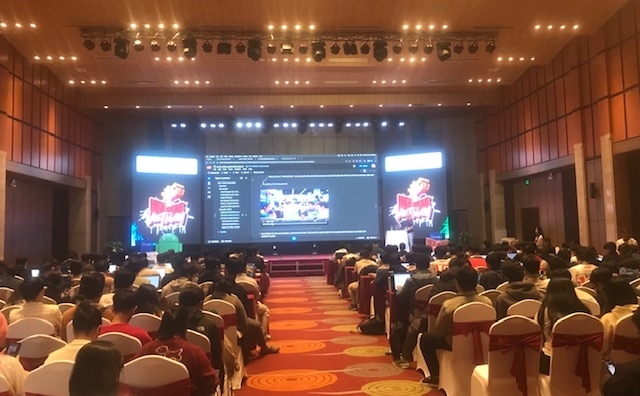
The Da Nang People’s Committee has issued Decision No. 3345/QD-UBND dated December 31, 2025, approving a project titled "Da Nang – City of Innovation."
The overall goal of the project is to build Da Nang into an innovative city—an ecological, smart, distinctive, and sustainable metropolis of international stature, serving as a hub for connection and development within regional and global urban networks.
At the same time, Da Nang is envisioned as a tourism center linked with an international event hub; a center for high-tech industry and information technology; a startup and innovation hub; a regional-scale international financial center; and a livable coastal city of Asian standards.
By 2030, the project sets out specific targets such as upgrading city's innovation ecosystem to international standards, comparable to major ecosystems in Southeast Asia, recognized and ranked by international organizations; striving to be among the world’s top 300 startup and innovation ecosystems. The city aims to support the formation of around 500 innovative startups, attract more domestic and foreign venture capital funds, and work toward the emergence of at least one technology unicorn in Da Nang.
Priority sectors under the project include: information and communications technology; high-tech and green industries; biotechnology and healthcare; circular economy, marine economy, and logistics; smart cities and smart tourism; financial technology (fintech); data science, big data, and artificial intelligence (AI).
To implement the “Da Nang – City of Innovation” project, the city has allocated a total budget of nearly VND7.3 trillion (over $277 million), sourced from the annual science and technology fund managed by the city Department of Science and Technology, along with other lawful funding sources.
According to Director of the local Department of Science and Technology, Mr. Nguyen Thanh Hong, the city has established three innovation startup support centers; 12 incubators; three makerspaces; eight co‑working spaces; six startup investment funds; 10 startup clubs at universities and colleges; and more than 20 institutions and universities actively participating in the ecosystem, with an estimated 200 innovative startup enterprises.


 Google translate