


As science, technology, innovation, and digital transformation play increasingly decisive roles in national competitiveness and sustainable development, quantum technology is unlocking novel paradigms for tackling complex computation, simulation, optimization, and cybersecurity challenges.
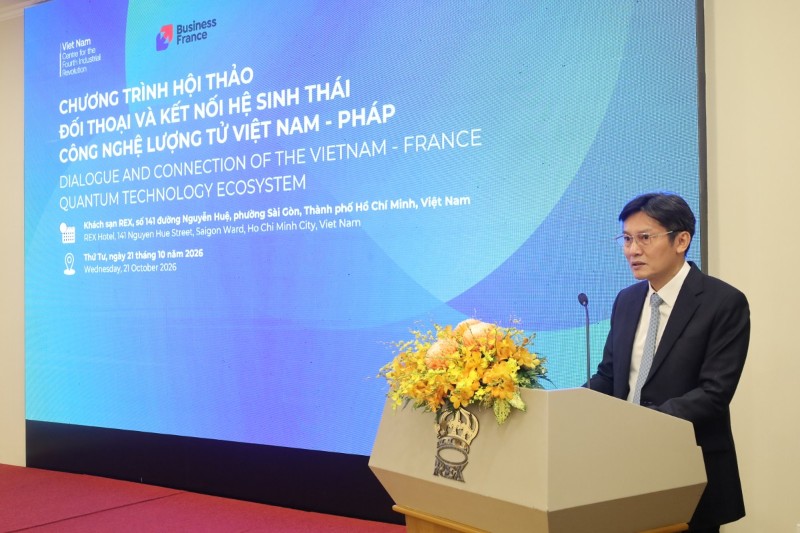
This potential was highlighted at the seminar "Dialogue and Connectivity of the Vietnam–France Quantum Technology Ecosystem," held in Ho Chi Minh City on October 21.
The dialogue pursued two primary objectives: strengthening networking, knowledge exchange, and commercial, investment, and technological partnerships between French quantum enterprises and HCM City counterparts; and sharing international experiences in ecosystem building to support roadmap research on quantum applications in megacity governance through 2030, with a vision toward 2045.
Speaking at the event, Deputy Director of the Centre for the Fourth Industrial Revolution in the city (HCMC C4IR), Mr. Pham Phu Truong, underscored a strategy to transition from broad knowledge-sharing to tangible partnerships by identifying clear application use cases, establishing flexible collaboration models, and setting up enduring liaison channels between the two ecosystems.
A core focal point of the seminar was identifying concrete urban challenges in the city where quantum technology could offer viable breakthroughs. Key sectors examined included banking, finance, and risk modeling; logistics, traffic coordination, and freight flow optimization at seaports and airports; energy grid management and climate change mitigation; as well as data protection and urban information security.
In the banking and financial sector, discussions centered on researching emerging tech applications for computational optimization and risk management as the southern metropolis accelerates efforts in the development of Vietnam's International Financial Center headquartered in the city.
In logistics and transportation, resolving the complexities of large-scale operating networks was analyzed through the lens of real-world operational needs and access to tailored technological solutions. Regarding information security, proactive preparation against systemic shifts that quantum advances could inflict on cryptographic protocols and digital infrastructure was raised as an urgent priority.
Participants emphasized that realizing these opportunities demands synchronization across three pillars: adaptive regulatory sandboxes and legal frameworks; clearly defined practical use cases tailored to end-user entities; and a workforce prepared and trained early.
"HCMC C4IR, operating as a technology ecosystem connector and an affiliate within the World Economic Forum’s (WEF) global C4IR Network, is committed to fostering long-term bridges between international tech firms and Vietnamese regulatory bodies, research institutes, universities, and business communities," Mr. Truong said.
The event gathered representatives from the municipal departments, domestic research institutes, universities, and local enterprises, alongside officials from the French Consulate General in the city and a high-level French tech delegation—featuring firms such as Quandela, Quobly, QPerfect, and Thales—who shared insights on technological capabilities, application viability, and bilateral collaboration potential in Vietnam.
The workshop served not only as a dedicated platform linking Vietnamese and French quantum stakeholders, but also contributed vital international perspectives to Ho Chi Minh City’s research roadmap for quantum technology deployment.
 Google translate