


The Vietnamese Ministry of Industry and Trade has completed a draft submission on signing a free trade agreement (FTA) between Vietnam and the European Free Trade Association (EFTA), which comprises Switzerland, Norway, Iceland and Liechtenstein.
The dossier has been sent to the Ministry of Justice for appraisal.
Negotiations for the Vietnam–EFTA FTA, known as VEFTA, began in 2012. After more than 14 years and 21 official negotiating rounds, the two sides have concluded negotiations on the agreement’s full content. The Ministry of Industry and Trade has now finalized the draft submission for the Government to consider the signing of the deal.
The proposed agreement covers trade in goods and services, investment, rules of origin, technical barriers to trade, sanitary and phytosanitary measures, trade facilitation, government procurement, intellectual property, competition, SMEs and sustainable development.
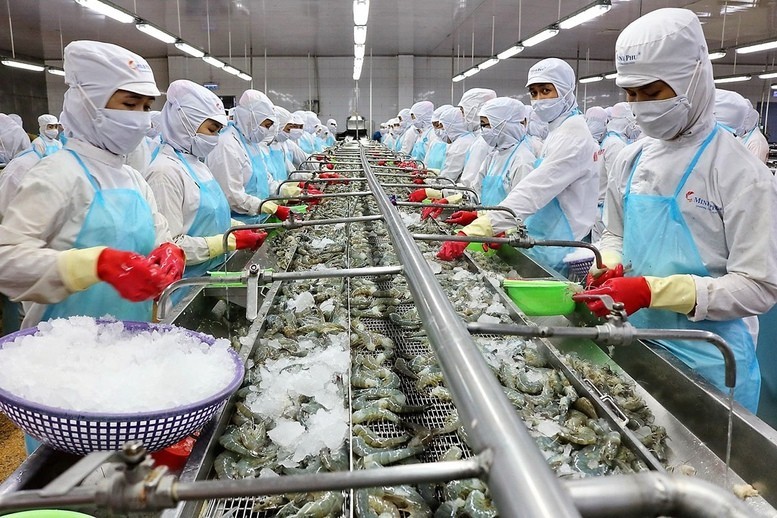
On tariffs, EFTA members have offered immediate liberalisation of more than 90% of tariff lines, representing 99.5% of Vietnam’s exports to the bloc. EFTA also commits to eliminating tariffs immediately on all industrial products, including seafood.
As a result, key Vietnamese exports such as textiles and garments, footwear, seafood, computers, electronic products and components, machinery and equipment would receive immediate tariff elimination. EFTA also offers tariff reductions for several major Vietnamese agricultural products, including rice, honey and fruit and vegetables.
Vietnam, meanwhile, has offered to eliminate tariffs on more than 86% of tariff lines, equivalent to 99.9% of imports from EFTA, either immediately or through reduction schedules ranging from three to 15 years.






 Google translate