


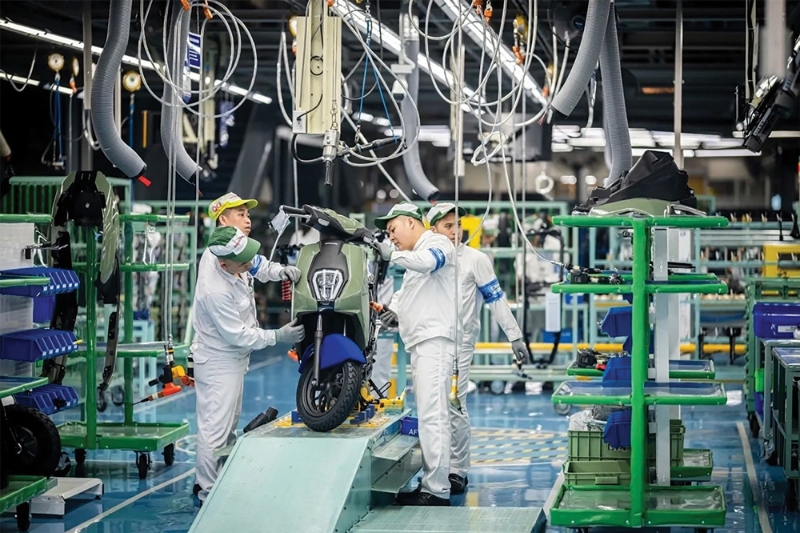
Japan has long been one of the largest investors in Vietnam, as well as a strategic economic partner making deep contributions to the country’s industrialization and economic integration. Beyond providing large-scale capital, Japanese enterprises have also played a critical role in technology transfer, enhancing production capacity and gradually shaping Vietnam’s position in regional and global supply chains.
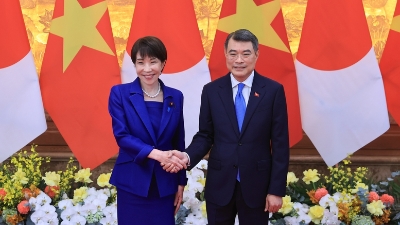
During the early May visit to Vietnam by Japanese Prime Minister Takaichi Sanae, the two sides agreed to further promote and deepen their Comprehensive Strategic Partnership. This is seen as a new driver to advance bilateral economic, trade, and investment cooperation in a more substantive and effective direction, thereby opening significant room for future Japanese FDI inflows into Vietnam.
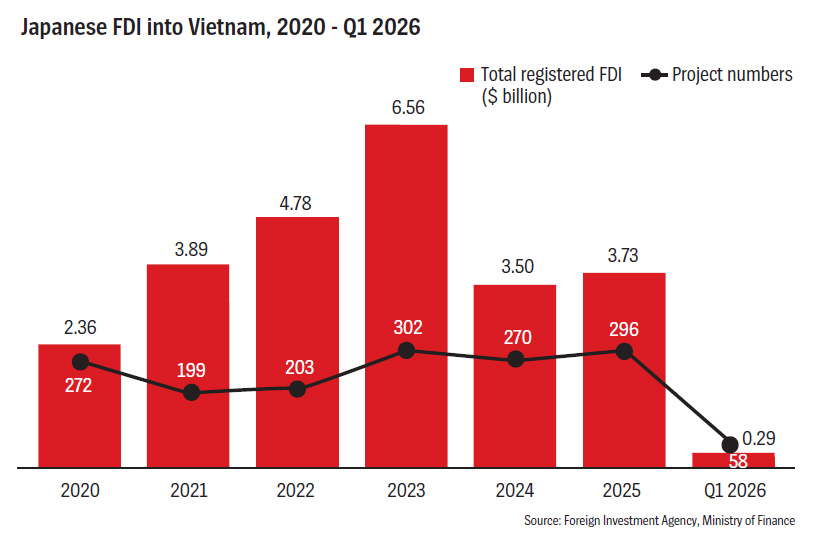
Spanning a wide range of sectors, Japanese investors have become a key component of Vietnam’s foreign investment landscape. According to the Foreign Investment Agency at the Ministry of Finance, as of the end of the first quarter of 2026, Japan had 5,760 valid projects in Vietnam with total registered FDI exceeding $79.01 billion, accounting for more than 14 per cent of total FDI and making Japan the third-largest investor in the country.
Industry leads the way
Manufacturing and processing remains the “backbone” of Japanese capital inflows. The presence of major corporations such as Honda, Canon, Panasonic, Nidec, and Meiko has helped establish large-scale production hubs in both northern and southern Vietnam. Beyond capital scale, these investors have also contributed to job creation, the development of domestic supplier networks, and improvements in production management standards, enabling Vietnam to participate more deeply in regional value chains.
In electronics, Japanese enterprises in Vietnam are involved across the spectrum, from component manufacturing and assembly to equipment supply and technology solutions, helping to form a relatively complete electronics industry ecosystem. According to a report from FiinGroup, export value from Japanese electronics enterprises in Vietnam reached approximately $9.8 billion in 2025, up 0.3 per cent year-on-year. Meanwhile, Japanese enterprises accounted for around 6.2 per cent of Vietnam’s total electronics exports in 2025.
A new wave of Japanese investment has remained active in recent months. In late April, AEONMALL Vietnam invested more than $149 million in the AEON Mall Bac Ninh Tan Tien project in northern Bac Ninh province, marking a strong expansion in modern retail. Around the same time, Sun Hill Vietnam invested $3 million in the Sunhill Vietnam factory project in Bac Ninh, adding to local industrial capacity.
In parallel, large-scale projects involving major Japanese corporations continue to be accelerated through strategic partnerships. A notable example is the $4.2 billion North Hanoi Smart City project, developed by a joint venture between the BRG Group and the Sumitomo Corporation, marking a shift from manufacturing investment toward modern urban and infrastructure development.
According to Mr. Ozasa Haruhiko, Chief Representative of the Japan External Trade Organization (JETRO) in Hanoi, Vietnam remains an attractive destination amid the wave of production relocations by Japanese companies, thanks to its strong market potential and clear improvements in its investment environment. Three key advantages continue to draw Japanese firms: large market size, competitive labor costs, and political-social stability. “Where Vietnam was once primarily seen as an assembly base driven by cost advantages, its strong economic growth has elevated it into a highly-promising consumer market,” he explained. “This shift is clearly influencing the investment and business strategies of Japanese enterprises in the coming period.”
Expanding investment drivers
The Japanese business community is not only a major investor but also an important “bridge” in strengthening bilateral ties. Its contributions extend beyond economic growth to include technology transfer, workforce training, and sustainable development.
A recent survey by JETRO showed that, in 2025, approximately 67.5 per cent of Japanese companies in Vietnam reported profits; the highest level in 15 years. At the same time, 56.9 per cent plan to expand operations within the next one to two years, significantly higher than the ASEAN average. Notably, around 35 per cent of Japanese firms in Vietnam export to the US; above the regional average and reinforcing Vietnam’s role as a key manufacturing hub within global strategies.
At the same time, investment drivers among Japanese enterprises in Vietnam are undergoing a clear shift. Some 60.1 per cent are expanding their operations due to strong growth in domestic demand. This confirms that Vietnam is no longer merely an “export manufacturing base” and is increasingly emerging as a dynamic and promising consumer market capable of attracting long-term business strategies.
Analyzing this trend, Mr. Haruhiko noted the significant change in investor perceptions. While Vietnam was once viewed mainly as a production base, it is now considered an important consumption market, prompting companies to adjust strategies and expand their presence beyond manufacturing into distribution and services.
In particular, Japanese companies are increasingly seeking Vietnamese partners to jointly participate in value chains and develop large-scale projects, rather than implementing standalone investments, as in the past.
Meanwhile, labor advantages continue to be a key factor reinforcing investor confidence. According to Mr. Haruhiko, Vietnam’s workforce, ranging from unskilled labor to highly-qualified professionals, is rated by Japanese businesses as above the ASEAN average. This provides a critical foundation for attracting projects with higher technological content and added value.
In practice, many Japanese enterprises are choosing Vietnam not only for competitive costs but also to tap into an increasingly abundant pool of skilled technical talent, particularly in information technology, electronics, and smart manufacturing. This is helping drive a shift from basic processing and assembly toward deeper participation in higher-value segments of the supply chain. “In particular, Japanese companies are increasingly seeking Vietnamese partners to jointly participate in value chains and develop large-scale projects, rather than implementing standalone investments, as in the past,” Mr. Haruhiko noted.
Looking ahead, especially following the new cooperation orientations agreed during Prime Minister Sanae’s visit, Japanese investment flows into Vietnam are expected to enter a new phase characterized by deeper links and greater substance. Cooperation will expand into strategic sectors such as liquefied natural gas (LNG), energy, railway infrastructure, and green development, going beyond capital scale to include technology transfer, enhanced domestic capacity, and deeper integration into value chains. As a result, Japan’s investment landscape in Vietnam is expected to become more diversified, more sustainable, and more effective in supporting long-term economic growth.



 Google translate