


Nearly 25 years to extract the first ton of oil
From the founding of the Oil Exploration Group 36 in 1961 to the first ton of crude being extracted from the Bach Ho field in 1986, earlier generations of the Vietnam National Industry - Energy Group (Petrovietnam) persevered for nearly 25 years amid severe scarcity. From that milestone emerged major national works, including the Bach Ho gas pipeline, the Phu My Fertilizer Plant, the Dung Quat Oil Refinery, and the Ca Mau Gas-Power-Fertilizer Complex, each opening a new field that Vietnamese personnel mastered on their own.
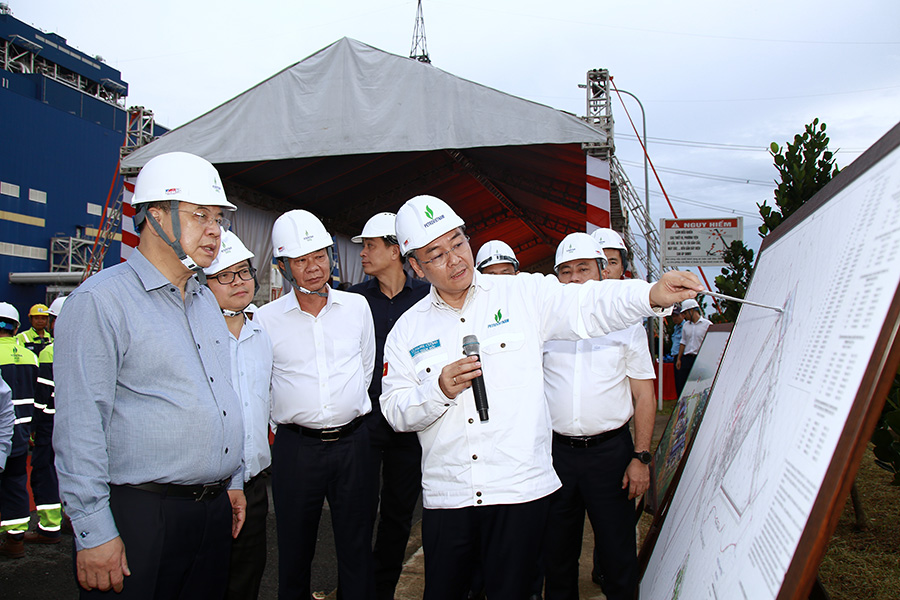
Every oil and gas facility has a finite lifecycle: reservoirs eventually deplete, platforms are decommissioned, and plants are upgraded with newer technologies. What endures longest is the capability accumulated across generations from exploration and field development to engineering, construction, operations, and governance. This foundation propelled Petrovietnam to eleventh place in the 2026 Fortune Southeast Asia 500 rankings, with total assets nearing VND1,200 trillion ($47.2 billion).
2026 a true test of internal resilience
That foundation has been tested in 2026 as Middle East crude supplies face disruptions. Petrovietnam proactively secured alternative crude supplies and kept the Dung Quat and Nghi Son refineries operating at high levels, reaching 125 per cent of design capacity at peak intervals and meeting over 70 per cent of domestic petroleum demand through seamless value-chain coordination. That difficult period underscored a lasting lesson: energy security is national security, and resilience must be built during normal times.
Business results in 2026 further confirmed this internal strength. Within ten months, consolidated revenue and pre-tax profit had exceeded full-year targets. Notably, price factors are estimated to account for only about 41 per cent of full-year revenue growth, with the remainder driven by higher output, market expansion, and new products and services.
In the core upstream sector, Petrovietnam recorded six new domestic oil and gas discoveries in just ten months, matching the entire 2021-2025 total. Domestic crude output returned to growth after an eleven-year decline despite natural depletion at major fields, with October 2026 marking 18 consecutive months of year-on-year production growth.
While new discoveries replenish future resources, the $12 billion Block B-O Mon gas-to-power chain transforms resources into energy and showcases an integrated upstream-to-downstream ecosystem spanning gas fields, pipelines, and power plants. We are determined to welcome first gas in the third quarter of 2027, bringing roughly 5 billion cu m of gas ashore annually to fuel around 3,800 MW of power for the Mekong Delta.
In 2026, Vietnamese oil and gas products and services also expanded globally. In the Middle East, we won the EPIC-1 package under the Maydan Mahzam field redevelopment project, estimated at over $3 billion and Vietnam’s largest international contract to date. Two weeks later, the Commonwealth LNG project in Louisiana, the US, selected Vietnam to fabricate over 60 technological modules totaling 18,500 tons. These deals add to over $10 billion in international projects, products, and technical services delivered by Petrovietnam, affirming our capacity as a world-class general contractor. Meanwhile, Nhon Trach 3 and 4 - Vietnam’s first liquefied natural gas (LNG) power plants - entered commercial operation using advanced gas turbines. Exporting Vietnamese services while bringing advanced technology home is how we elevate our internal strength.
Expanding development space

The road ahead remains challenging amid geopolitical competition, supply chain volatility, and energy transition pressures, while Vietnam’s double-digit economic growth target requires commensurate energy expansion. Petrovietnam must simultaneously ensure national energy security, enhance existing operational efficiency, and create new growth drivers.
These priorities align with entering the Fortune Global 500 before 2030 and implementing Politburo Resolution No. 79-NQ/TW. We do not pursue growth at all costs merely for a ranking. Rather, we use the listing as a benchmark to optimize finite resources and generate new resources from technology, human talent, and markets.
Larger asset scale demands greater prudence and efficiency. Every project must be rigorously evaluated for capital mobilization, returns, and risks, avoiding scattered investments while leveraging Petrovietnam’s scale and integrated value chain. This drives our transformation from an oil and gas corporation into a national industrial and energy group. Oil and gas remain the core foundation for expanding into midstream and downstream segments, including LNG-gas-power hubs, deep processing, and high-value mechanical engineering, becoming an integral link in global oil, gas, and renewable energy supply chains. Petrovietnam is also ready for complex new mandates such as offshore wind power exports and nuclear power, turning the institutional space opened by Politburo Resolution No. 79 into gas flows, electricity, and tangible projects.
People as the most invaluable asset
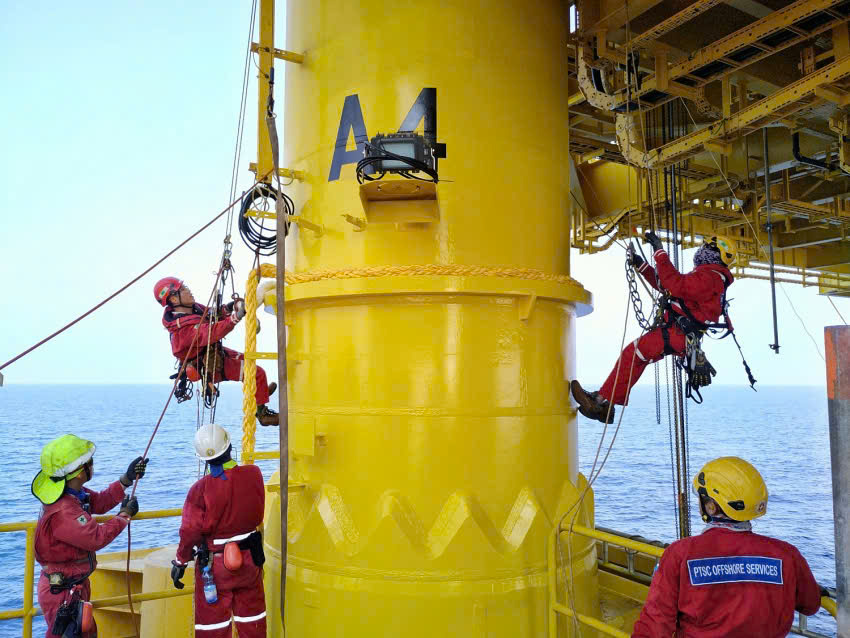
While physical facilities eventually reach the end of their lifecycles, human talent grows more valuable over time. Human resources are our most invaluable asset: technology and machinery can be bought, but building a team of top experts takes 10-20 years or longer.
Today’s young engineers will manage Block B gas flows, LNG power plants, and offshore wind projects for decades, honing their skills on complex domestic projects to master technology before competing globally. Meanwhile, a capable leader is judged not only by operational results during their term but by the quality of the next generation they prepare for the future.
On our 65th anniversary, I sincerely thank the nearly 60,000 Petrovietnam officials, employees, and workers, along with their families, especially those of offshore personnel working far from home, for their unwavering support. In 2026, our workforce proved ready for greater missions: exceeding 2026 targets to build momentum for 2027, welcoming the first gas from Block B, and bringing more products and services bearing Vietnamese intellect to the world. For Petrovietnam, global ambition begins with national responsibility: energy must always stay one step ahead.

On our 65th anniversary, I sincerely thank the nearly 60,000 Petrovietnam officials, employees, and workers,along with their families, especially those of offshore personnel working far fromhome, for their unwavering support.


 Google translate