


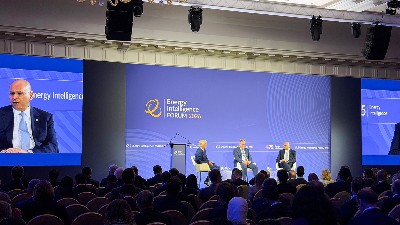
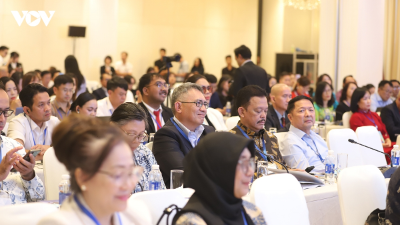
During a panel discussion at the "Development of Vietnam Oil and Gas Industry: Ensuring Sustainable Growth" forum organized by Tap chi Kinh te Viet Nam / Vietnam Economic Times / VnEconomy, Mr. Dang Thanh Tung, Deputy Head of Development Strategy at the Vietnam Industry and Energy Group (Petrovietnam), shared the group's breakthrough strategic directions and analyzed the necessary conditions for the synchronized implementation of large-scale energy projects.
SIX BREAKTHROUGHS IN DEVELOPMENT STRATEGY
According to Mr. Tung, as energy demand continues to rise while domestic oil and gas extraction potential faces certain limitations, Petrovietnam has identified multiple approaches to maintain growth, leverage existing resources, and gradually expand into new energy sectors.
Firstly, the group continues to maintain domestic oil and gas extraction output through the application of technology and the utilization of new mechanisms and policies. Mr. Tung noted that remaining resources could be more effectively exploited with appropriate technical solutions, especially for small, marginal, and long-exploited fields.
Enhancing oil recovery rates and extending the life cycle of existing fields are considered important directions. Previously, some solutions could not be implemented due to policy and mechanism limitations. With the new Petroleum Law, Petrovietnam expects to have more favorable conditions to exploit domestic resources more effectively.
Alongside this, the group prioritizes resources for key projects, including the Lot B O Mon gas-electric chain. This project chain is expected to significantly contribute to Petrovietnam's growth while supplementing gas and electricity supply, thereby ensuring national energy security. Other oil and gas projects, including Blue Whale, are also expected to see progress in the near future.
Given the limitations of domestic extraction potential, Petrovietnam will continue to expand its oil and gas exploration and extraction activities abroad. The group is currently collaborating with partners in Russia and seeking opportunities in other regions worldwide.
Another breakthrough direction is the development of the liquefied natural gas (LNG) chain. According to Mr. Tung, although this field faces many challenges, gas still plays an important role in Vietnam's long-term energy structure, especially as energy demand increases and emission reduction requirements become more pronounced.
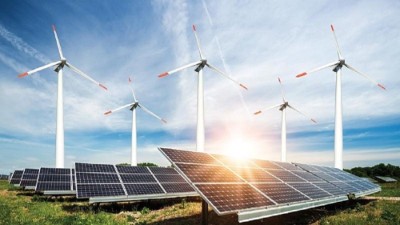
Petrovietnam is also preparing to develop an offshore wind power ecosystem, not only through project investments but also by building capacity to participate in the supply chain and provide services for this sector.
In addition to these areas, the group is beginning to prepare conditions to participate in the development, construction, and operation of nuclear power plants as assigned by the government. This is a long-term vision field, requiring preparation in terms of capacity, human resources, and necessary conditions for gradual participation.
Combining energy development with emission reduction
According to Mr. Tung, a major challenge for current energy projects lies not only in the scale of investment capital or technological requirements but also in the ability to coordinate and organize synchronized implementation across stages.
"The common characteristic of oil and gas and energy projects is the very large capital requirement, long capital recovery time, while facing many uncertainties. Fluctuations in oil and gas prices make investment efficiency difficult to predict. Even ordering turbines for power plants can take at least four years to be delivered, indicating that projects require long-term vision and thorough preparation," Mr. Tung shared.
Therefore, Mr. Tung emphasized the need to excel from planning to institutional and policy building, but more importantly, the organization of planning implementation. For energy projects, investors need to clearly identify the product output, buyers, and purchase prices. Without transparent, stable mechanisms and market predictability, businesses will find it difficult to make long-term investment decisions.
Particularly with gas-electric project chains, a single bottleneck can cause the entire chain to stall. Therefore, implementation must be comprehensively calculated, from exploration, extraction, transportation, and gas distribution to infrastructure investment, construction, and power plant operation.
The requirement for synchronization becomes even more important for new energy sectors. Besides investment capital, these fields also require parallel development of technology, infrastructure, supply chains, and markets. According to Mr. Tung, Vietnam needs to prepare a legal framework early, drawing on the experiences of countries in the region to facilitate the development of new sectors.
Alongside growth and energy security goals, Petrovietnam also aims to develop emission reduction solutions in production and business activities.
One research direction is the capture and storage of carbon dioxide (CO₂). This solution can help reduce emissions from industrial activities, including those using significant fossil fuels.
For coal-fired power plants, the group is researching greening power generation activities, such as co-firing ammonia or biomass to gradually reduce emissions. The choice of specific solutions needs to be linked to technological conditions, fuel supply capabilities, and implementation efficiency at each facility.
Additionally, offshore wind power and nuclear power are identified as potential development directions contributing to the energy transition process. Nuclear power, in particular, is a low-carbon emission source during power generation and is being reconsidered by many countries in the context of increasingly urgent energy security requirements.
In the long term, Petrovietnam also aims towards low-emission energy and fuel forms such as hydrogen and green ammonia, thereby expanding emission reduction capabilities in energy production and use sectors.

 Google translate