


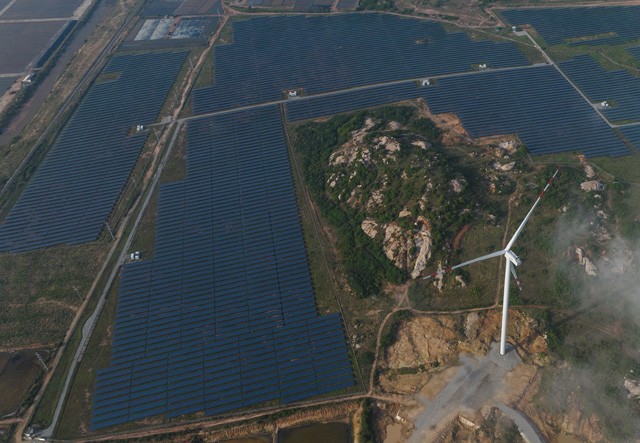
Vietnam is moving away from a model in which solar power growth was largely driven by incentives toward one increasingly shaped by market signals. Under the adjusted National Power Development Plan VIII (PDP8), approved under Decision No. 768/QD-TTg in April 2025, the country aims to increase the share of renewable energy in power generation while developing 10,000-16,300 MW of energy storage capacity by 2030.
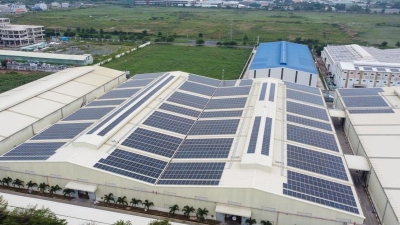
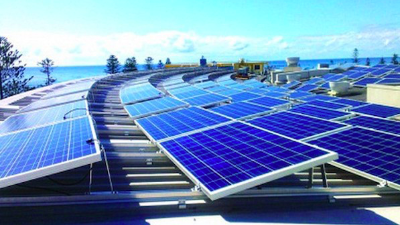
The plan also promotes rooftop solar at manufacturing facilities and industrial parks under a self-generation, self-consumption model. The shift is changing the investment proposition for solar power, with the question no longer simply being how much generation capacity can be added, but how that capacity can generate predictable commercial value. The combination of Direct Power Purchase Agreements (DPPAs), Battery Energy Storage Systems (BESS), and rising demand for industrial decarbonization could provide that next layer of value by connecting renewable generation more closely with corporate electricity demand.
At the 4th Vietnam Solar & Energy Storage Future Conference, held in Ho Chi Minh City on September 22, industry experts discussed how these factors could reshape the commercial development of solar and storage in Vietnam.
Beyond capacity growth
Vietnam’s transition toward a competitive electricity market represents a fundamental change in the investment environment for renewable energy. According to Mr. Nguyen Tuan Phat, Partner at the DIMAC Law Firm, the previous phase of solar development was supported by feed-in tariffs (FIT) and other incentives, while the next phase will require projects to demonstrate their ability to operate on market terms.
DPPAs are therefore becoming more than contractual mechanisms for purchasing renewable electricity, providing a link between generation assets and the actual electricity needs of businesses. The shift points to a broader change in Vietnam’s solar market: growth is moving from a capacity-driven model, where policy support was central to project expansion, toward a market-driven model in which the value of renewable power depends more closely on how generation, demand, and market conditions interact.
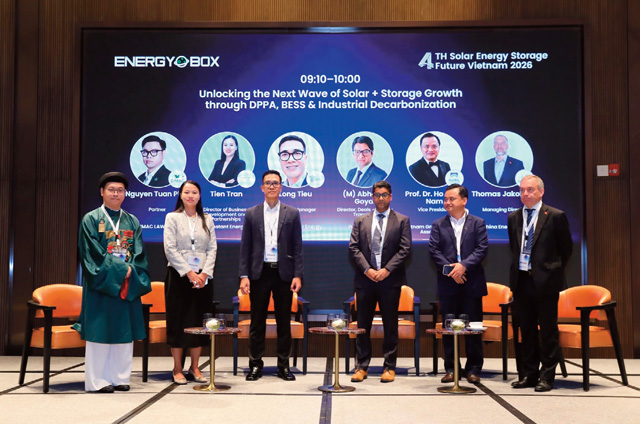
Ms. Tien Tran, Director of Business Development and Partnerships at Constant Energy, highlighted three main drivers of DPPA demand: environmental, social, and governance (ESG) commitments, energy-cost optimization, and the need to secure long-term orders from global customers. This means renewable power can create value for industrial customers beyond the price of electricity, helping reduce emissions and meet requirements from global supply chains. Demand is emerging across Vietnam, from the north to the south, among both domestic businesses and foreign-invested enterprises.
The commercial proposition for solar, however, is constrained by the mismatch between generation and industrial demand. Solar generation does not always coincide with the hours when factories have their highest electricity consumption, limiting the value that can be extracted from the power produced.
Mr. Long Tieu, Country Director for Vietnam at Fourth Partner Energy, pointed to BESS as a way to address this gap by storing electricity and shifting consumption to periods when power is needed, while also supporting more stable factory operations. As a result, BESS is increasingly being viewed not simply as an enabling technology for renewable energy but as an economic tool.
As Vietnam’s solar market enters this more commercial phase, the investment case will increasingly depend not on how much renewable capacity can be added but on how effectively solar, storage, and electricity demand can be integrated to create measurable economic value.
Bankability challenge
Growing demand for renewable electricity and energy storage does not automatically translate into investable projects. For lenders, the critical question is whether future revenues can be secured and forecast with sufficient confidence.
Mr. Abhinav Goyal, Director of Energy Transactions and Transition at PwC Vietnam, noted that the bankability of DPPA projects ultimately depends on the security of their revenue streams. In a competitive electricity market, revenue depends on the buyer as well as market conditions, including how generation capacity and end-user demand are matched. “When the market operates in 30-minute cycles, investors need to understand how generation output, plant capacity, and consumer demand are connected,” Mr. Goyal explained.
This makes market knowledge and trading capability an important part of the financing equation. Investors consequently need greater visibility into how generation, consumption, and market conditions interact before building reliable financial models. The challenge is therefore not simply whether DPPAs exist as a legal mechanism, but whether the market provides sufficient data, expertise, and forecasting capabilities to make projects financially bankable.
For international investors, reliable electricity-market data is becoming a fundamental investment requirement. Better information on generation, demand, and market pricing would allow investors to improve forecasts, strengthen financial models, and reduce the information gap when entering Vietnam’s relatively-complex electricity market. Local partners with deep electricity-market expertise could consequently become an important part of the investment equation.
The same principle applies to BESS, where investors need clearer recognition of the multiple services storage can provide, including load shifting, increasing renewable-energy use, and improving industrial resilience. Mr. Phat also noted that green finance and sustainability-linked finance serve different purposes, with green finance generally tied more closely to specific projects and technology transitions, while sustainability-linked finance operates primarily at the corporate level.

When the market operates in 30-minute cycles, investors need to understand how generation output, plant capacity, and consumer demand are connected.

For long-term investors, the challenge is also one of market timing. Mr. Thomas Jakobsen, Chief Executive Officer of Indochina Energy Partners, cautioned against using the rapid expansion of solar during the FIT era as a benchmark for DPPAs. “Vietnam had developed around 10-15 GW of solar power by 2020, while the power plan at the time allowed Vietnam Electricity (EVN) to purchase only around 1 GW, and the rapid expansion created significant challenges for the power system,” he noted. “DPPAs represent a different commercial model, with different revenue and risk dynamics. We should not expect DPPAs to develop at the same speed as FIT.”
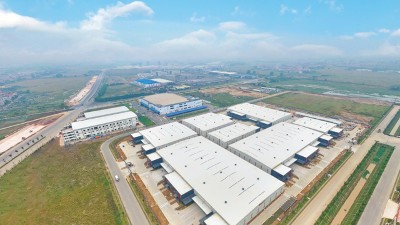
Industrial parks could provide a practical platform for combining solar, BESS, and DPPAs, given their concentration of factories, electricity demand, and existing infrastructure. Conference discussions, however, highlighted unresolved questions around retail electricity licensing, internal cost allocation, network infrastructure, and rooftop rights, while panelists differed on whether some of these constraints were regulatory, technical, or primarily commercial. These factors will influence how technically-feasible projects can be translated into commercially-viable investments.
From opportunity to capital
Mr. Jakobsen expects DPPAs to attract tens of billions of USD in capital into Vietnam over the longer term. “If we look toward the end of 2030, when the PDP8 concludes, I would be very surprised if the capital coming into Vietnam through DPPAs was below $20 billion,” he said. The figure is an industry projection rather than a committed investment pipeline, but it highlights the potential scale of the market if the underlying commercial conditions can be established.
For that to happen, three issues stand out: greater transparency in electricity market data and pricing, clearer recognition of the economic value of BESS, and greater policy predictability. These conditions will determine whether demand for renewable power can be translated into bankable projects and, ultimately, larger capital flows.
DPPAs can provide an offtake channel for solar power, BESS can address the mismatch between renewable generation and industrial demand, while ESG commitments and supply chain decarbonization can strengthen demand from corporate buyers. Together, these factors are changing the investment proposition for solar power in Vietnam.
The opportunity is therefore moving beyond simply adding clean energy capacity. Solar and storage are increasingly becoming part of the industrial equation for energy costs, financing, and decarbonization, as Vietnam moves toward a more market-driven electricity system.






 Google translate