


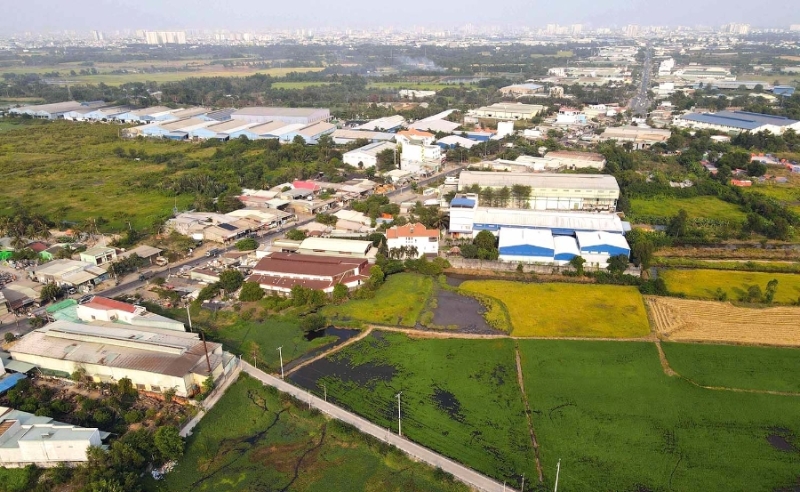
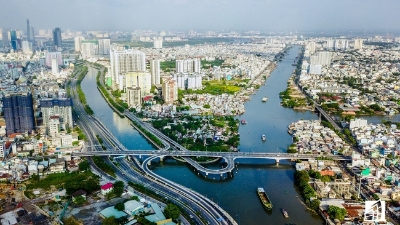
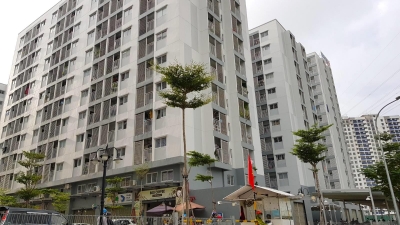
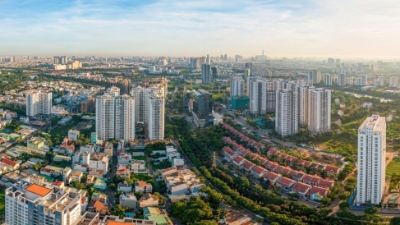
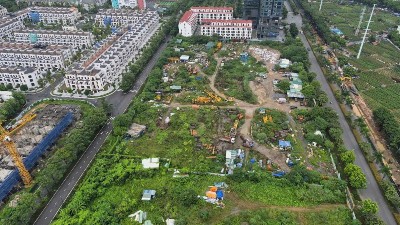
The Ho Chi Minh City People's Council has recently approved a list of 64 agricultural land plots to be utilized for pilot commercial housing projects. This move aims to address the city’s growing housing demand while maximizing the potential of existing land resources.
According to a proposal submitted by the City People's Committee, the People's Council was initially asked to review and approve a third-phase list of 76 plots covering approximately 3.94 million square meters.
However, following a rigorous inspection, the People's Council determined that only 64 plots—totaling more than 2.7 million square meters—met the necessary criteria and conditions. Notably, over 1 million square meters of this total consists of rice-growing land. The conversion of these areas is expected to provide a substantial supply of new housing for the city's residents.
Under the National Assembly’s Resolution No. 171, these pilot projects allow real estate enterprises to acquire land use rights and convert land purposes for various types of land, provided the sites align with local urban planning and housing development schemes. This policy is expected to open significant opportunities for real estate developers and create favorable conditions for sustainable urban growth.
However, the transition from agricultural to commercial residential land is a complex process. Primary importance is being placed on the accuracy and integrity of land records and data.
The City People’s Committee has been tasked with reviewing and overseeing these projects to ensure they only proceed when all legal requirements are fully met. This will require close coordination between Government agencies and businesses to maintain transparency and efficiency throughout the conversion.
Another critical challenge involves safeguarding the rights of local citizens, particularly those currently farming the land. As the conversion may impact their livelihoods, the city emphasized the need for appropriate support policies to ensure community consensus and cooperation. Furthermore, the development of these commercial housing projects must be executed sustainably to avoid placing excessive pressure on urban infrastructure and the city’s overall living environment.
 Google translate