


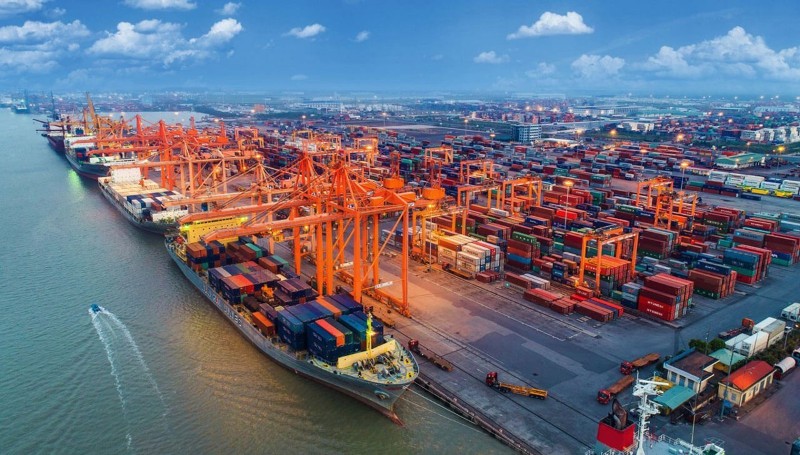
The Ho Chi Minh City People’s Committee has issued a decision to establish a Free Trade Zone (FTZ) linked to the Cai Mep Ha port area, covering a planned area of over 4,174 hectares.
The FTZ will comprise three major functional areas, with eight adjacent sub-zones.
Under the decision, the FTZ will serve as a pioneering pilot model for testing and accumulating experience with preferential institutional mechanisms and an internationally oriented free investment and trade environment.
It is expected to promote institutional reform, serve as a hub connecting Ho Chi Minh City’s production, trade and services with regional and global markets, and become a new growth driver for the city’s development as a Southeast Asian maritime economic hub.
The FTZ is also expected to create space for rapid, sustainable and internationally integrated development in the southeastern region and the country as a whole.
It will place the digital, green and circular economies at the heart of its development, with a focus on green logistics, port clusters and an international transshipment hub serving as key links in global supply chains. It will closely connect the Cai Mep-Thi Vai deep-water port cluster, the Can Gio International Transshipment Port and Long Thanh International Airport.
The FTZ is also envisioned as a green manufacturing and export center for high-value-added products incorporating advanced, environmentally friendly technologies; an innovation hub with integrated, smart and modern infrastructure; and a destination for talent and regional headquarters of multinational corporations operating in logistics, maritime services and international trade.
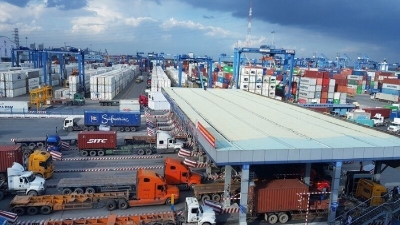
In terms of operations, the FTZ will include production zones, port and port logistics areas, logistics centers, trade and service areas, and other functional zones in accordance with regulations.

 Google translate