


As of September 19, 2026, the total registered foreign investment in Ho Chi Minh City reached $17.225 billion, approximately 4.19 times higher than the same period in 2025 and 156.6 percent of the annual plan.
Based on these results, the city anticipates total registered FDI for the entire year of 2026 to reach around $19 billion, equivalent to 172.7 percent of the plan.
According to the Ho Chi Minh City Department of Finance, by September 19, the city had issued new investment registration certificates for 1,438 projects with a total capital of $9.358 billion. There were 225 projects with adjusted capital, resulting in a net increase of $4.927 billion, and 1,450 cases of capital contribution, share purchase, and capital contribution purchase with a total value of $2.94 billion.
The capital structure indicates that both new projects and ongoing projects contributed to the increase. New capital accounted for 54.3 percent of the total registered FDI, while adjusted capital accounted for 28.6 percent.
A significant portion of the increase this year comes from projects with very large investments. Among the new projects, the Can Gio International Transshipment Port has a total investment of over $4.9 billion, while the AI Factory Data Center has an investment of approximately $2.1 billion.
These two projects are in areas that Ho Chi Minh City is prioritizing for investment promotion, including seaport infrastructure, logistics, digital infrastructure, and artificial intelligence.
Additionally, investors have proposed an increase of about $2.8 billion for the International University Urban Area project and approximately $1.4 billion for the Smart Complex project in Functional Area 2a of the Thu Thiem New Urban Area.
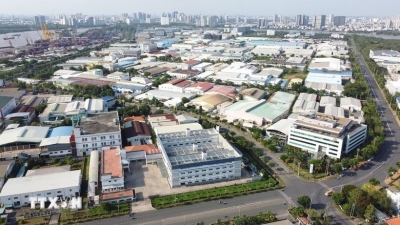
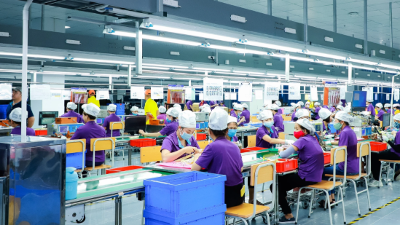
FDI is also becoming more prominent in the system of export processing zones and industrial parks. According to the Management Board of Ho Chi Minh City's Export Processing and Industrial Zones, in the first nine months of 2026, the total investment attracted to these zones exceeded $5.57 billion, with FDI accounting for more than $4.2 billion, an increase of 62.22 percent compared to the same period in 2025.
Among these, 100 new FDI projects were granted with a total registered capital of $3.14 billion; 120 projects adjusted their capital with an additional increase of $1.12 billion.
For the period 2026-2030, the Management Board aims to attract $20-$21 billion in investment, with an average investment of $8-$10 million per hectare and a disbursement rate of over 70 percent of the total registered capital.
From attracting capital to enhancing investment efficiency
The rapid increase in FDI also emphasizes the need to transform registered capital into production capacity, business operations, and tangible contributions to the economy.
The Ho Chi Minh City Department of Finance stated that the city will continue to coordinate in resolving procedural obstacles and project implementation processes, while promoting connections between FDI enterprises and domestic enterprises in terms of goods supply, services, and human resource training.
The future investment promotion direction will focus on high technology, digital infrastructure, logistics, supporting industries, green production, and high value-added sectors. This is also the direction the city has set in building a technology investment ecosystem, focusing on core technology, innovation capacity, and the ability to participate in the global value chain.
The city is concentrating on removing bottlenecks to accelerate the implementation and disbursement of approved projects. According to the plan, in the last three months of the year, the city aims to promote the disbursement of approximately VND171.727 trillion ($6.5 billion) in FDI and key projects.
In export processing zones and industrial parks, this requirement is also set alongside the goal of attracting capital. For the period 2026-2030, the Management Board of Ho Chi Minh City's Export Processing and Industrial Zones aims to attract $20-$21 billion, while requiring a disbursement rate of over 70 percent of the total registered capital. This indicates that capital scale is only part of the equation; project implementation progress, land and infrastructure use efficiency, as well as the ability to create links with domestic enterprises, determine the value generated from FDI.
With over $17.2 billion registered by September 19, Ho Chi Minh City has a basis to project a total of around $19 billion for the year. Along with this goal, the city is shifting its focus from attracting capital to bringing committed capital into reality, creating additional production capacity and value for the economy.
 Google translate