



The concept of a low-altitude economy (LAE), or low-altitude aviation / airspace economy, remains relatively new. Could you tell us more about the sector?
Whenever aviation is mentioned, most people think of civil aviation - commercial flights carrying passengers or cargo from one location to another, across regions or across borders. Operating such a network requires negotiations over traffic rights, including overflight, landing, and commercial operation rights, between countries; a process that is often extremely complex.

The LAE, however, differs in important ways. It refers to a new layer of airspace below 1,000 meters or, depending on national perspectives and regulations, up to 3,000 or even 5,000 meters. This is where flying devices and lightweight aircraft, either manned or unmanned aerial vehicles (UAVs), can operate in a wide range of endeavors.
As a result, the accompanying technological ecosystem, from manufacturing and operational technologies to supply chains for production, maintenance, warranty, and repair, also carries unique characteristics, shaped by the technical features and capabilities of these vehicles.
What is the state of LAE development globally?
The expansion of low-altitude aviation technology worldwide has been striking. China, for instance, has moved rapidly by adopting sandbox mechanisms - controlled testing environments - and is now scaling up real-world applications. Its fixed-wing cargo UAVs have reached payload capacities of up to 2,000 kg, with control ranges extending an impressive 500 km.
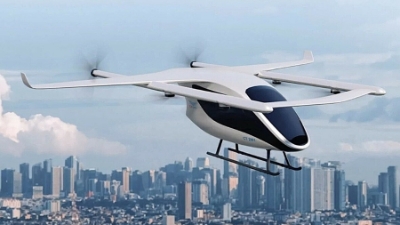
Passenger transport is also advancing quickly. Thailand recently issued an airworthiness certificate for a UAV capable of carrying two passengers. Tests in China have gone even further, moving beyond the two-person limit.
All of this signals a shift. Beyond small drones used for routine civil purposes, UAVs are poised to enter specialized transport, both cargo and passenger, in the very near future. Whether we welcome it or not, this transformation is becoming an inexorable technological and economic trajectory.
In your view, what is the current state of Vietnam’s LAE?
While the Party and the government have outlined clear ambitions to develop the LAE as a new growth engine, the legal framework and regulatory system remain far from coherent, creating obstacles in implementation.
This caution is understandable, as national security and defense are always top priorities. And this is not unique to Vietnam; every country must navigate security concerns when opening new airspace.
The pressing question is how to maintain strict control while still creating space for the sector to grow. How can Vietnam unlock the potential of an airspace layer that is largely unused and channel it into economic development? This challenge is shared by researchers, ministries, and businesses seeking to enter this promising field.
You mentioned that other countries also face security concerns but still push ahead, for instance through sandbox models. Is Vietnam being too cautious and missing opportunities?
While many countries are moving quickly to apply low-altitude aviation technologies, Vietnam is still wrestling with regulatory and oversight issues. Just some weeks ago, Thailand issued an airworthiness certificate for a passenger-carrying unmanned aircraft - a Chinese-made product. The United Arab Emirates (UAE) has done likewise and is actively preparing to deploy UAVs for commercial air taxi services.
In Vietnam, key legal documents such as the Law on National Defense 2024 and Decree No. 288/2025/ND-CP, issued on November 5, 2025, still classify UAVs and drones strictly as objects requiring tight control. They are not yet recognized as a form of high-tech civil transport capable of underpinning a new economic sector, as maritime or road transport does. More notably, the recent draft of the new Law on Aviation introduces the concept of a “low-altitude space economy” but leaves UAV governance untouched.
The core question is this: without UAVs, what exactly is the LAE? Which agency will take the lead in building a specialized regulatory framework for these emerging aviation technologies? Vietnam spent decades building its civil aviation regulations to integrate with global aviation. Should this new sector follow a comparable path?
This is an urgent issue that needs clear recognition and a unified approach to create timely policies that can open the door for the sector’s development.
In terms of capability, are Vietnamese companies strong enough to compete?
Vietnam has a dynamic group of technology firms already working in the low-altitude space - a significant national asset.
Currently, Viettel is the only entity licensed to manufacture UAVs. While its core work serves defense needs, it is planning to expand into civil production. Alongside Viettel, many smaller companies are actively developing advanced aerial technologies, and several have proven internationally competitive. Manufacturers and exporters such as HTI and RtRs, as well as innovators like Gremsy, XBlink, and Mismart, have secured sizeable contracts for UAV components and related equipment. Yet most still operate on a relatively small scale.
With current capabilities, I believe Vietnamese tech firms absolutely can compete. But how far they can advance, and how they can scale, is a strategic question that still needs to be answered.
What kind of push do we need to turn this “potential” into reality?
We need a true, full-scale national effort. While we cannot expect an immediate leap, we can absolutely move toward our goals if the leadership of the Party and the government is expressed consistently through concrete policies.
These policies must meet two requirements: they must be strict enough to ensure national safety and security, yet flexible enough to create space for enterprise-led innovation and development.
With a flexible legal framework and clear direction, businesses will have the foundation to shape their strategies. Combined with the practical involvement of universities and research institutes, we can form a strong collective force and lay the groundwork for Vietnam’s LAE.
How is the Vietnam Aviation Academy contributing to this effort?
As the country’s largest specialized aviation university, we have taken a pioneering step by launching two new training programs in the most recent admissions cycle: Unmanned Aircraft Engineering and Robotics Engineering.
A strong sector requires a comprehensive supply chain, where businesses provide components and technologies, from cameras and AI to materials and structural design.
This makes the role of universities and research institutes indispensable. Beyond training and supplying high-quality human resources, we work closely with companies to tackle complex technological challenges that individual enterprises may struggle to solve on their own.
In reality, many Vietnamese technology firms today are strong in electronic control systems but lack expertise in structural optimization and aerodynamics. This is where research institutions like ours, with deep specialization in civil aviation, can offer significant support. We conduct calculations and studies based on industry requests to help address these bottlenecks.
This is just an initial contribution, but for emerging technologies such as UAVs, and eventually space, the R&D role of universities and institutes will be critical, provided there are coherent policies and strategic investment.
Given the current landscape, are you optimistic about the sector’s future in Vietnam?
From what I observe, Vietnamese tech companies are facing many challenges because this field requires substantial investment. They have dedication and capability, but these resources need to be multiplied through supportive mechanisms and better conditions.
Therefore, resources must be considered at the level of national capacity. I want to emphasize that developing this sector must be a national endeavor, it cannot rest on the shoulders of any single organization. Only then can we expect it to deliver meaningful benefits for the country.
As the world searches for new growth engines, the low-altitude economy (LAE) has emerged as an economic space worth trillions of dollars. According to Morgan Stanley, with continued advances in science and technology, the scale of the LAE could reach around $9 trillion by 2050. This prospect has prompted the US, China, and many other countries to accelerate their race to capture market share and strategic advantage in this rapidly emerging sector.

![[Interactive]: Economic overview - September 2026](https://premedia.vneconomy.vn/files/uploads/2026/10/06/9e0f403040dd4384ad690004bc1911ab-124594.png?w=400&h=225&mode=crop)




 Google translate