


From the perspective of an economic diplomat, how would you assess the international standing and recognition of Vietnamese corporate brands today?
Vietnamese brands have made significant progress. We have developed a growing number of businesses capable of competing internationally and succeeding in demanding markets. What we still lack is a broad base of strong brands that can give our economy a distinct identity and elevate our national brand.
We must distinguish between having products available in a market and having a brand that establishes a foothold there. Some businesses have little mainstream media exposure but enjoy strong reputations in business-to-business (B2B) supply chains. We need to develop both business-to-consumer (B2C) brands and reputable B2B brands.
Several Vietnamese businesses have demonstrated their international competitiveness. In technology, FPT is a prominent example. Its IT services revenue from overseas markets exceeded VND35 trillion ($1.35 billion) in 2025, reflecting its technical expertise and ability to solve complex challenges for global corporations.
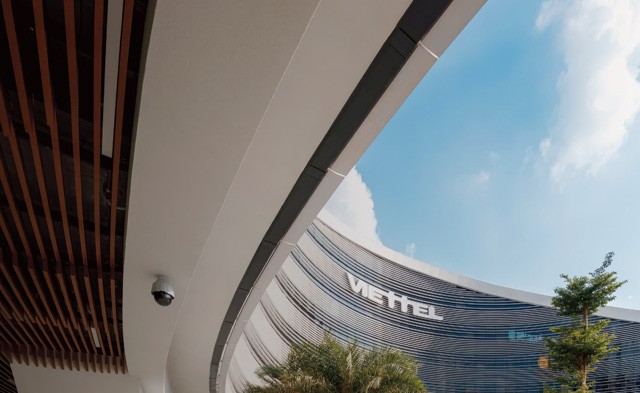
Viettel has built successful telecommunications brands overseas, including Metfone in Cambodia, Unitel in Laos, Bitel in Peru, and Movitel in Mozambique. Metfone demonstrates how Vietnamese businesses can link their brands to local community development, drawing on Vietnamese management expertise and technology.
In consumer goods, Vinamilk has expanded into 65 countries and territories. VinFast’s investments in factories and distribution networks in India, Southeast Asia, and North America reflect its long-term global ambitions. Other examples include Vietnam Airlines and Vietjet Air in aviation, TH true MILK in dairy, Trung Nguyen Legend in coffee, and Masan’s CHIN-SU brand, which has entered markets such as the US, Japan, and South Korea.
These achievements show that Vietnamese businesses should not underestimate their capabilities. The challenge is to turn their ambition into lasting success through sound strategies, genuine capabilities, perseverance, and a supportive policy environment.
Looking at Vietnam’s record-breaking export performance in recent years, what do you see as the biggest paradox facing Vietnamese goods in global markets?
Vietnam’s export achievements are a tremendous source of pride. From an economy once plagued by shortages, we have risen to become one of the world’s 20 largest merchandise-exporting economies. In 2025, merchandise exports reached approximately $475 billion, generating a trade surplus of around $20 billion. These achievements reflect the hard work of our workforce, the dynamism of businesses, the support of industry associations, and assistance from government agencies, including the diplomatic service. Our network of 17 free trade agreements (FTAs) covering more than 60 economies has opened up unprecedented market opportunities.
However, we must ask some difficult questions. How much of the value of exported products is actually created in Vietnam? Which stages of production do Vietnamese businesses control? How much do Vietnamese workers and enterprises benefit? Most importantly, do international consumers recognize the Vietnamese brands behind the products they buy? That is the biggest paradox. Products made in Vietnam have traveled far, but Vietnamese names and brands have not achieved a commensurate level of global recognition.
Export figures reflect the value of goods crossing our borders, including imported raw materials and components. To assess the economy’s underlying strength, we must examine domestic value-added and how much technology, branding, distribution capacity, and value capture Vietnamese businesses control.
Our export volumes are substantial, but in many industries, domestic businesses remain concentrated in contract manufacturing, assembly, and raw material supply - the lower end of the value chain. Many high-quality Vietnamese products still reach consumers under foreign brands.
What specific barriers does the absence of strong corporate brands create for trade promotion and economic diplomacy overseas?
Strong political relations, FTAs, and trade promotion fairs can open doors, but converting opportunities into commercial contracts and lasting partnerships requires businesses and brands that can convince prospective partners.
Without recognizable brands, Vietnamese representative offices overseas can do little more than make general claims that Vietnamese goods are good. International importers and distributors need concrete assurances: Which company will supply the products? Is the quality consistent? Will deliveries arrive on time? Who will take responsibility if something goes wrong?
If Vietnamese businesses remain limited to contract manufacturing or supplying raw materials for foreign partners to process and sell under their own brands, embassies and trade offices cannot effectively promote these products to local consumers simply because they carry a small “Made in Vietnam” label.
We need identifiable brands with clear product stories. Without a trusted brand, businesses must spend considerable time and money on sample testing, certification, and approaching distributors individually. Market trust cannot be built on words alone; it must be earned through consistent quality and firm commitments.
Does this reflect a structural weakness in our growth model?
Absolutely. The limitations of Vietnamese brands reflect the position of domestic businesses within global value chains. If we focus solely on fulfilling orders for others while foreign partners control design, technology, branding, and distribution, we will remain in a passive position with limited bargaining power.
The growth model based on manufacturing expansion, FDI attraction, and low labor costs has helped Vietnam escape poverty and become a middle-income country. However, low-cost labor cannot remain our competitive advantage indefinitely if we aim to become a high-income developed country by 2045.
The greatest challenge is ensuring that FDI success drives the development of Vietnamese enterprises. Domestic businesses must improve management, technological expertise, and reliability to become Tier 1 and Tier 2 suppliers to FDI corporations. This would help them build their capabilities and eventually establish their own brands.
What strategic solutions are needed to address this fundamental challenge?
We must pursue two objectives simultaneously: attracting high-quality external resources and strengthening domestic capabilities.
The government needs to create a transparent, stable, and predictable business environment. Intellectual property rights must be strictly protected, while counterfeiting, commercial fraud, and origin fraud must be addressed decisively.
Businesses cannot confidently invest over decades in building their brands if their trademarks can be easily infringed upon. Politburo Resolution No. 68-NQ/TW on private sector development must be translated into concrete business conditions that provide this protection.
Government support programs, particularly the National Brand Program, must also better reflect businesses’ needs. Small and medium-sized enterprises need access to shared services, including quality-testing centers, international legal consulting, market research, and intellectual property protection.
For agricultural products, branding must begin at the source, with standardized production areas, reliable traceability systems, and a fair distribution of benefits for farmers.
Looking ahead to 2045, how will successful Vietnamese corporate brands contribute to the country’s international image and standing?
Countries such as Japan, Germany, and South Korea are widely recognized through their global products and brands. Japan is associated with perseverance and meticulousness, Germany with precision and quality, and South Korea with creativity and trendsetting. Corporate brands are fundamental to a country’s reputation and national brand.
Vietnam has a distinctive cultural heritage, a rich culinary tradition, and the craftsmanship of its traditional villages. These strengths are complemented by a commitment to learning, adaptability, dedication, and the determination of Vietnamese people to advance in the technology era. By embedding these cultural values in our products and services, we can create distinctive added value that competitors will find difficult to replicate.
When Vietnamese businesses succeed through professionalism, integrity, and quality, the world will see Vietnam not merely as a low-cost investment destination, but as a trusted strategic partner and a dynamic, sophisticated economy. Positive perceptions of Vietnamese brands can ultimately translate into greater appreciation for the country and its people.




 Google translate